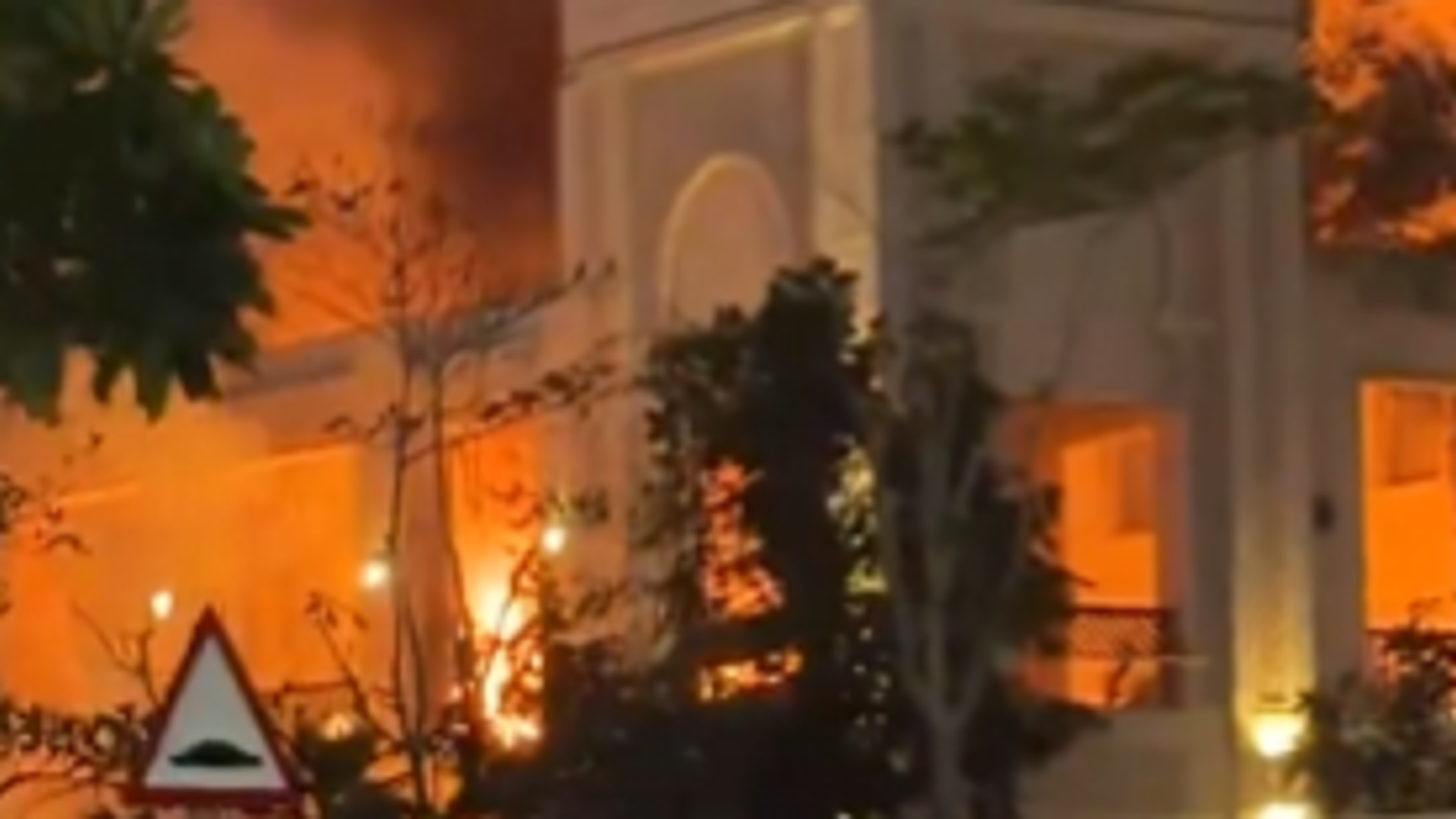
Panic sells. Stability is boring. When the headlines scream that Dubai is being "rocked by conflict" or that the sky is falling over the Burj Khalifa, the media is banking on your inability to read a map or a balance sheet. They want you to believe a global logistics hub and a primary tourism artery can be dismantled by a few hours of airspace management. It is a fairy tale for the risk-averse.
The "lazy consensus" among mainstream outlets is that Dubai is a fragile glass house, one geopolitical tremor away from total shattering. They see a flight diversion and call it a collapse. They see a precautionary grounding and call it a crisis. I have spent a decade watching analysts predict the "imminent end" of the Emirati miracle every time a regional neighbor clears their throat. They have been wrong for twenty years, and they are wrong now.
Dubai is not a city; it is a shock absorber.
The Myth of the Fragile Hub
The primary misconception is that Dubai’s success is a fluke of geography that makes it vulnerable to every regional skirmish. The opposite is true. Dubai’s entire economic architecture is built on the premise of regional volatility. It thrives because it is the "safe harbor" in a complicated neighborhood.
When conflict flares elsewhere, capital doesn't flee the Middle East entirely; it migrates to the most stable point. That point is the UAE.
Reality Check: Airspace Management vs. Airspace Failure
Mainstream reports love to use the phrase "flights halted." It sounds terminal. In reality, the diversion of Emirates or flydubai traffic is a highly calibrated technical protocol.
- Risk Mitigation: Airlines in this region operate with higher fuel reserves specifically to handle "holding patterns" or diversions to Muscat or Doha.
- Operational Recovery: Dubai International (DXB) has a recovery rate that puts Heathrow or JFK to shame. After a disruption, DXB doesn't just "resume"; it surges.
- Data vs. Drama: Look at the numbers. Even during periods of peak regional tension, DXB’s passenger throughput consistently hits records. In 2024, the airport handled 86.9 million passengers. If the "conflict" was actually rocking the foundations, you would see a sustained dip in arrivals. You don't. You see a momentary blip followed by a vertical line of recovery.
Stop Asking if Dubai is Safe
The "People Also Ask" section of your search engine is likely filled with questions like: Is it safe to travel to Dubai during a conflict?
It’s the wrong question. The premise assumes that Dubai is a passive participant in regional dynamics. It isn't. The UAE is a massive defense spender and a diplomatic heavyweight. The security infrastructure in Dubai is not just "robust"—it is omnipresent and invisible.
The Invisible Shield
While reporters are filming five people running for cover because they heard a loud noise, they are ignoring the actual mechanics of Emirati defense. The UAE operates a multi-layered missile defense system, including the Terminal High Altitude Area Defense (THAAD) and Patriot batteries.
$$P(\text{intercept}) \approx 1 - (1 - p)^n$$
In this simplified reliability model, $p$ is the probability of a single interceptor hit and $n$ is the number of interceptors fired. The UAE doesn't fire one; they fire enough to make the statistical probability of a breach negligible. To suggest the city is "rocked" by a threat that never even touches the pavement is a journalistic malpractice.
Why the "Panic" is a Buying Opportunity
Every time the Western press cycles through a "Dubai is over" narrative, the smart money moves in. I have seen private equity firms and real estate whales wait for these specific headlines to trigger "panic sells" in the secondary property market.
- The Luxury Hedge: High-net-worth individuals (HNWIs) do not move their money to Dubai because it’s a beach resort. They move it because it’s a neutral zone.
- Corporate Resilience: Companies aren't closing their DIFC offices because of a weekend of flight delays. They are doubling down because the legal framework (based on English Common Law) remains untouched by what happens in the skies over neighboring countries.
If you are a traveler or an investor letting a sensationalist headline dictate your movements, you are being manipulated by an algorithm designed to trigger your amygdala.
The Logistics of Resilience
Let's talk about the "people running for cover." In any major global city—be it London, Paris, or New York—a loud noise or a sudden police presence creates a localized panic. To project a localized moment of confusion onto the entire economic viability of a city-state is absurd.
Dubai’s logistics are designed for redundancy. If the port at Jebel Ali faced a hurdle, the road networks to Fujairah are already optimized. If one flight path is closed, ten others are opened. This is the Antifragile model described by Nassim Taleb: a system that actually gets stronger or more refined when stressed.
The Cost of Being Wrong
The media's obsession with a "Dubai downfall" is rooted in a subconscious desire to see the "impossible city" fail. It feels unnatural to them that a desert can become a global axis. So, they pounce on every hiccup.
The downside of my contrarian view? Yes, insurance premiums for shipping can spike during these periods. Yes, there is a reputational tax the city pays every time a "conflict" headline goes viral. But these are temporary costs. The long-term trajectory is an upward slope that hasn't been broken since 1971.
The Real Crisis is Your Information Diet
If you want to know what is actually happening in Dubai, stop looking at the news and start looking at the Load Factor of the airlines.
As of this year, Emirates is still reporting record profits and near-capacity seating. People are voting with their wallets and their feet. They are not running away from Dubai; they are waiting in the lounge for the next flight to it.
The next time you see a headline about Dubai being "shaken," understand that the only thing actually shaking is the hand of the journalist trying to meet a clickbait quota. The city itself is already moving on to the next project.
The sky isn't falling. The planes are just taking a slightly different route to get there.
Don't let a temporary diversion blind you to a permanent powerhouse. If you're waiting for Dubai to collapse to justify your hesitation, you're going to be waiting for a very long time.
Pack your bags or move your capital. The "conflict" is a ghost story told by people who aren't there.