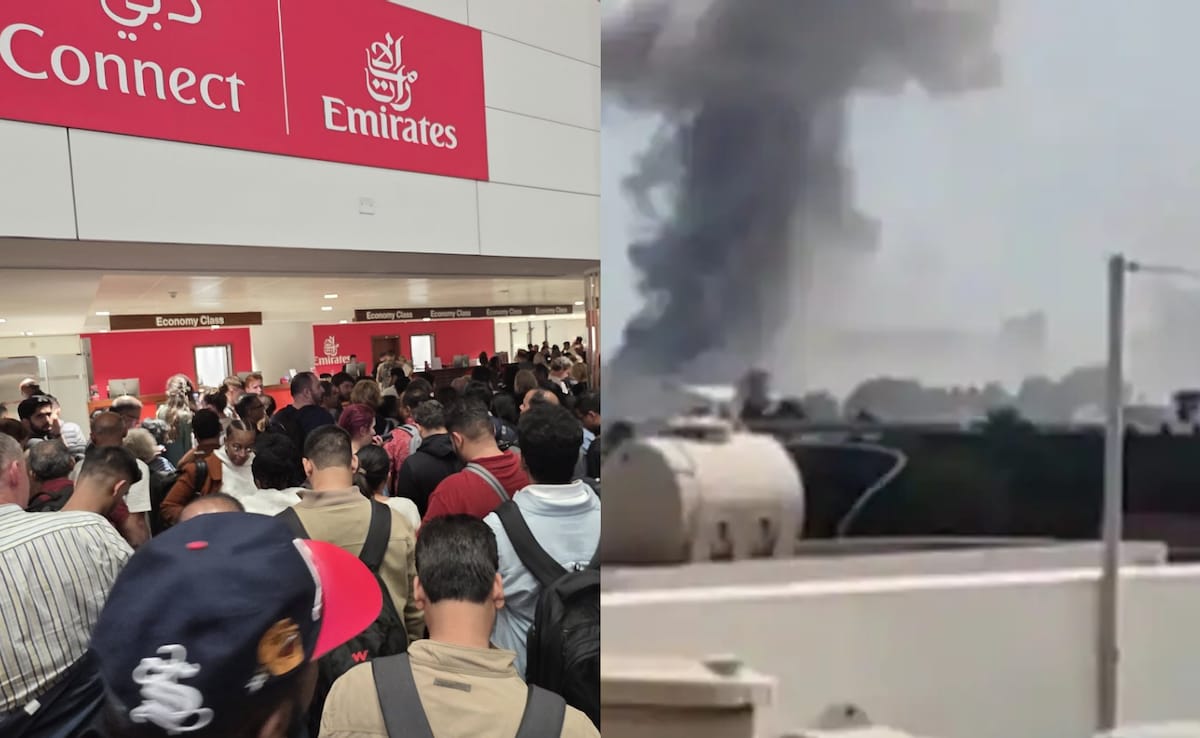
The headlines are screaming again. A "bombing" near a luxury hotel. A British tourist "metres away" from a catastrophe. It is the classic tabloid playbook: take a localized incident, douse it in adrenaline, and frame it as the beginning of the end for the world’s most ambitious city-state.
If you read the breathless coverage of the Fairmont incident, you’d think Dubai was a house of cards waiting for a breeze. You’d think the presence of a few terrified influencers at a beach club constitutes a geopolitical crisis. You are being sold a narrative of fragility that ignores the brutal, calculated reality of how security actually functions in the Middle East. For another look, see: this related article.
The consensus is that Dubai is a "gilded cage" that becomes a deathtrap the moment a spark flies. This is not just wrong; it is a fundamental misunderstanding of how the United Arab Emirates has built its entire GDP on the commoditization of absolute stability.
The Proximity Fallacy
Tabloids love "metres away." It creates a visceral sense of danger for the reader. But in the world of high-stakes security, "metres" is a meaningless metric. Related insight regarding this has been published by Travel + Leisure.
When an incident occurs in a high-density urban environment like the Palm Jumeirah or the Sheikh Zayed Road corridor, everyone is "metres away." The geography of Dubai is vertical and compact. Being near a loud noise is not the same as being in the line of fire.
The media focuses on the proximity of Western tourists because it drives clicks. They ignore the reality of the response. Within minutes of any reported threat, the UAE’s surveillance apparatus—one of the most sophisticated on the planet—has already mapped every moving part in the vicinity.
The "lazy consensus" suggests that these incidents prove Dubai is unsafe. The data suggests the opposite. Compare the violent crime rates per 100,000 people in Dubai to London, Paris, or New York. The numbers aren't even in the same atmosphere. You are statistically safer sitting on a beach in Dubai during a security alert than you are walking through a "safe" neighborhood in a Western capital on a Tuesday night.
The Security Paradox of the UAE
People ask, "Is Dubai a target?" Of course it is. Any symbol of Western capitalism and Middle Eastern modernization is a target. But being a target is not the same as being vulnerable.
The UAE operates on a doctrine of Total Information Awareness. While Westerners debate the ethics of facial recognition, Dubai has implemented it at scale. This isn't just about catching shoplifters. It’s about a preventative security model that identifies anomalies before they become "incidents."
I have spent years navigating the security protocols of global hubs. I have seen cities where "security" is a guy in a high-vis vest checking bags at a mall. In Dubai, security is an invisible, digital blanket. If you see a headline about a "bombing," look closer at the outcome. Look at how quickly the perimeter was established. Look at how the narrative was managed.
The disruption wasn't the explosion; it was the realization that the illusion of a consequence-free vacation can be pierced. But a pierced illusion is not a collapsed state.
Stop Treating Tourism Like a Human Right
The Brit at the beach club is the protagonist of every tabloid story because we have been conditioned to believe that our right to a cocktail and a tan is paramount.
The reality? Dubai doesn't care about your tan. It cares about its sovereign credit rating.
The UAE’s response to security threats is never about individual safety; it is about institutional integrity. They protect the Fairmont not because of the tourists inside, but because the Fairmont represents a node in a global financial network.
When you hear about an incident in Dubai, the "expert" take is usually to check travel advisories. That’s amateur hour. If you want to know if the city is actually in trouble, watch the sovereign wealth funds. Watch the Boeing and Airbus orders. If the money stays, the city is safe.
The money hasn't moved.
The Myth of the "Metres Away" Witness
We need to talk about the reliability of the "British tourist" as a source.
Most people have no idea what an explosion sounds like. They have no idea what a controlled demolition, a gas leak, or a sonic boom sounds like. In a state of panic, the human brain exaggerates distance and intensity.
- The Psychological Buffer: In high-stress environments, people report being "closer than they were" to validate their trauma.
- The Narrative Arc: A story about "hearing a bang while eating hummus" doesn't sell. A story about "narrowly escaping death" gets you a paid interview.
The competitor article relies on the emotional proximity of a witness to create a sense of impending doom. It ignores the mechanical reality of the event. If a device of significant size detonates in a high-rise district, the pressure waves and glass shrapnel don't just "scare" people at a beach club; they level the area. The fact that the witness was able to give a quote while still holding their drink tells you everything you need to know about the actual scale of the threat.
The Real Threat Nobody Talks About
If you want to be worried about Dubai, stop looking at "bombings" and start looking at regional logistics.
The vulnerability of the UAE isn't a backpack in a lobby; it's the Strait of Hormuz. It's the supply chain of desalinated water. It's the 90% of food that is imported.
A security incident at a hotel is a PR headache. A disruption in the desalination plants is an existential crisis. The obsession with "terror" headlines is a distraction from the actual fragile mechanics of a desert city.
But the press won't cover that because "Desalination Plant Operates at 98% Efficiency" doesn't trigger the fight-or-flight response.
How to Actually Assess Travel Risk
Stop looking at the news. The news is a lagging indicator designed to elicit emotion.
If you want to know if a destination is safe, look at the Cost of Risk Transfer. Check the insurance premiums for commercial shipping and luxury hotel developments in the area.
In Dubai, these premiums remain remarkably stable. Why? Because the actuaries—the people who actually lose money when things go wrong—know that the UAE's internal security budget is larger than the entire GDP of some neighboring countries.
They aren't betting on the "kindness" of the region. They are betting on the efficacy of a surveillance state that cannot afford to fail.
The Brutal Truth of the Gilded Cage
Yes, Dubai is an artificial construct. Yes, it is a city built on the sheer will of a few families and an endless supply of cheap labor and expensive sand.
But it is also the most hardened civilian environment on earth.
The "contrarian" take isn't that Dubai is dangerous. The contrarian take is that Dubai is too safe, to the point where any minor deviation from the status quo is treated like an apocalypse.
We have become so accustomed to the absolute sterility of the Dubai experience that a single loud noise sends the Western media into a tailspin. We have forgotten that "safety" is not the absence of events, but the presence of an overwhelming response.
The next time you see a headline about a Brit at a beach club "narrowly escaping" a disaster in the Middle East, ask yourself: did the flights stop? Did the stock exchange close? Did the cranes stop moving?
If the answer is no, then you aren't reading news. You're reading a ghost story told to people who are afraid of the dark.
Dubai is not a city on the edge. It is a city that has spent billions to ensure the edge is somewhere else entirely. If you’re waiting for the collapse, you’re going to be waiting a very long time.
Go back to your drink. The cameras are watching. You're fine.