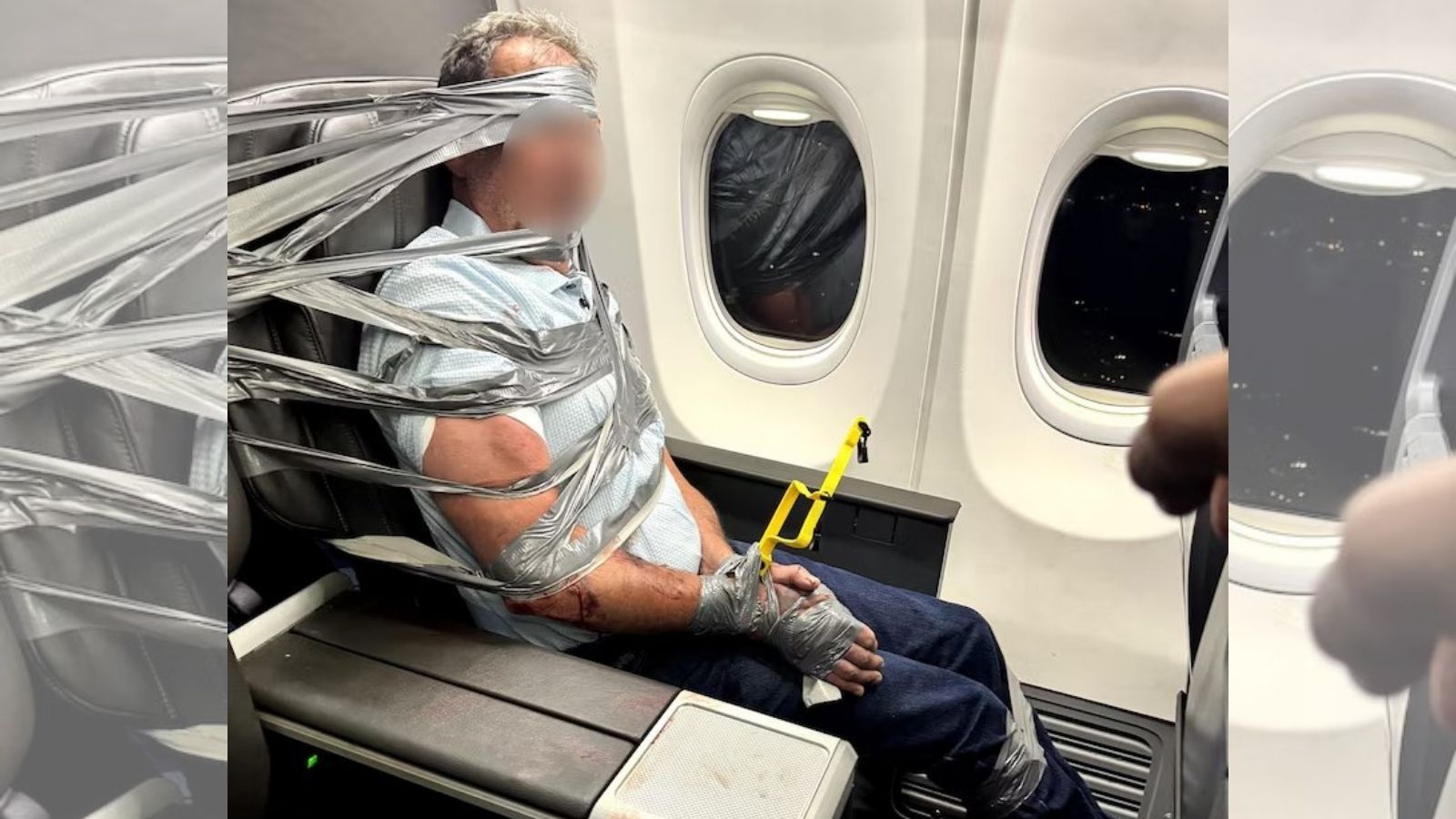
Another week, another viral clip of a passenger bound to a seat with flex cuffs and industrial tape because they lost their minds at thirty-thousand feet. The internet erupts with the usual chorus of pearl-clutching outrage, demanding lifetime bans, heavier federal fines, and air marshals on every regional commuter hop. Everyone points the finger at the individual, calling them unhinged, violent, or feral.
They are missing the plot entirely. Learn more on a connected subject: this related article.
When a passenger snaps so violently that crew members have to resort to cargo straps and hardware-store adhesives, you are not looking at a sudden spike in unhinged human behavior. You are looking at the predictable, mathematically guaranteed failure of an operational model designed to treat paying customers like cattle in a pressurized tin can.
I have spent two decades managing crisis operations and high-stress logistics where human friction points are measured in seconds and millimeters. I have watched multi-million-dollar safety protocols crumble because leadership optimized for asset utilization instead of human physiology. Airlines built a system that turns a six-hour aluminum tube confinement into a psychological pressure cooker, and then acts shocked when the pressure valve blows. Additional analysis by AFAR highlights comparable views on the subject.
Let us dismantle the lazy consensus. The narrative says we need stricter enforcement and harsher deterrents. The data says deterrence does not work on populations pushed past their biological breaking point.
The Chemistry of Cabin Rage
Cabin pressure is maintained at an equivalent altitude of six to eight thousand feet. Oxygen saturation drops. Dehydration accelerates because humidity in a commercial fuselage hovers around ten to twenty percent, drier than the Sahara. Add cramped seat pitches that have shrunk by four inches over thirty years, zero ergonomic support, erratic delays, gate-agent roulette, and alcohol freely flowing from cart to tray table at thirty-thousand feet.
You do not have a customer service issue. You have a pressure chamber engineered to degrade cognitive function.
When cortisol spikes and blood oxygen dips, impulse control is the first casualty of the human nervous system. A minor trigger—a reclining seat, a lost bag, a delayed boarding group—stops being an inconvenience and registers in the amygdala as an existential threat. The passenger does not choose to flip out. Their neurochemistry does it for them.
Airlines know this. They also know that packing three hundred people into a space designed for two hundred and forty generates the quarterly margins Wall Street demands. They trade passenger sanity for yield management, and then outsource the consequences to flight attendants who are expected to double as unarmed correctional officers.
The Myth of the Air Marshal Fix
The knee-jerk policy prescription from the armchair experts is simple: put federal law enforcement on every flight.
It is a logistical fantasy born of economic illiteracy. There are tens of thousands of commercial flights daily in the United States alone. Scaling federal security personnel to cover every domestic trunk route would bankrupt the carriers or skyrocket ticket prices past the point of economic viability. Even if you funded it, throwing armed personnel into a confined space full of volatile amateurs introduces more tactical liability than it solves.
More importantly, law enforcement is downstream of the problem. It reacts to the explosion; it does not cool the reactor.
If you want to stop mid-flight outbursts, you stop treating human beings like inventory. You restore seat pitch. You mandate real-time air turnover rates that do not leave cabins stale and oxygen-starved. You cut off alcohol sales the moment a delay stretches past two hours on the tarmac. You treat ground delays as a human operations crisis, not an accounting inconvenience.
Instead, the industry doubles down on theater. They buy heavier zip ties. They stock stronger tape. They invest in liability waivers and legal teams. They treat the symptom with hardware because fixing the disease would cut into operating margins.
The Brutal Reality of Your Next Flight
The dirty secret of modern commercial aviation is that the social contract between carrier and traveler is completely dead.
The airlines abandoned their side of the bargain decades ago when they stopped viewing passengers as guests and started viewing them as payload units. You are cargo that breathes. When cargo talks back or pushes against the walls of the crate, you get taped down.
Will this change because of a viral video or a sternly worded memo from the Federal Aviation Administration? Not a chance. The quarterly earnings reports look too good. The shareholders demand efficiency, and efficiency means maximum density with minimum breathing room.
Next time you strap into a seat where your knees touch the pocket of the person in front of you, remember that you are sitting inside a corporate calculation. They have already done the math on how many zip ties to keep in the overhead bin. They have already factored the cost of a diversion into the fuel budget.
You are not flying in a transportation network. You are riding in a pressure cooker with wings, managed by executives who pray you keep your cool while they squeeze every last drop of profit out of your bones.
Stop blaming the passenger. Start looking at the architects of the cage.