The heat in Luxor does not just sit on your skin. It weighs on your lungs, thick with the powdered ghost of limestone and the sharp, metallic tang of sweat.
When you scrape away a patch of earth that has remained undisturbed since the Iron Age, your hands shake. It is not from physical exhaustion, though your shoulders ache from hours of wielding a trowel. It is the sudden, terrifying realization that the barrier between the living and the dead has just thinned to the width of a fingernail. If you enjoyed this post, you might want to read: this related article.
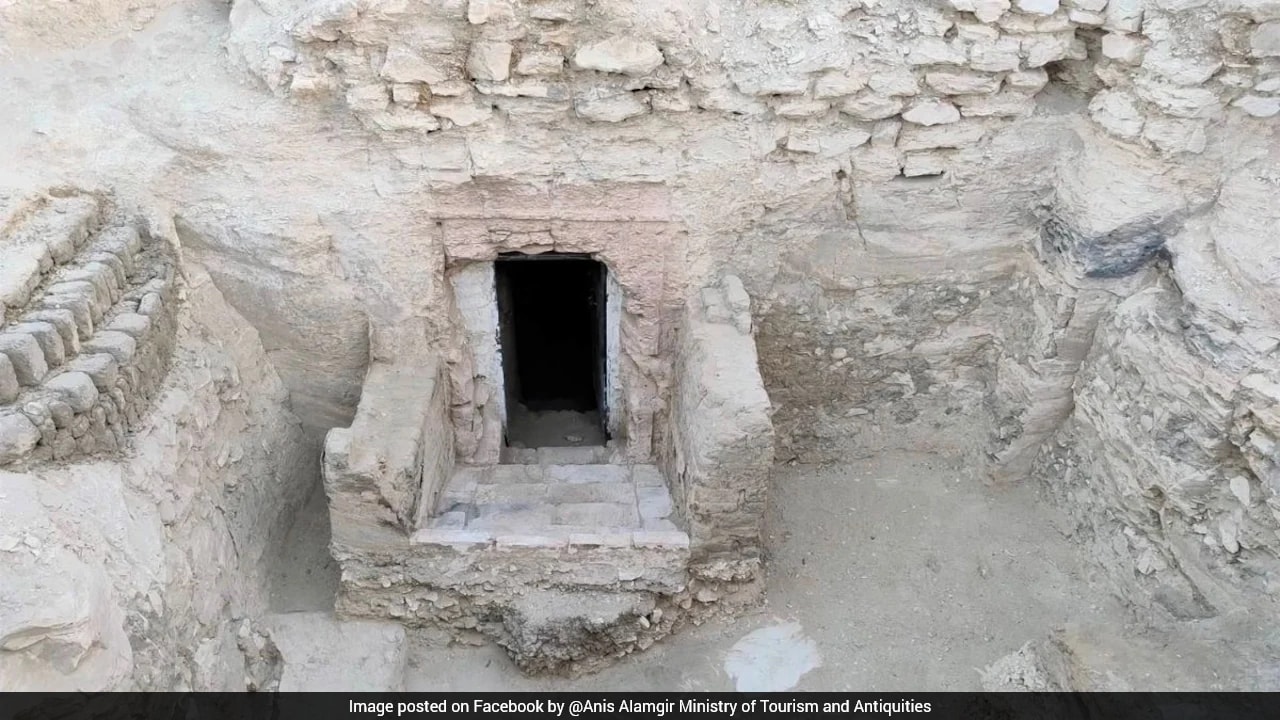
We often treat archaeology as a series of sterile press releases. A line item in an academic journal. A bullet point on a museum placard. We read headlines about a nearly 3,000-year-old tomb from the Ramesside Period being unearthed in Egypt, and we nod, momentarily amused, before scrolling down to check the stock market or the weekend weather.
But behind every discovery is a human being who sat in the dark, thousands of years ago, wondering if anyone would ever remember their name. And behind the discovery is another human being today, blinking through dust goggles, holding their breath because they just noticed a stroke of bright blue paint hiding beneath three millennia of dirt. For another angle on this event, check out the recent coverage from National Geographic Travel.
The Sound of Shifting Earth
To understand the weight of the Ramesside discovery in Luxor, you have to forget the postcards of the Pyramids. You have to forget the gold mask of King Tutankhamun. The real history of Egypt is painted on the walls of tombs tucked into the rugged valleys of the West Bank, where the sun sets into the kingdom of the dead.
Consider the ordinary rhythm of an excavation. It is tedious. It is boring. For every hour of discovery, there are weeks of moving bucket after bucket of gray, featureless sand. The sun beats down with a fierce, blinding intensity. Your water turns lukewarm in its canteen within twenty minutes.
Then, the trowel hits something that does not sound like stone.
It is a hollow thud. A scrape that carries a distinct resonance.
When the Egyptian archaeological mission working near the tomb of Amenhotep II cleared away the debris, they were not looking for a grand monument to a pharaoh. They were tracing the edges of the ancient world, piece by piece. What they found instead was a doorway. A limestone threshold leading down into a chamber that had not breathed oxygen since the reign of the Ramesside kings, an era that stretched across the 19th and 20th Dynasties when Egypt was trying desperately to hold onto its golden empire.
The air that rushes out of a newly opened tomb is heavy. It smells of old stone, dried mud, and an inexplicable, ancient dryness that parches your throat instantly. It is the smell of time itself, trapped and concentrated in a space no larger than a modern living room.
The Scribe in the Shadow of the Pharaohs
Let us create a name for the person who might have overseen the sealing of this tomb, a man we will call Amenemhat. He is a hypothetical figure, but his reality is written in every chisel mark on the walls.
Amenemhat was a scribe of the divine offerings. He was not a king. He never commanded armies, nor did he have his name carved onto giant obelisks that kissed the sky. He was a middle-class bureaucrat. He worried about his grain rations. He worried about his children’s education. He worried about whether the local stonecutters were overcharging him for his final resting place.
When Amenemhat walked through the streets of Thebes—the city we now call Luxor—the world was changing around him. The glorious peaks of the 18th Dynasty, the era of Hatshepsut and Akhenaten, had faded. The Ramesside pharaohs were fighters, builders of massive temples, but the edges of the empire were fraying. The sea peoples were invading the coastlines. Inflation was rising. The world felt unstable.
In times of uncertainty, humans look toward eternity.
Amenemhat invested everything he had into his tomb. He hired artists who worked by the flickering light of linen wicks dipped in castor oil. He watched them mix ground lapis lazuli, malachite, and yellow ochre with water and animal glue. He wanted the walls to show him as he wished to be remembered: handsome, prosperous, standing before the gods of the underworld with a clean heart.
When the tomb was finally finished, and Amenemhat was laid to rest, his family brought offerings of beer, bread, and roasted geese. They wept, they sang, and then the workers slid the heavy limestone blocks into place. They plastered over the cracks. They threw handfuls of desert sand over the entrance until it blended perfectly with the hillside.
They walked away, believing the silence would last forever.
The Survival of Color
The most shocking part of entering a Ramesside tomb is not the architecture. It is the color.
Our modern world has stripped ancient history of its vibrancy. We look at Greek statues and see white marble. We look at Roman ruins and see gray stone. We think of the past as a monochrome world, a faded photograph.
Luxor shatters that illusion.
As the dust settled in the newly cleared chamber, the flashlights of the archaeological team caught fragments of wall paintings that looked as though they had been brushed on yesterday. The yellows are as bright as sunflowers. The reds possess a deep, brick-like warmth. The eyes of the figures painted on the walls—outlined in thick, dramatic lines of black kohl—stare back at you with an intensity that is deeply unsettling.
They are looking at us. We are looking at them.
The gap of three thousand years vanishes in an instant. You realize that the artist who painted that arm, who curved that hieroglyph just so, was an ordinary person who got tired, who complained about the quality of the beer, who had a cramp in his hand from holding the brush for too long.
But why does this discovery matter more than the others?
Luxor is already an open-air museum, crowded with tombs and temples. Why should we care about another hole in the ground?
The answer lies in the gaps of our knowledge. History is a book with half its pages torn out. Every time a tomb like this is discovered, we find one of those missing pages. It tells us how the ordinary people lived, what they feared, and how they viewed their place in a universe that seemed to be collapsing around them. It provides context to the grand narratives of the pharaohs, showing the human infrastructure that kept the empire running.
The Weight of the Trowel
Working on an active dig site changes your relationship with time.
You begin to notice that the problems of the ancient Egyptians were not so different from our own. They worried about legacy. They worried about their families being taken care of after they were gone. They spent their hard-earned money on insurance policies for the afterlife.
There is a profound vulnerability in excavating a tomb. You are, by definition, an intruder. You are breaking into a space that was designed to be private, sacred, and eternal. The team of Egyptian researchers who made this discovery do not treat it lightly. They do not tear through the stone with heavy machinery.
They use soft brushes. They use dental picks. They move with the patience of surgeons.
Consider what happens next: the conservation team moves in. They analyze the chemical composition of the plaster. They stabilize the flaking paint with specialized resins. They translate the hieroglyphs, reading aloud the names of the dead for the first time in millennia. There is an ancient Egyptian proverb that states: "To speak the name of the dead is to make them live again."
When an archaeologist reads those inscriptions, they are performing an act of resurrection.
The heat outside the tomb continues to bake the valley. The tourists line up at the Valley of the Kings, cameras clicking, voices murmuring in a dozen different languages. They look at the grand monuments, amazed by the scale.
But the true magic of Egypt is found in the quiet corners, in the small tombs of the scribes and craftsmen that are still waiting beneath the sand. It is found in the realization that three thousand years is just a drop in the ocean of human experience. The people who built these tombs were not gods, nor were they aliens, nor were they mythical figures.
They were just like us. They loved, they feared, they worked, and they died. And today, a group of tired workers in Luxor wiped the sweat from their brows, cleared away a handful of dirt, and brought them back into the light.