The coffee in the paper cup has long gone cold, but nobody standing in the damp October drizzle seems to notice. It is barely seven in the morning in a suburb outside Philadelphia. A line already wraps around the corner of the municipal building—stretching past the parked minivans, past the neatly trimmed hedges, all the way down to the edge of the asphalt.
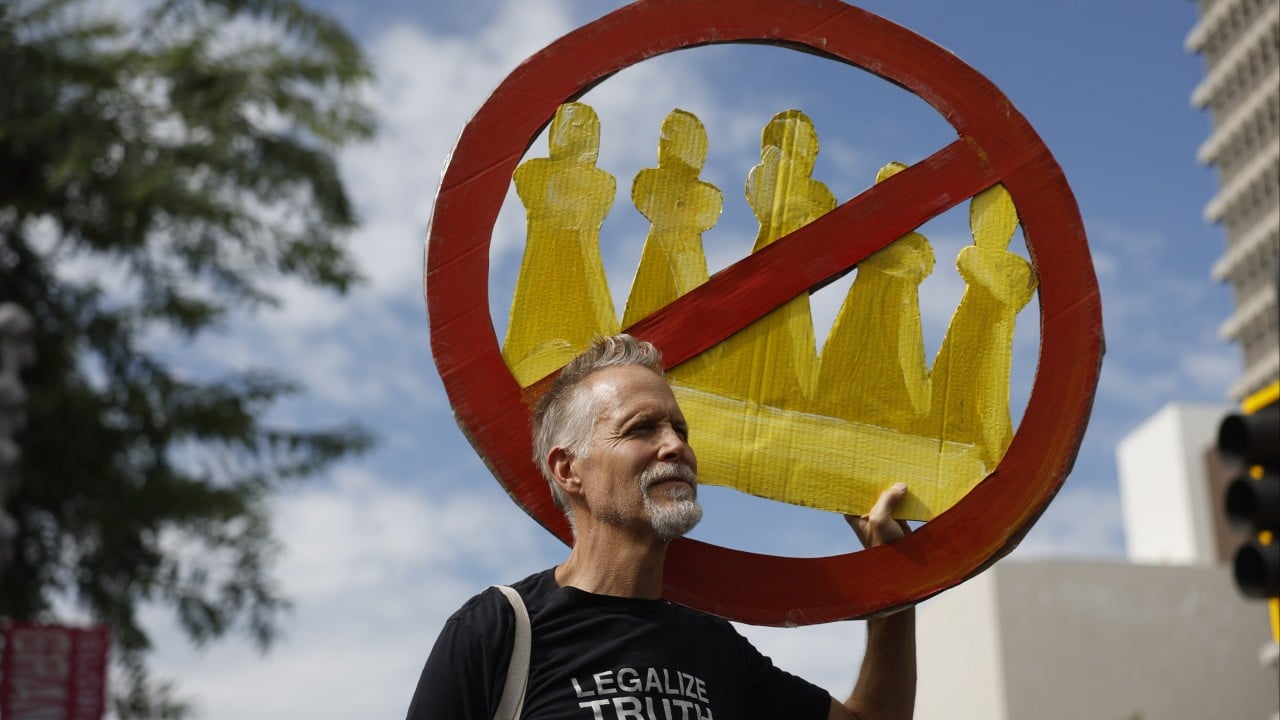
People are holding signs. Not the glossy, machine-printed variety handed out by national campaigns, but pieces of poster board lettered with heavy black markers at kitchen tables the night before. No Kings. Two words, simple and stark, echoing a sentiment older than the nation itself.
To an outsider, the scene looks like a routine political rally. But look closer at the hands holding the coffee cups, the parents adjusting their children’s hoods, the retirees shifting their weight on portable lawn chairs. This isn't just about turnout metrics or precinct strategy. It is a quiet, desperate, and deeply human movement to stake a claim on the future before the polls officially open.
Across the United States, events operating under the banner of "No Kings" have begun sprouting in church basements, community centers, and public parks. Their stated goal is practical: push voters to cast their ballots early, long before election day chaos sets in, and build an airtight buffer against political overreach. But their true engine is emotional. It is the raw, collective anxiety of citizens who feel the ground shifting beneath their feet and have decided that waiting until the final hour is no longer an option.
The Weight of the Early Ticket
Consider Sarah. She isn't a professional organizer. She works thirty-five hours a week at a logistics firm and spends her evenings managing a household of four. Six months ago, the phrase "early voting window" meant very little to her beyond a passing mention on the evening news.
Then came the rhetoric. The steady drumbeat of speeches suggesting that executive power should expand, that checks and balances were mere suggestions, and that national leadership ought to operate with unchecked authority. For Sarah, something snapped—not with anger, but with a sudden, chilling clarity.
"I realized that if I wait until the Tuesday of the election, I'm just reacting," she says, her fingers wrapped tightly around a clipboard filled with volunteer sign-up sheets. "If I go early, if I get ten of my neighbors to go early, we aren't just participating. We are building a wall."
Sarah’s realization highlights a fundamental shift in how Americans view the ballot. For generations, voting on Election Day was a cherished civic ritual—a shared moment of national convergence. But as political tension has escalated, that single day has started to feel like a bottleneck, easily disrupted by long lines, equipment failures, or last-minute intimidation tactics.
The "No Kings" gatherings target this exact vulnerability. By reframing early voting not merely as a convenience, but as a deliberate strategy of democratic self-defense, these events transform passive sentiment into immediate action.
The Mechanics of Sovereignty
The math behind the movement is straightforward, even if the emotions driving it are complex.
When a voter casts a ballot early, several structural changes occur at once:
- Resource Relief: Local election offices absorb the administrative load over weeks rather than hours, reducing the risk of technical bottlenecks on the final day.
- Campaign Realignment: Campaigns stop spending resources trying to persuade individuals who have already voted, shifting their focus to harder-to-reach pockets of the electorate.
- Security in Numbers: A massive bank of early votes creates a clear, undeniable paper trail long before the high-pressure environment of election night begins.
Yet, numbers alone do not pull people out of bed at dawn on a freezing Saturday. The driving force is the historical echo embedded in the phrase No Kings.
America was born out of an explicit rejection of monarchical rule. The founders, flawed as they were, designed a system explicitly engineered to prevent any single individual from accumulating absolute power. When modern political campaigns lean into authoritarian optics—promising swift, unchecked action at the expense of established legal norms—it triggers an instinctive alarm in a specific segment of the populace.
The "No Kings" events operate as a physical manifestation of that alarm. They are intentional reminders that in a constitutional republic, authority is borrowed, temporary, and strictly conditional.
Beyond the Noise of the Square
Walk through one of these gatherings and the atmosphere is strikingly different from a typical campaign rally. There are no booming loudspeakers playing classic rock tracks. There are no high-profile surrogates giving polished stump speeches.
Instead, you hear low, earnest conversations.
A retired high school history teacher explains the mechanics of mail-in ballot tracking to a first-time voter. A group of college students coordinates carpools to transport elderly residents to county clerk offices. Volunteers sit at folding tables, meticulously verifying voter registration statuses on tablets, double-checking addresses, and clearing up confusion about local ID laws.
This is tedious, unglamorous work. But it is precisely where the battle for democratic resilience is fought.
The strategy relies on a simple truth about human behavior: action dissipates anxiety. When people feel overwhelmed by national headlines, by the relentless noise of social media, and by the looming specter of political instability, feeling helpless is the default condition. Providing a concrete task—cast your vote today, help your neighbor cast theirs tomorrow—restores agency.
What Happens When the Line Ends
As the morning progresses in Pennsylvania, the rain turns into a fine mist. The line outside the municipal building does not shrink; it grows.
By noon, hundreds of ballots have been deposited into the secure drop box near the entrance. Each envelope dropped through the slot makes a soft, metallic thud—a quiet sound, almost lost under the rustle of jackets and the murmur of the crowd.
This movement will not be measured by the size of its rallies or the viral reach of its slogans. It will be measured in those quiet thuds, repeated thousands of times in precincts across the country, day after day, until the final deadline arrives.
The people standing in the rain understand something fundamental about the system they are trying to protect. Democracy does not survive because of abstract principles written on old parchment. It survives because ordinary citizens decide, on ordinary mornings, to stand in line and ensure that no single person ever gets to act like a king.
The cold coffee is finally tossed into a recycling bin. Sarah checks another name off her list, adjusts her jacket, and turns to welcome the next car pulling into the lot. There are still four hours left before the doors close for the day, and the line shows no sign of ending.



