The declaration of a Public Health Emergency of International Concern (PHEIC) by the World Health Organization regarding the Ebola virus outbreak in the Democratic Republic of the Congo (DRC) is not a mere bureaucratic signal; it is a recognition of a systemic failure in localized containment. With 87 confirmed fatalities attributed to a rare strain, the situation reveals a critical breakdown in the "Containment Calculus"—the mathematical relationship between viral virulence, transmission velocity, and the logistical friction of the operating environment. This analysis deconstructs the biological variables of the virus and the structural bottlenecks that transform a regional medical event into a global security risk.
Viral Architecture and the Transmission Vector
Ebola virus disease (EVD) is characterized by a high case-fatality rate (CFR), often exceeding 50% in untreated populations. The current strain demands a precise understanding of its kinetic profile. Unlike respiratory viruses that rely on aerosolized droplets, Ebola is a blood-borne and fluid-borne pathogen. Its success as a killer is predicated on the exploitation of human proximity during the peak of symptomatic distress.
The viral entry mechanism targets monocytes, macrophages, and dendritic cells. This initial infection triggers a systemic inflammatory response, resulting in a "cytokine storm" that compromises vascular integrity. The fundamental pathology is defined by:
- Vascular Permeability: The destruction of endothelial cell junctions, leading to internal and external hemorrhaging.
- Coagulopathy: The consumption of clotting factors, which induces a paradoxical state of disseminated intravascular coagulation.
- Immune Subversion: The virus produces VP35 proteins that inhibit the host’s interferon response, allowing the viral load to achieve exponential growth before the adaptive immune system can mount a defense.
This biological profile dictates the transmission logic. Because the viral load is highest at the point of death, traditional burial practices and end-of-life care become the primary engines of the outbreak. The 87 deaths recorded in the Congo represent 87 distinct nodes of high-risk exposure, where the concentration of virions per milliliter of fluid reaches its zenith.
The Triad of Epidemiological Failure
The transition from a cluster of cases to an international emergency is driven by three specific variables: the surveillance gap, the trust deficit, and the logistical friction of the "Deep Jungle" geography.
The Surveillance Gap
Effective containment requires a Case Fatality Ratio (CFR) that decreases over time as detection improves. If the CFR remains static while deaths rise, it indicates that the surveillance apparatus is only capturing "end-stage" data. We are seeing the results of an infection after it has already occurred, rather than identifying the chain of transmission in real-time. This lag creates a "phantom" transmission chain where the virus moves through the population undetected until a symptomatic cluster reaches a hospital, or more likely, a mortuary.
The Trust Deficit and Social Resistance
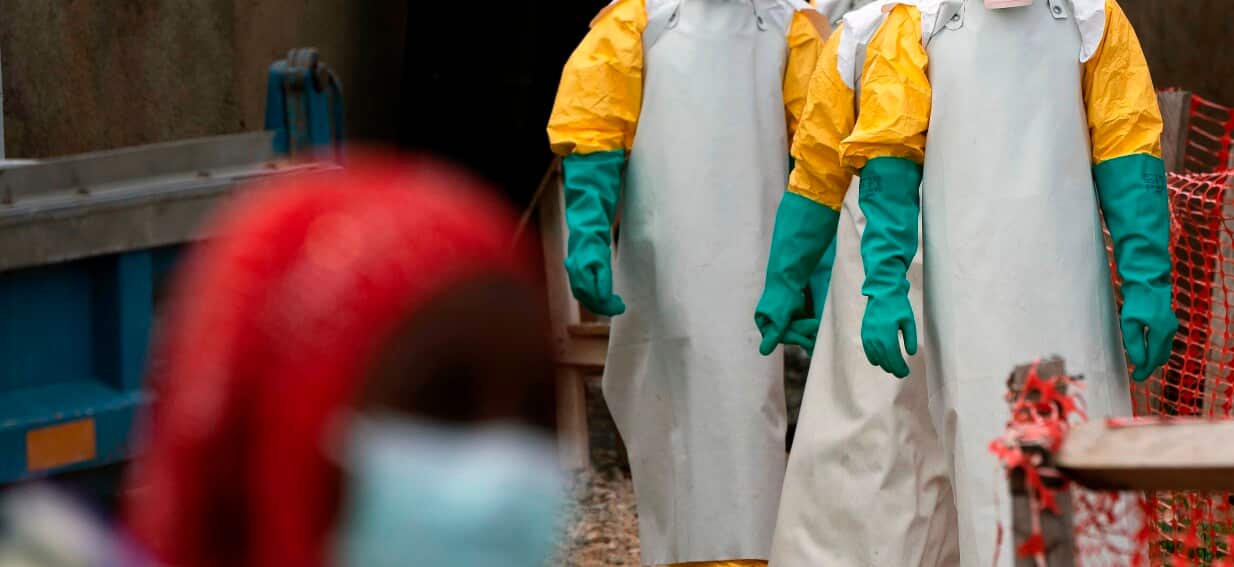
In the DRC, medical intervention is frequently viewed through a lens of historical and political suspicion. This is not an irrational response but a calculated reaction to decades of instability. When healthcare workers arrive in biohazard suits (Personal Protective Equipment), they appear as faceless agents of an external state. This creates a psychological barrier that prevents early reporting. Resistance to "safe and dignified burials" remains the single greatest hurdle. If the community perceives the medical response as an interference with sacred rites, they will hide the sick, effectively decentralizing the outbreak and making contact tracing a mathematical impossibility.
Logistical Friction
The Congo Basin presents an environment where the "Cold Chain" for vaccines and treatments is nearly impossible to maintain. The rVSV-ZEBOV vaccine requires storage at $$-60°C$$to$$-80°C$$. In a region with zero reliable power grid and infrastructure consisting of unpaved forest tracks, the delivery mechanism becomes a greater challenge than the biological science. The "Last Mile" of delivery is where the virus wins.
The Economic Cost Function of Containment
The declaration of a PHEIC triggers a shift in funding and resource allocation, but it also imposes an immediate economic penalty on the host nation. The Cost Function of an Ebola outbreak can be modeled as:
$$Total Cost = C_{m} + C_{l} + C_{t}$$
Where:
- $C_{m}$ is the direct medical cost (PPE, isolation units, personnel).
- $C_{l}$ is the loss of labor and human capital.
- $C_{t}$ is the trade and travel disruption cost.
The international community often focuses on $C_{m}$, yet $C_{t}$ is what devastates the local economy. When borders close and flight paths are diverted, the formal and informal trade routes that sustain the population collapse. This economic strangulation further erodes trust in the international health response, as the "cure" appears to be more damaging to the community’s survival than the virus itself.
Strategic Limitations of the PHEIC Declaration
While the WHO’s declaration mobilizes international law (International Health Regulations 2005), it is limited by the lack of enforcement mechanisms. A PHEIC is a recommendation, not a mandate. This creates a two-tiered problem:
- The Over-Reaction Risk: Neighboring states may close borders against WHO advice, stifling the flow of essential medical supplies and experts.
- The Resource Allocation Lag: International funding often arrives in a "reactive" burst rather than a "proactive" stream. By the time the funds are disbursed and converted into field hospitals, the virus has likely moved to a new geographic cluster.
Deployment of the Ring Vaccination Strategy
The most effective tactical tool available is Ring Vaccination. This involves identifying a "contact" (an individual who has interacted with an infected person) and vaccinating all "contacts of contacts." This creates a human buffer zone of immunity that prevents the virus from finding a new host.
The success of this strategy is contingent on 100% accuracy in contact tracing. If a single high-risk individual is missed due to social stigma or movement across a porous border, the "ring" is broken. In the current DRC context, the high mobility of the population—driven by conflict and trade—means the ring is constantly being stretched.
Operational Requirements for Containment
To move beyond the current plateau of 87 deaths and prevent a multi-country epidemic, the intervention must pivot from a purely medical model to an integrated security and social model.
- Decentralized Isolation: Instead of large, centralized Ebola Treatment Centers (ETCs) that require long-distance transport of the sick, the response must utilize smaller, community-integrated isolation pods. This reduces the "fear factor" and keeps the patient closer to their support network while maintaining bio-safety.
- Point-of-Care Diagnostics: Current diagnostic delays (waiting for lab results from distant cities) allow the virus to spread. Deploying rapid, field-stable molecular diagnostic tools is non-negotiable for real-time contact tracing.
- Neutralizing the Shadow Outbreak: Surveillance must extend to the "hidden" population—those who die at home. This requires a shift in focus from hospitals to community leaders, utilizing them as the primary data sensors.
The rare strain identified in this outbreak suggests a potential for different clinical presentations or increased environmental resilience. If genomic sequencing confirms a significant mutation in the glycoprotein (GP) of the virus, existing monoclonal antibody treatments may see reduced efficacy. This would necessitate a rapid pivot in the pharmaceutical pipeline, moving from standard ZMapp-style treatments to broader-spectrum antivirals.
The current trajectory indicates that unless the "Last Mile" logistical and social barriers are addressed with the same rigor as the viral science, the death toll will continue to climb. Containment is not a matter of medicine alone; it is a matter of closing the gap between the speed of the virus and the speed of the social and logistical response. The international community must prepare for a long-duration engagement that prioritizes local infrastructure over temporary field tents.