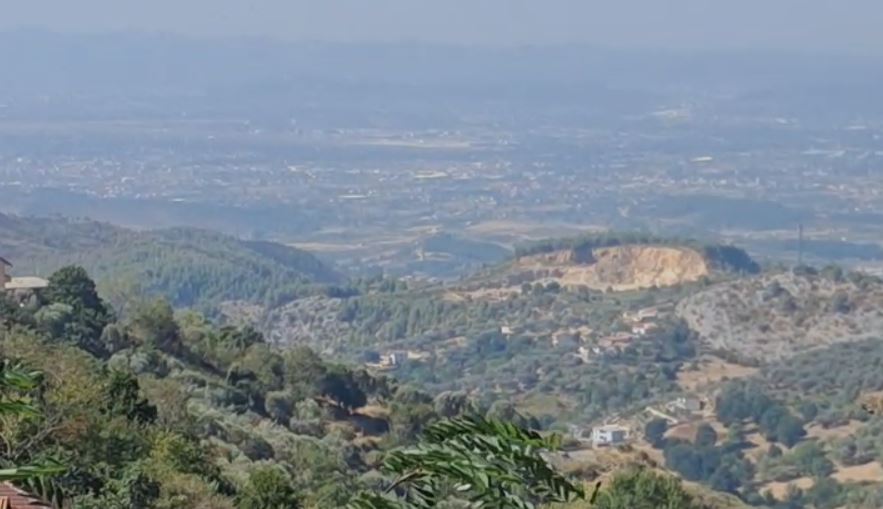
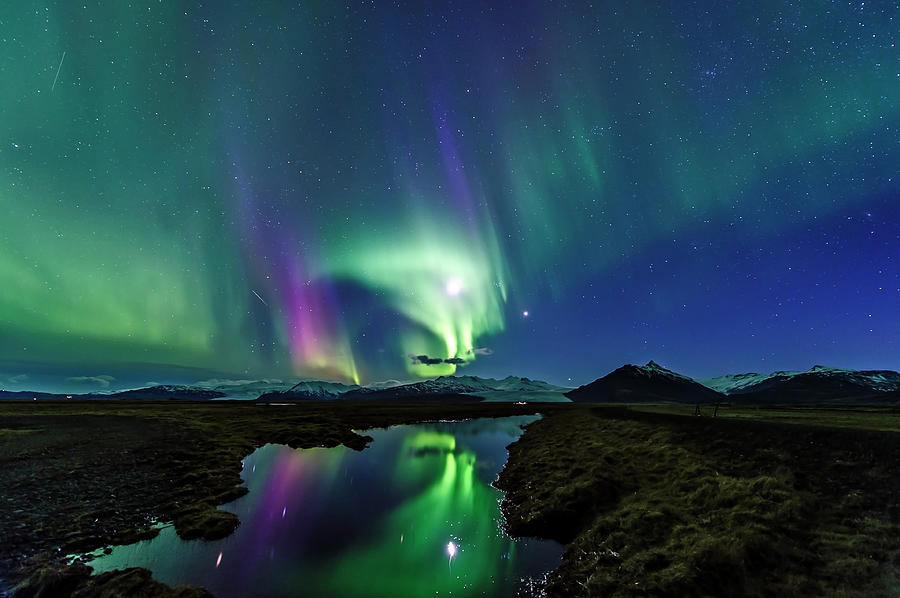
The air in Dharamshala smells of pine, melting butter lamps, and the quiet weight of memory.
Morning arrives here not with a gentle sun, but with a sharp light that cuts through the mist clinging to the Dhauladhar range. Down in the narrow alleys of Mclaren Ganj, prayer wheels spin in a rhythm older than most modern borders. Monks in crimson robes walk shoulder-to-shoulder with Tibetan shopkeepers who have never seen the grasslands of Amdo or the high plateau of Lhasa. They carry their home in their chests.
On this particular August morning, the mountains carry something else. The distant, resonant bass of a celebration from a neighboring nation.
India is turning eighty.
Across the plains and cities of the subcontinent, tricolor flags snap in the monsoon wind. Millions mark eight decades of self-determination, of breaking the heavy chains of colonial rule, of writing a national destiny from scratch. But here, tucked into the Himalayan foothills where the Tibetan government-in-exile finds its fragile sanctuary, the milestone lands with a complex, aching resonance.
It is a celebration, yes. But it is also a mirror.
Consider Penpa Tsering, the Sikyong, the democratically elected political leader of the Tibetan administration. Standing before a crowd gathered under the crisp mountain sky, he does not merely offer polite diplomatic congratulations to Delhi. He draws a line. A straight, unyielding line connecting the hard-won freedom of the world's largest democracy to the unfinished, agonizing struggle of a stateless people.
Listen to his words hang in the mountain air.
Eighty years of freedom. Think of what that number actually means. It means infants born on the stroke of midnight grow old, raise children, plant gardens, and die under a flag of their own making. It means generations who never had to look over their shoulder for an occupying soldier. It means sovereignty.
For the Tibetans watching the tricolor flutter against the monsoon clouds, that concept is both an inspiration and a ghost.
To understand why India's Independence Day matters so deeply in these uphill streets, you have to look past the official press releases and dive into the texture of daily survival. Exile is not a romantic poetic device. It is bureaucratic limbo. It is a stack of identity documents that call you a foreigner in the only land that offered you shelter. It is the slow, agonizing erosion of a language spoken in whispers across a closed border.
Yet, for over sixty years, Dharamshala has stood as an extraordinary anomaly. It is an administrative heart beating without a body. A government-in-exile functioning not by force of arms, but by the sheer, stubborn will of a displaced community that refuses to let its culture dissolve into the dust of history.
When the Sikyong speaks to the crowd, his voice carries the weariness of a decades-long diplomatic marathon, but also the stubborn spark of hope. He points to India's journey—a subcontinent fractured by partition, burdened by staggering poverty, written off by cynical imperialists who predicted immediate collapse—and notes how it clawed its way to global standing through resilience and democratic institutions.
If India could do it, the underlying argument goes, then freedom is not an impossibility. It is merely a matter of endurance.
Walk down through the temple courtyard near the Dalai Lama's residence. The afternoon rain has started, turning the slate pathways slick and shiny. An elderly Tibetan man sits on a low wooden bench, his fingers rhythmically turning a brass prayer bead for every breath. He pauses, looking down toward the valley where the road winds away toward the plains.
He remembers 1959. He remembers the snowstorms, the crossing of the high Himalayan passes, the gnawing hunger, and the terrifying uncertainty of stepping onto Indian soil with nothing more than the clothes on his back.
He has lived long enough to see his grandchildren graduate from Indian universities, speak fluent English alongside Tibetan, and code websites on modern laptops. He has also lived long enough to watch satellite imagery show Chinese settlements creeping deeper into ancestral Tibetan valleys, rewriting place names and scrubbing the Tibetan alphabet from public life.
This is the psychological tightrope of Dharamshala. Gratitude and grief living in the same room.
The celebration of India's milestone becomes a collective exercise in projection. For a few hours, the exiled community steps into the light of national triumph. They wave small paper flags. They share plates of sweet rice and steaming milk tea. Young Tibetans, born thousands of miles away from Lhasa, dance in traditional circle formations, their boots thumping against the concrete courtyard in synchronized defiance.
They are not just celebrating a friendly neighbor's birthday. They are rehearsing for their own.
Critics in distant capitals often dismiss exile politics as a fading echo. They look at the entrenched military power of the modern Chinese state, calculate the economic leverage of Beijing, and quietly advise the Tibetans to pack away their banners and accept a permanent minority status under a foreign flag. They call realism what is actually moral surrender.
But history is rarely a straight line dictated by current balance sheets. Empires that look invincible at dawn have a habit of fracturing by dusk. The Berlin Wall fell to tired people with hammers. Apartheid crumbled under the weight of its own internal rot. Freedom, once ignited in the human heart, proves remarkably difficult to extinguish with surveillance cameras and re-education camps.
This is why the Sikyong's comparison strikes such a raw nerve.
Eighty years ago, the British Empire seemed permanent to anyone standing in the streets of Delhi or Calcutta. The machinery of colonial control was total, institutionalized, and seemingly absolute. Yet it broke. It broke because millions of ordinary people simply decided that dignity was non-negotiable.
As the sun dips behind the jagged silhouette of the mountains, the celebratory banners in Dharamshala begin to flutter in the evening chill. The crowds disperse back to their guest houses, their carpet-weaving workshops, and their classrooms. The butter lamps flicker out one by one.
Up here, high above the plains where a billion people celebrate their sovereignty, the struggle continues in quiet classrooms, in translation archives preserving ancient Buddhist texts, and in the steady, unbroken gaze of a people who refuse to forget who they are.
The mountains remain silent witnesses. They have seen empires rise, consume themselves, and turn to dust. And somewhere in the dark, a prayer wheel turns, waiting for the dawn.