The humidity in Causeway Bay hangs like a wet wool blanket. It sticks to the skin, traps the exhaust fumes of idling double-decker buses, and makes every breath feel heavy. On any normal summer afternoon, the intersection near the SOGO department store is a sea of shopping bags, iced milk teas, and the relentless beep of Octopus cards tapping through turnstiles.
But July first is never a normal day.
Years ago, this date meant something entirely different. The streets would swell with a human tide. Hundreds of thousands of people, side by side, carrying banners and singing under the blistering sun, marching from Victoria Park down Hennessy Road. It was a annual ritual, a loud, chaotic, vibrant expression of a city’s distinct identity.
Today, the silence is deafening.
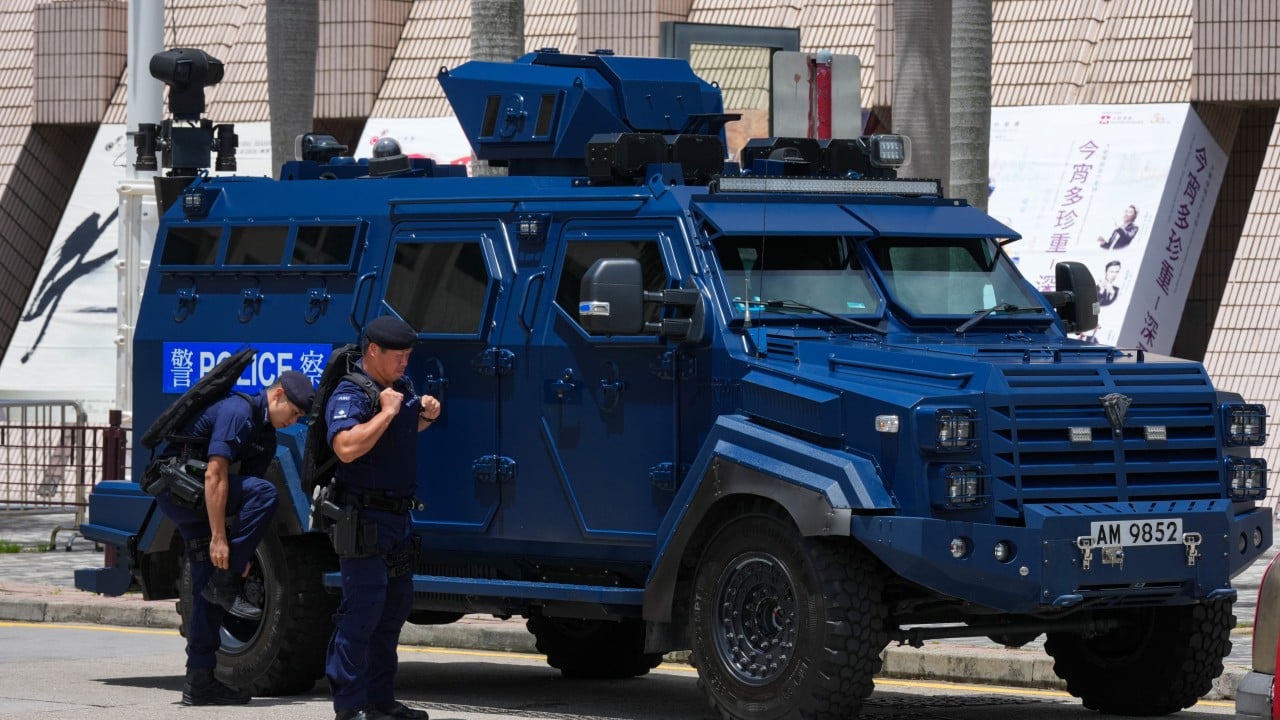
Instead of a sea of protestors, there is a sea of blue. Police officers stand in tight clusters at every major corner. Tactical vests. Pepper spray canisters. Radios buzzing with static and clipped commands. The atmosphere is thick with a different kind of tension, one that makes ordinary pedestrians lower their heads and quicken their pace.
Consider what happens when a city's public square shrinks to the width of a sidewalk.
A young man walks past the department store. Let us call him Leo—a hypothetical composite of the young people who still navigate these streets, carrying the weight of a changing era. He wears a plain black t-shirt and a dark backpack. In the past, this was just clothing. Today, it is a target.
An officer steps into his path. A hand goes up. A polite but unyielding command to stop.
Suddenly, Leo is no longer just a commuter trying to meet a friend for dinner. He is a subject of scrutiny. He is guided gently but firmly toward a cordoned-off area against a storefront window, where blue plastic tape separates the examined from the examiners. Passersby glance over, then look away instantly. No one wants to look too closely. To look is to involve oneself, and involvement is a luxury few can afford.
The officers go through his bag. They unzip every compartment. They flip through a notebook. They examine his wallet. This is the reality of the modernized policing strategy in the city, where preventive stop-and-search operations have replaced active crowd control. On this single afternoon, police stopped and searched at least fifteen individuals in these former protest hotspots.
Imagine the psychological weight of that moment. The vulnerability of having your personal belongings laid out on a folding table in the middle of a public street while tourists walk past with shopping bags. It is a quiet exercise of authority, designed not to make a scene, but to maintain absolute predictability.
Then, the rhythm breaks.
A few blocks away, near Victoria Park, a man in his fifties begins speaking loudly. He isn't carrying a sign. He isn't throwing anything. But his voice rises above the low hum of the traffic, carrying words that slice through the carefully managed quiet. Within seconds, the blue shirts converge.
The movement is swift and practiced. A tight circle forms around him, blocking him from public view. The radios crackle with higher urgency. A police van pulls up to the curb, its side door sliding open with a heavy metallic clank.
The man is escorted inside. The door slams shut. The van pulls into the traffic flow, disappearing past the neon signs and shopping malls. Officers later confirm that a man was taken away for inquiries, though no formal charges are immediately announced. The sidewalk clears. The space heals over as if nothing happened.
But the memory remains in the eyes of those who watched from the tram stops.
This is how the new normal operates. It is not characterized by the dramatic clashes of yesterday, but by the meticulous, quiet management of public space. The stakes are invisible, playing out in the minds of everyday citizens who must constantly recalibrate what they say, what they wear, and where they walk.
The street remains open. The buses keep running. The neon lights keep flashing. But under the heavy summer sky, the city moves to a vastly different beat, wondering if the old march will ever be anything more than a fading memory.