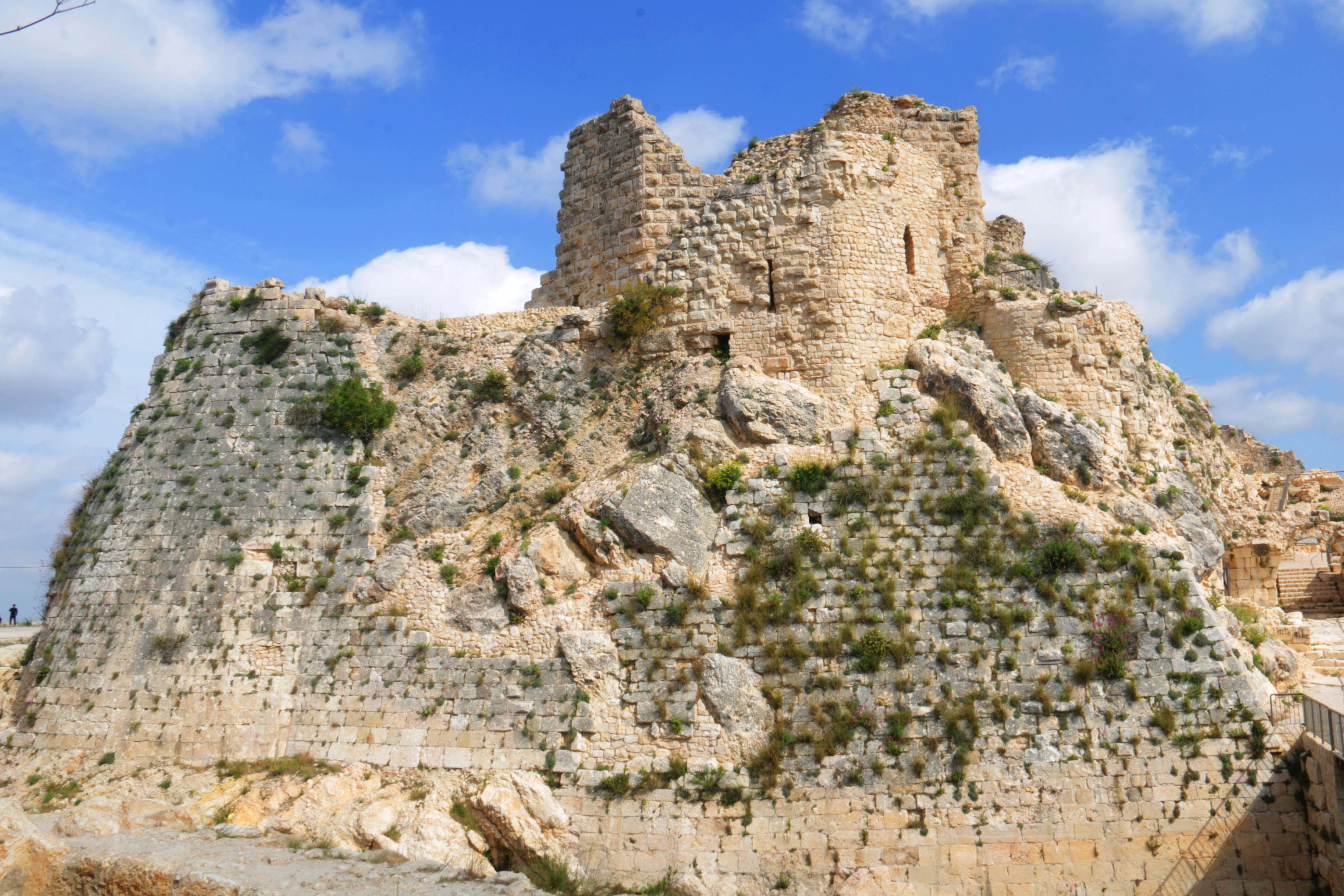
History has a cruel way of repeating its geometry. On a jagged ridge in southern Lebanon, a fortress of limestone and mortar cuts into the sky, casting a shadow that has dictated the terms of survival for nearly a millennium. It is called Beaufort Castle, or Qala’at al-Shaqif. To a military cartographer, it is simply a high-value coordinate, a strategic vantage point overlooking the Litani River. To the people who live beneath its gaze, it is something much heavier. It is an iron-fisted ruler that never sleeps.
When news broke that the Israeli army had captured this ancient stronghold once again, the headlines read like a standard ledger of modern warfare. Positions secured. Strategic heights occupied. Textbooks will call it a logistical triumph of high-tech maneuver warfare.
But military dispatches cannot capture the smell of wild thyme crushed under the treads of armored vehicles. They do not record the specific, terrifying silence that falls over the surrounding valleys when the guns on the ridge change hands. To understand what just happened in southern Lebanon, you have to look past the troop movements. You have to look at the stones.
A View From the Precipice
Imagine standing on the highest rampart of Beaufort on a clear morning. Below you, the land drops away into a staggering vertical abyss. The Litani River snakes through the gorge like a silver ribbon. To the south, the rolling hills of Galilee stretch out into Israel. To the east, the snow-capped peak of Mount Hermon stands guard.
From this single vantage point, a person with a pair of binoculars—or a modern drone operator—can see everything. You can see who is farming. You can see who is moving goods. You can see the dust kicked up by a single pickup truck miles away.
This is the tyranny of topography. For centuries, whoever held this rock held the keys to the entire region. Crusaders built it to watch the plains of Damascus. Saladin bled to take it from them. In the late twentieth century, it became a bloody focal point of the Israeli-Arab conflict, changing hands in brutal, close-quarters combat that left an indelible mark on a generation of soldiers.
Now, the boots on the stone are different, but the math remains identical.
The capture of Beaufort is not just another tactical update in a protracted campaign. It is a psychological tectonic shift. When an army takes the castle, they are not just occupying a building; they are plugging themselves into a historical amplifier. Every broadcast, every threat, and every artillery shell launched from that height carries the weight of nine hundred years of conquest.
The Human Cost of High Ground
Military analysts talk about "line of sight" as if it were an abstract engineering term. It is not. For the residents of Nabatieh and the small agricultural villages nestled in the valleys below, line of sight is an existential condition.
Consider the daily life of a hypothetical citrus farmer named Nabih, a composite of the resilient families who have tilled this soil through countless occupations. For Nabih, the castle on the hill is not a proud monument or a tourist attraction. It is a giant eye. When the castle is active, the eye is open.
Under the previous status quo, the presence of militant forces within the ancient ruins meant the hill was a constant target for airstrikes. The sky above Nabih’s orchards was routinely torn apart by the scream of jets. Now, with Israeli forces occupying the structure, the direction of the threat has flipped, but the vulnerability remains exactly the same. The farmer looks up at the ridge and knows that his entire life—his home, his children playing in the yard, his harvest—is completely transparent to the optics of a foreign military power.
This is the invisible toll of strategic warfare. The physical battles are fought by young men in uniform, but the long-term occupation of geography is suffered by civilians who have nowhere else to go. The capture of Beaufort reorders the psychological landscape of southern Lebanon. It sends a clear, chilling message to the population below: your sky is no longer your own.
The Ghosts in the Mortar
The Israeli military's return to Beaufort stirs deep, painful memories on both sides of the border. For Israel, the fortress is steeped in a complex, somber lore. During the war in the early 1980s, the battle for the castle became a symbol of both immense bravery and immense futility. Young Israeli commandos fought bunker by bunker through the Crusader vaults, losing comrades in a struggle that became etched into the national consciousness.
For nearly two decades afterward, the Israeli Defense Forces maintained a heavily fortified outpost inside and beneath the medieval structure. It became a crucible. A generation of conscripts spent their youth looking out through concrete firing slits, listening to the thud of incoming mortars, waiting for an enemy they rarely saw. When Israel withdrew from Lebanon in 2000, the demolition of their concrete bunkers at Beaufort was seen as the closing of a painful chapter.
To return there now is to reopen a wound that many hoped had scarred over. It demands an immense expenditure of blood and material to retake a place that was abandoned decades ago. The strategic necessity may make sense on a map in a well-lit briefing room in Tel Aviv, but on the ground, the air feels thick with the ghosts of past campaigns. The stones of Beaufort have absorbed the blood of French knights, Mamluk warriors, Palestinian fedayeen, Lebanese fighters, and Israeli paratroopers. They do not care which flag flies from the mast. They only demand more sacrifice to maintain the lease.
The Shift in the Wind
What happens next is dictated by the cruel logic of the terrain. Holding Beaufort is not a passive endeavor. You cannot simply sit in a castle and watch. To secure a high point, an army must control the approaches. They must clear the dead zones—the deep ravines and folded valleys where an adversary can hide from the view of the ramparts.
This means the capture of the castle is not the end of a phase, but the beginning of a broader, more invasive reality for the region. Patrols will expand. Checkpoints will multiply. The surrounding hills will be remade to serve the security of the fortress.
The adversary, stripped of their premier observation post, will adapt. History shows that when you lose the high ground, you go underground. The conflict does not vanish; it merely sinks deeper into the subterranean world of tunnels, ambushes, and asymmetric retaliation. The capture of the strategic castle changes the rules of engagement, but it does not write the final sentence of the war.
The sun sets over the Mediterranean, casting long, bloody-red shadows across the Lebanese hills. The ancient fortress of Beaufort stands dark against the twilight, its broken towers still dominant, still terrifying. It has outlived empires, kingdoms, and republics. New modern technology is brought to its walls, new radios crackle in its corridors, and new soldiers watch the horizon with white knuckles. The ancient rock remains what it has always been: a beautiful, tragic monument to man's endless, violent obsession with the high ground.


