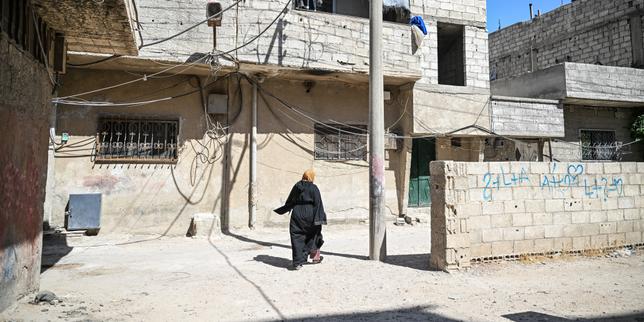
The old social contract in Syria is dead. For decades, the bargain was simple, if unspoken. You kept your mouth shut politically, and in return, the state kept your belly full with heavily subsidized bread, cheap cooking gas, and free basic healthcare. It wasn't a luxurious life, but it was predictable.
Today, that bargain has been torn up and thrown in the trash.
Faced with a ruined treasury, crippling international sanctions, and a severe shortage of foreign reserves, the Syrian government has spent the last few years quietly abandoning its welfare system. They call it economic liberalization. They pitch it as a necessary step toward efficiency and attracting foreign investment. But on the ground in Damascus, Aleppo, and Homs, nobody is buying the spin.
The reality is simple. The state is broke, and it's passing the bill to a population where nine out of ten people already live below the poverty line.
The Sudden Death of the Syrian Welfare State
For generations, the Syrian state subsidy system was the ultimate safety net. It kept the country stable through wars and droughts. If you had a state-issued smart card, you could buy flatbread, tea, sugar, and heating oil for a fraction of their market prices.
Then came the cuts.
In a series of rapid-fire decrees, the government began stripping millions of citizens of these lifelines. At first, they targeted business owners and wealthy professionals. But the criteria for losing subsidies quickly expanded to ridiculous levels. Own a car built after a certain year? No more cheap bread. Travel abroad once for work? You're off the list.
The state justified this by saying they wanted to redirect resources to the poorest of the poor. It sounded nice on paper. In practice, it was a disaster.
The system's bureaucracy is notoriously corrupt and inefficient. Thousands of desperately poor families suddenly found themselves locked out of the subsidy system because of database errors or arbitrary rules. If you lose your subsidy, you have to buy food on the open market. And on the open market, prices are completely decoupled from local wages.
When Liberalization Means State Abandonment
To understand why this is happening, you have to look at the regime's shift toward what it calls a social market economy. It's a fancy term for a brutal reality. The government is privatizing public assets and deregulation is running rampant, but not in a way that helps regular people.
This isn't the kind of economic liberalization that opens up competitive markets. It's a system of state-sanctioned monopolies.
Essential services like electricity, transport, and even parts of the agricultural supply chain are being handed over to a select group of war profiteers and business elites close to the ruling circle. When the government privatizes a service, the price skyrockets immediately.
Take the power sector. Regular state electricity is practically nonexistent in many parts of the country, sometimes running for just one or two hours a day. To get through the night, people have to rely on private neighborhood generators, often run by well-connected local bosses who charge astronomical rates for a few amperes of power.
If you can't pay, you sit in the dark. It is that simple.
The state has essentially stepped back from its duties as a provider of basic infrastructure. They've left a desperate population at the mercy of private cartels that operate with total impunity.
The Brutal Reality on the Streets of Damascus
To really grasp how bad things are, you have to look at the math.
The average monthly salary for a public sector worker in Syria is around 300,000 to 400,000 Syrian Pounds. At current exchange rates, that amounts to roughly $20 to $25 a month.
Now look at the cost of living. A single family needs at least several million Syrian Pounds a month just to secure basic food, rent, and medicine. The gap isn't just wide. It's an unbridgeable chasm.
How do people survive? They don't, at least not without help.
Almost everyone you meet in Damascus has a side hustle, and then another hustle on top of that. Teachers drive unregistered taxis after school. Engineers work as delivery drivers at night. But even multiple jobs aren't enough. The real lifeline for millions of Syrians is remittances sent from relatives working in the Gulf, Europe, or neighboring Lebanon.
If you don't have family abroad sending you dollars or euros, you are basically starving.
The diet of the average Syrian has completely changed. Meat is a luxury that many families haven't tasted in months, sometimes years. Fruit is bought by the individual piece, not by the kilogram. People have resorted to buying single cigarettes or cooking oil by the tablespoon because they can't afford a full bottle.
How the Currency Collapse Fuels the Fire
You can't talk about the Syrian economic crisis without talking about the death of the Syrian Pound. Before the conflict started in 2011, one US dollar was worth about 47 Syrian Pounds. Today, the currency has collapsed into the tens of thousands per dollar.
When a currency loses that much value, saving money becomes pointless.
Shopkeepers adjust their prices multiple times a day. If you buy a bag of rice in the morning, it might cost 15% more by the time the shop closes. This hyperinflation has wiped out the life savings of the middle class. Pensioners who worked for thirty years hoping for a comfortable retirement now find that their monthly pensions can't even buy a carton of eggs.
The government's response to this currency freefall has been a mix of denial and heavy-handed security crackdowns. For a long time, using foreign currency like US dollars in daily transactions was strictly banned, with severe jail sentences for violators.
But you can't arrest your way out of a currency collapse.
By forcing people to use a dying currency while everything they import is priced in dollars, the government only succeeded in driving the real economy underground. The black market isn't just an alternative anymore. It is the actual economy.
Why the Current Strategy is No Strategy at All
Ask any local economist in Damascus about the government's long-term plan, and you'll likely get a bitter laugh. There is no strategy. It is pure chaos.
The regime is operating in survival mode, making ad-hoc decisions to plug whatever hole is leaking the fastest today. If they run out of fuel, they raise the price of state gasoline to match the black market, hoping to squeeze some extra cash from the few people who can still afford to drive. If the bakeries run out of flour, they tighten the smart card restrictions further.
It's a policy of managed decline.
They are hoping that by cutting costs and letting the population fend for itself, they can keep the state machinery running just enough to maintain control. But this approach is incredibly short-sighted. By hollowed out the purchasing power of the population, they have killed off any hope of a domestic economic recovery. Local factories can't sell their goods because nobody has the money to buy them. Farmers are letting their crops rot in the fields because the cost of transport and fertilizer is higher than what they can get at the market.
Instead of fostering a productive economy, the current policies are encouraging the brain drain to accelerate. Anyone with a degree, a trade, or a bit of capital is looking for a way out. The country is being drained of its doctors, engineers, and skilled workers, leaving behind an impoverished, aging population that is entirely dependent on humanitarian aid and charity.
The Path Forward is Not in the Official Playbook
If you are looking for a silver lining, you won't find it in the official government press releases or the empty promises of economic ministers. The state has shown that it has no intention of reversing course, nor does it have the resources to do so even if it wanted to.
For those trying to navigate this wreckage, survival requires a complete shift in how you think about livelihood and security in Syria.
First, stop waiting for state-level solutions or international aid packages to change the daily reality. The aid sector is heavily restricted and often co-opted, meaning very little of that money actually reaches the people who need it most in a meaningful way.
Instead, the only resilient economic models appearing in Syria today are highly localized, decentralized cooperative networks. Communities are starting to pool resources to purchase shared solar energy setups, bypassing the failed state grid entirely. Small-scale, localized agricultural initiatives that focus on community self-sufficiency rather than selling to state-controlled markets are showing the only real signs of resilience.
If you are operating a business or trying to support family inside the country, the priority must be on securing non-local income streams. Freelancing online for regional clients, securing remote work, and establishing reliable, informal channels for remittances are the only ways to keep your head above water. Relying on the local Syrian market for income is a fast track to poverty. The old economic system is gone, and it is not coming back. Those who survive this crisis are the ones who stop looking to the state for answers and start building their own localized networks of survival.