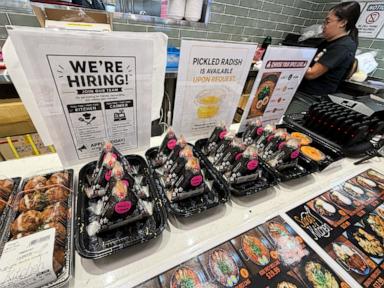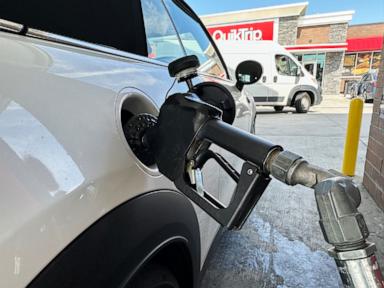
Every time gas ticks up by thirty cents or a head of lettuce costs an extra dollar, the airwaves fill with doom. Headlines scream about crushed budgets, disappearing savings, and a public supposedly marching toward financial ruin. It is the same lazy narrative recycled every business cycle. Analysts sit in climate-controlled Manhattan offices, look at a single sticky CPI category, and project immediate societal collapse.
They are wrong. They are misreading standard behavioral adaptation as catastrophe. In other updates, take a look at: Structuring Institutional Liquidity Inside Decentralized Prediction Markets.
I have watched companies panic over consumer sentiment indexes for decades. They look at survey data where people claim they are struggling, and they freeze their capital expenditures. Then they watch those same consumers drop record amounts on concert tickets, pet tech, and international flights. The gap between what people say to a pollster and how they actually allocate capital is wide enough to drive an eighteen-wheeler through.
Let us dismantle the core fallacy driving the current wave of economic hand-wringing. Investopedia has analyzed this important issue in great detail.
The Consumer Spending Paradox Nobody Wants to Acknowledge
The mainstream thesis relies on a simple, flawed equation: higher sticker prices equal lower purchasing power equal universal misery. It sounds logical on a chalkboard. It fails completely when confronted with actual balance sheets.
What the consensus misses is income velocity and wage realignment. For the bottom sixty percent of earners, nominal wages have outpaced headline inflation for consecutive quarters. Yes, grocery bills hurt more than they did three years ago. But nobody mentions that household debt service ratios remain well below historical stress thresholds. People are paying higher prices because they have more cash moving through their hands, not because they are draining their last reserves to buy eggs.
Imagine a scenario where a household spends ten percent more on essentials but secures a fifteen percent raise and locks in a three percent mortgage rate. Their cash flow actually improves. Yet, when a pollster calls them and asks if things feel expensive, they say yes. Of course they say yes. Human psychology dictates that we notice losses instantly and take gains for granted.
We treat economic sentiment surveys like gospel when they are actually emotional venting sessions.
The Myth of the Flat-Broke American
Let us talk about savings rates. The chorus of despair loves to point out that pandemic-era excess savings have evaporated. They act as if a normalization of savings rates is equivalent to a famine.
During 2020 and 2021, consumers were artificially locked indoors with stimulus checks burning holes in their pockets. Savings spiked to abnormal, historically anomalous highs. Expecting those savings rates to persist forever is like expecting your heart rate to stay at peak workout levels while you sleep. The drop back down to historical averages is not a crisis. It is gravity.
When you look at actual household net worth, the picture looks radically different from the nightly news broadcast. Asset values across real estate and equities expanded aggressively over the past decade. Even adjusted for current price levels, household balance sheets are remarkably resilient.
I have seen businesses panic over these sentiment dips and slash marketing budgets right before their customers went on a spending spree. They listened to the noise instead of looking at the transaction logs.
The Real Problem is Structural Complacency, Not Inflation
If you want to know why people feel miserable despite healthy balance sheets, look at lifestyle creep and asset concentration. The issue is not that gas costs four dollars a gallon. The issue is that we have built an entire economic architecture that punishes savers and rewards asset holders, while convincing everyone else they need a luxury lifestyle on a median income.
Prices for commodities fluctuate. That is what commodities do. They are elastic, volatile, and exposed to global supply chain shocks. When oil spikes due to geopolitical friction, it hits the pump immediately. It makes for great television footage. It triggers immediate political outrage. But treating headline inflation as a permanent tax on existence ignores how quickly capital shifts and wages adjust.
The real danger to your financial life is not the price of milk. It is the institutional advice telling you to sit on cash while inflation quietly eats your purchasing power, or telling you to panic and sell your growth assets every time the consumer confidence index dips.
Stop looking at sentiment surveys. Start looking at cash flow, debt structures, and productivity metrics. The economy is not collapsing; it is just shedding the fragile illusions of the zero-interest-rate era.
Adapt your strategy or keep crying over grocery receipts while everyone else builds actual wealth.