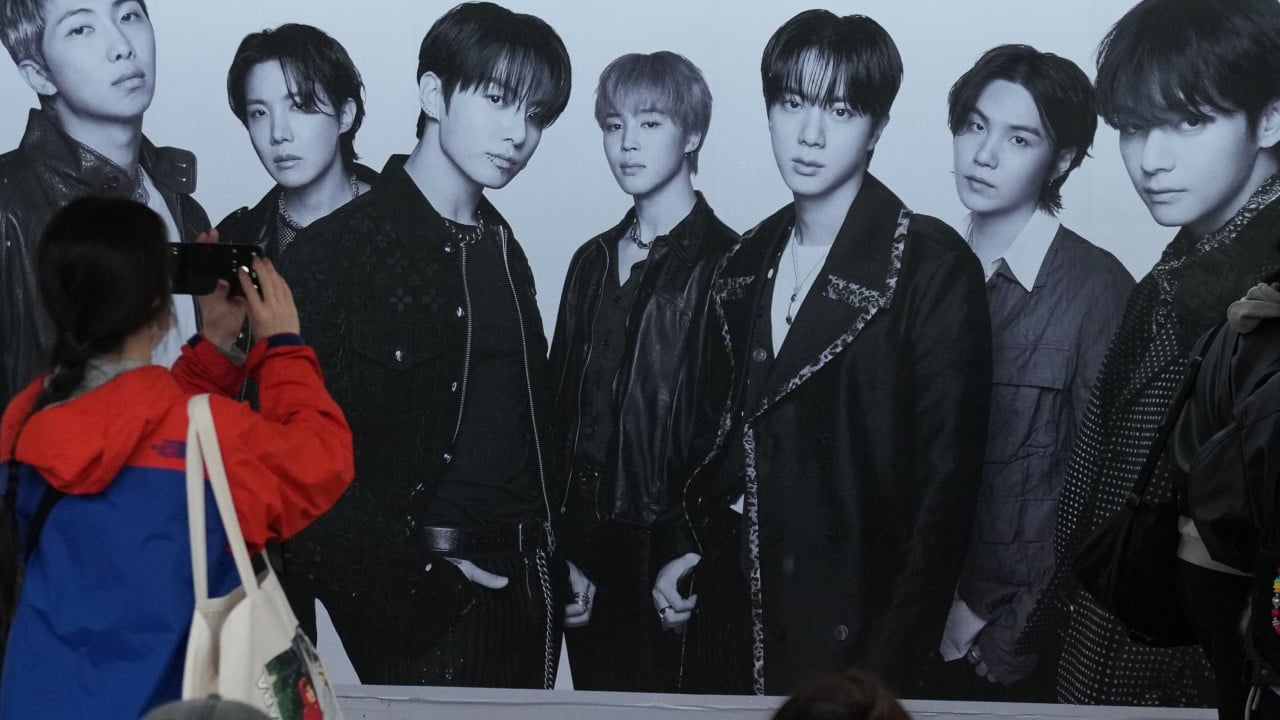
The arrival of 2.06 million international visitors attributed to a single cultural event or group represents more than a spike in tourism; it is a profound demonstration of cultural gravity—the ability of a localized intellectual property to bend global consumer behavior and capital flows. While headlines focus on the sheer volume of "ARMY" fans entering the country, a rigorous analysis must look past the 2.06 million figure to understand the structural mechanics of how pop culture exports function as a primary driver of South Korean Gross Domestic Product (GDP). This phenomenon functions through a three-stage economic cycle: Identity-Driven Migration, the Multiplier Effect of Localized Consumption, and Long-Term Soft Power Equity.
The Identity-Driven Migration Framework
Tourism traditionally relies on geographical or historical utility—visitors travel to see a monument or enjoy a climate. The BTS-driven influx operates on a different logic. We define this as "Identity-Driven Migration," where the primary motivator for travel is not the destination’s physical attributes, but the desire to synchronize physical location with a digital community identity.
This creates a specific demand curve. Unlike standard seasonal tourism, which is elastic based on price and weather, Identity-Driven Migration is highly inelastic. Fans are willing to pay a premium for flights and accommodation during specific "comeback" windows because the value of being present during a specific temporal event (a concert or pop-up event) outweighs the marginal cost of the trip. The 2.06 million tourists recorded do not represent a random distribution; they are a concentrated demographic of high-intent consumers.
The Korean Wave Multiplier: Beyond Ticket Sales
The primary error in analyzing the $4.9 billion annual contribution of BTS to the South Korean economy is focusing solely on direct revenue from concerts. To quantify the actual impact, we must apply a Tourism Multiplier Effect (TME) formula.
- Direct Impact: Revenue from concert tickets, official merchandise, and localized pop-up stores.
- Indirect Impact: Spending on flights (specifically Korean Air and Asiana), hotels, and domestic transportation.
- Induced Impact: The secondary spending of employees within the tourism sector who see wage increases or job security due to the surge.
A critical observation is the "Halo Effect" on South Korean exports. A tourist visiting for a BTS event is statistically more likely to consume K-beauty products, visit K-food franchises, and engage with Korean electronics. Data suggests that for every 1% increase in the popularity of Korean cultural content, there is a corresponding 0.03% increase in the export of consumer goods. The 2.06 million tourists act as a massive, decentralized marketing force, carrying physical goods back to their home markets and establishing long-term brand loyalty to "Brand Korea."
Strategic Bottlenecks in Infrastructure and Logistics
While the 2.06 million figure is impressive, it exposes significant bottlenecks in South Korea's tourism infrastructure. The sudden concentration of travelers into specific districts—namely Seoul (Gangnam and Yongsan) and Busan—creates an artificial scarcity in the hospitality market.
The surge pricing observed during major events reflects a failure in "Fan-Flow Management." When demand outstrips supply so aggressively, the local economy risks "Overtourism" backlash, where the cost of living for residents rises sharply, and the quality of the tourist experience diminishes. To sustain these numbers, the South Korean government and private sector must solve the following structural challenges:
- Geographic Decentralization: Moving fans away from the Seoul metropolitan area to peripheral provinces to distribute economic gains.
- Digital Integration: Using blockchain or verified fan IDs to prevent predatory secondary market pricing for accommodation and transport.
- Capacity Elasticity: Developing modular tourism infrastructure that can scale up for major events without leaving behind "ghost" facilities during off-peak periods.
The Cost Function of Intellectual Property Dependency
There is a systemic risk in tying national tourism targets to a single entity. The "BTS Effect" is subject to the lifecycle of the group members, including mandatory military service and the natural evolution of musical careers. This creates a "Concentration Risk" in the South Korean soft power portfolio.
If the 2.06 million visitors are exclusively tethered to one IP, the tourism industry faces a cliff when that IP is inactive. The Hyundai Research Institute previously estimated that the total economic impact of BTS over a 10-year period could reach 56 trillion won. However, this projection assumes the successful transition from a "Fandom Economy" to a "Legacy Economy."
A Legacy Economy is one where the destination remains relevant even when the catalyst is absent. For South Korea, the strategic objective is to convert the 2.06 million first-time visitors into repeat travelers by cross-selling other cultural assets—historical sites, traditional cuisine, and medical tourism.
Digital Convergence and the Hybrid Tourism Model
We are moving toward a model where the distinction between a digital and physical tourist is blurred. During BTS hiatuses or remote periods, "Virtual Tourism" via the Metaverse or high-fidelity streaming allows the economic engine to keep turning. However, the 2.06 million physical arrivals prove that digital proximity cannot yet replace physical presence.
The data shows a high correlation between digital engagement (YouTube views, Weverse interactions) and the propensity to book a flight to Incheon. This creates a predictable pipeline. Analysts can look at the geographic distribution of streaming data today to predict where the next wave of tourists will come from in six months. Currently, Southeast Asia and North America represent the highest growth potential for this conversion.
Diversifying the Soft Power Portfolio
To mitigate the risks of IP dependency, South Korea is aggressively diversifying. The "Squid Game" effect and the global rise of Korean webtoons act as hedges. However, BTS remains the "Apex IP" because of the communal nature of music fandom compared to the solo consumption of film or television.
The strategic play for the South Korean Ministry of Culture, Sports and Tourism is to utilize the current 2.06 million surge to fund the "Next-Gen K-Platform." This involves:
- Visa Liberalization: The "K-Culture Training Visa" which allows fans to stay for extended periods to learn the language or dance, turning short-term tourists into long-term residents and economic contributors.
- Smart City Integration: Building "K-Pop Zones" in cities like Goyang that are specifically designed for high-density, short-duration tourism.
Structural Recommendations for Competitive Markets
For other nations attempting to replicate this success, the lesson is clear: organic cultural growth cannot be forced, but it can be hyper-accelerated through state-private coordination. The "Korean Model" works because the government (via the Ministry of Culture) and the private sector (via HYBE and other labels) operate with a shared strategic vision.
The 2.06 million tourists are the result of a twenty-year investment in the "Hallyu" infrastructure. Any nation seeking to use culture as an economic lever must first build the digital export engine before they can expect the physical tourism arrivals.
The final move in this strategy is not to seek the "Next BTS," but to institutionalize the systems that allowed BTS to thrive. This means protecting the IP rights of creators, subsidizing global tours to seed future tourism, and ensuring that the domestic infrastructure is ready to absorb millions of arrivals at a moment's notice. The 2.06 million visitors are a proof of concept; the next stage is making that volume the baseline rather than the peak.