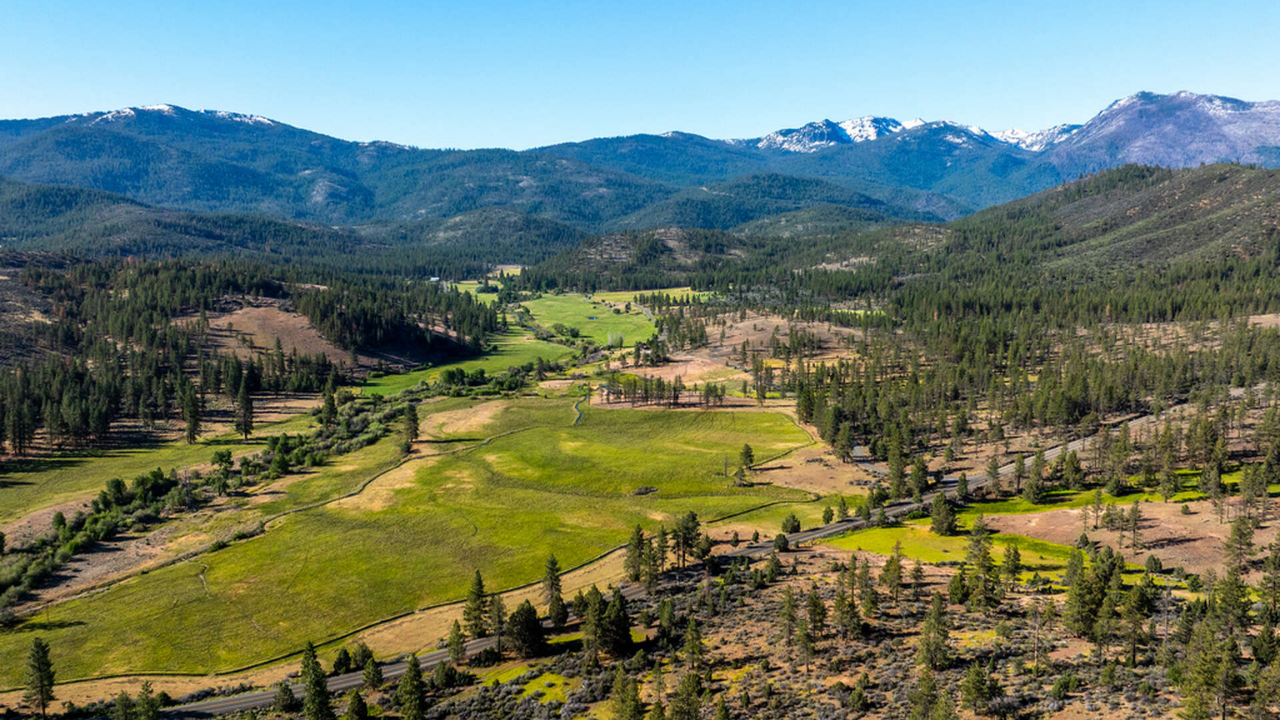
Surviving 170 years of commercial operation requires more than historical momentum or passive asset ownership; it demands a continuous structural adjustment to capital allocation, land economics, and operational risk mitigation. Established in 1856 during the formative era of Northern California agriculture, early cattle ranches faced acute resource constraints, volatile commodity pricing, and shifting regulatory frameworks. Analyzing how an enterprise endures across nearly two centuries provides a rare window into the survival mechanics of multi-generational land-based businesses.
The baseline economic reality of an 1856 foundation lies in spatial monopoly combined with severe logistical isolation. Early operators did not compete in national commodity markets characterized by instantaneous pricing transparency or refrigerated logistics. Instead, value creation was strictly bounded by regional supply chains, immediate proximity to burgeoning urban centers like San Francisco during the Gold Rush, and the brute-force carrying capacity of unmanaged grasslands. Building on this topic, you can find more in: Why Saving Ukrainian Agriculture is Destroying the Global Market.
The Structural Pillars of Multi-Generational Land Enterprises
Asset preservation in a multi-generational business is governed by a tripartite framework: biological asset management, real estate capitalization, and regulatory arbitrage. Each pillar operates under distinct economic constraints and failure modes. Observers at CNBC have also weighed in on this matter.
- Biological Asset Management: Livestock operations are subject to multi-year biological feedback loops. Herd expansion, genetics, and forage availability cannot be scaled instantaneously in response to market shocks. A drought or disease outbreak impacts yield years down the line, requiring structural cash reserves that purely transactional modern firms rarely maintain.
- Real Estate Capitalization: The underlying land base represents both the primary engine of production and the ultimate threat to continuity. As population density increases around historical agricultural tracts, property valuations decouple entirely from agricultural yields. Enterprises survive only if their balance sheets can absorb property tax trajectories that outpace livestock revenue.
- Regulatory Arbitrage and Compliance: Operations originating in the mid-nineteenth century predate modern environmental, labor, and water rights law. Longevity requires migrating from customary resource use to legally secured, codified property rights, particularly regarding riparian access and grazing permits.
The Capital Allocation Bottleneck
A primary vulnerability of legacy agricultural assets is the intergenerational transfer of equity without a corresponding transfer of operational liquidity. When land appreciates due to suburban encroachment, the estate tax liability generated upon the death of an operator often threatens the physical integrity of the ranch.
To prevent forced liquidation, long-surviving enterprises historically rely on structural diversification. This manifests not as trendy business pivoting, but as complementary asset utilization. Timber rights, mineral leases, water banking, and conservation easements serve as synthetic hedges against cattle cycle troughs. When beef margins compress due to feed cost inflation or international supply shifts, secondary revenue streams prevent operational insolvency.
The Cost Function of Scale and Fragmentation
As operational years accumulate, the original acreage of a 19th-century land grant or homestead typically undergoes partition through inheritance splits or strategic sell-offs to service debt. The economic cost function of this fragmentation is non-linear.
Operating a 10,000-acre contiguous block yields economies of scale in fencing, rotational grazing, and labor deployment. Reducing that footprint to 2,000 fragmented acres dramatically increases the per-unit cost of management. Fencing requirements scale with perimeter-to-area ratios, meaning smaller parcels absorb a disproportionate capital expenditure burden. Furthermore, wildlife migration corridors and watershed management—once handled natively across a single vast property—require complex cooperative agreements with adjacent landowners as fragmentation accelerates.
Adaptation Mechanics in the Modern Era
Enterprises reaching the 170-year milestone in Northern California today operate in an economic environment radically distinct from their origins. Labor markets are governed by strict wage and hour laws; environmental compliance regarding runoff and endangered species introduces substantial friction costs; and climate volatility alters historical carrying capacity models.
Survival through these shifts relies on transitioning from commodity price-takers to differentiated brand operators. Direct-to-consumer beef models, vertical integration, and agritourism capture retail margins that bypass traditional packing plant consolidation. However, these downstream expansions introduce counterparty risk, marketing overhead, and liability exposure that traditional ranchers were structurally insulated from.
Strategic Horizon for Centurial Assets
The ongoing viability of a 170-year-old operational model depends entirely on the disciplined separation of operating company risk from real estate holding value. Enterprises that conflate land appreciation with operational efficiency inevitably fail when asset values mask poor cash-flow generation. Future preservation mandates establishing formal governance structures—such as family councils, professionalized management boards, and permanent conservation easements—that legally bind descendants to rigorous capital preservation standards rather than short-term liquidity extraction.