Residential real estate acquisitions inherently involve asymmetric information between builders, vendors, and buyers. When latent structural defects or hidden moisture ingress manifest post-purchase, they trigger a complex intersection of property law, insurance policy interpretation, and structural engineering. A prominent legal dispute in Melbourne involving a $176,297 liability battle highlights the systemic friction points that emerge when property owners seek indemnity for defects discovered months after the transaction. Analyzing the underlying mechanics of this dispute reveals vital lessons regarding property indemnification, the limitations of standard domestic building policies, and the legal thresholds governing latent defect claims.
The Asymmetry of Latent Property Damage
The core vulnerability in residential property transactions stems from the temporal gap between construction completion and consumer acquisition. Structural integrity deteriorates via mechanisms that remain entirely invisible to standard pre-purchase building inspections. Moisture tracking behind sealed cladding, sub-slab foundation settling, and progressive waterproofing failures operate quietly over years.
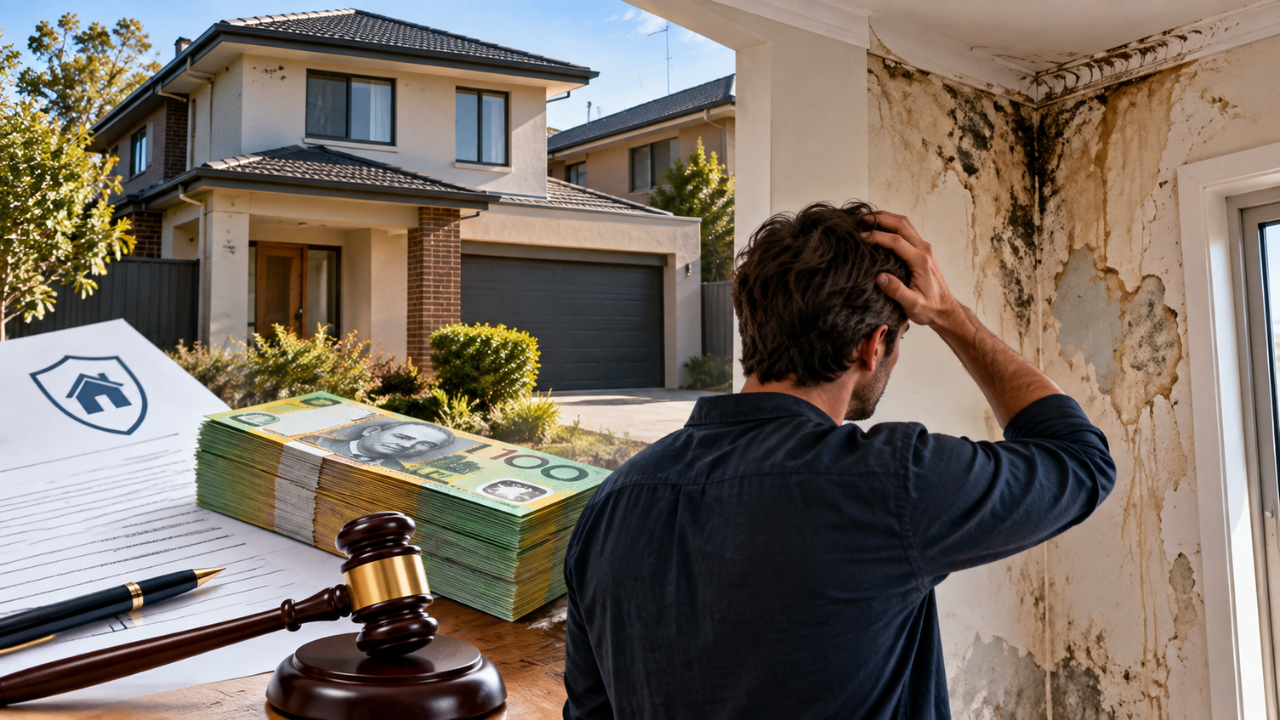
When a buyer assumes ownership, they inherit not only the physical asset but an unquantified risk ledger. In the Melbourne case, the identification of extensive water damage months after taking possession initiated a multi-tiered legal contest involving structural indemnity clauses, temporary accommodation provisions, and statutory building warranties.
The financial exposure escalates rapidly because water damage exhibits a compounding multiplier effect. A localized leak behind a finished wall cavity does not merely require plumbing intervention; it compromises structural timber, breeds microbial contamination, and necessitates the systematic stripping of internal linings, floor plates, and insulation. The resulting remediation cost frequently eclipses the market value of the component that failed.
Contractual Mechanics and Policy Exclusions
Standard residential insurance policies are structurally designed to cover sudden, accidental events rather than cumulative degradation or pre-existing construction non-compliance. This creates a severe misalignment for buyers dealing with latent defects.
Insurer defense strategies in these disputes rely on distinct contractual boundaries:
- The Temporal Distinction: Insurers differentiate sharply between an acute "escape of liquid" (such as a burst flexible hose) and chronic, progressive moisture ingress resulting from faulty building practice or deferred maintenance.
- The Origin Exclusion: Policies routinely exclude liability for damage originating from structural design errors, defective waterproofing application, or substandard workmanship executed prior to the current policyholder's inception date.
- Trace and Access Limits: While some policies cover the cost of locating a hidden leak, they frequently disclaim responsibility for rectifying the structural defect that caused the breach.
In the Victorian appellate review surrounding the Melbourne dispute (Victorian Building Authority v Fall-Armytage), the legal scrutiny focused heavily on statutory liability periods, ministerial orders prescribing minimum building cover, and the strict interpretation of indemnity clauses (such as Clause 32) versus general appeals to consumer protection principles. The judicial stance reinforced that broad consumer equity arguments cannot override the precise literal construction of insurance contracts and statutory limitation frameworks.
The Cost Function of Post-Purchase Remediation
When evaluating the total financial burden of a hidden defect dispute, property owners face an economic function defined by three primary variables: forensic investigation expenses, legal containment costs, and physical reconstruction overhead.
Total Loss = Investigation Costs + Legal & Administrative Friction + (Remmediation Scope x Compounding Multiplier)
- Forensic Investigation Expenses: Establishing liability requires invasive diagnostic work, including thermal imaging, moisture meter mapping, destructive core sampling, and independent engineering reports. Without these, policyholders cannot substantiate whether a defect meets the narrow criteria of sudden failure.
- Legal and Administrative Friction: Engaging with internal dispute resolution tiers and statutory tribunals (such as the Australian Financial Complaints Authority or state civil tribunals) involves substantial time and expert witness fees. As liability sums scale toward the six-figure mark, legal representation becomes mandatory, adding fixed costs that erode the net benefit of a potential settlement.
- The Compounding Multiplier: Physical remediation often uncovers secondary defects secondary to the primary failure. For instance, addressing water-damaged framing frequently triggers mandatory compliance upgrades to modern building codes, forcing the homeowner to fund structural enhancements that exceed the baseline repair footprint.
Structural Mitigation for Property Acquirers
Navigating the post-purchase risk environment requires shifting from reactive dispute management to upfront structural due diligence. Because statutory warranties governing residential construction possess strict time-bars (varying by jurisdiction and defect classification, such as major versus non-structural defects), timing dictates recovery viability.
Property buyers and owners must implement systematic risk-reduction frameworks:
- Comprehensive Pre-Purchase Technical Audits: Standard visual inspections are insufficient for modern multi-story or complex-clad structures. Engaging specialist invasive inspectors to assess high-risk moisture zones (balconies, parapets, sub-grade walls) provides a baseline inventory of hidden liabilities.
- Policy PDS Interrogation: Homeowners must audit their Product Disclosure Statements to verify the exact definitions applied to "gradual damage," "escape of liquid," and "earth movement." Understanding whether an insurer covers hidden gradual leaks before an incident occurs eliminates false assumptions regarding coverage.
- Evidence Preservation Protocols: Upon discovering anomalous moisture or structural distortion, property owners must halt cosmetic repairs, secure detailed photographic logs, and retain independent engineering or plumbing diagnostics before notifying insurers. Insurers routinely prejudice claims where the primary evidence of failure has been altered or discarded.
The resolution of complex property damage disputes does not favor equity; it rewards rigorous documentation, strict adherence to statutory timelines, and precise contractual alignment. Securing financial recovery in high-value latent defect scenarios demands treating the insurance contract and the building's physical history as an interconnected legal puzzle where every missing variable degrades the probability of indemnity.