Most beauty gift guides fail because they treat personal care items as interchangeable commodities rather than high-friction sensory investments. When a consumer buys a skincare or cosmetic product for another person, they face acute information asymmetry regarding skin physiology, olfactory preference, and existing vanity inventory. Conversely, when that same consumer purchases a gift set for themselves—a behavior retail analysts classify as self-gifting or opportunistic bundling—they are executing a calculated arbitrage play on unit economics. Evaluating beauty gifts requires separating emotional signaling from biochemical utility, then mapping where those two variables intersect to prevent deadweight loss in the recipient's bathroom cabinet.
To optimize beauty gifting, buyers must evaluate items across three structural dimensions: physiological compatibility, packaging signaling, and unit-price compression. Standard editorial roundups rely on subjective descriptors like "glow-inducing" or "cult-favorite," which obscure the actual mechanisms driving product satisfaction. A rigorous selection framework strips away marketing copy and assesses whether a formulation can survive the transition from a retail display to daily user adherence.
The Information Asymmetry Problem in Personal Care Gifting
Gifting apparel requires knowing two variables: size and aesthetic preference. Gifting active skincare or color cosmetics requires knowing at least six: Fitzpatrick skin type, transepidermal water loss rates, baseline sebum production, known allergen sensitivities, current active ingredient tolerance, and undertone saturation. A mismatch in any single variable renders the gift unusable.
This creates a high-risk allocation problem. In behavioral economics, gift-giving already suffers from deadweight loss—the gap between the price paid by the giver and the utility experienced by the receiver. In the beauty sector, this gap widens dramatically when buyers select targeted treatments. Gifting a high-concentration retinoid or an alpha-hydroxy acid peel to someone without knowing their barrier integrity does not merely risk non-use; it risks inducing contact dermatitis. Similarly, foundation and concealer purchases fail at high rates because undertone matching requires direct visual calibration under natural light.
Successful beauty gifts bypass these biological bottlenecks by targeting universal physiological pathways rather than localized anomalies. Formulations designed around humectants (such as glycerin, hyaluronic acid, and panthenol) or occlusives (such as squalane, petrolatum, and ceramides) interact predictably with human stratum corneum regardless of baseline skin type. While an oily-skinned recipient may reject a heavy petrolatum balm on their face, that exact formulation retains full utility on the hands, cuticles, or elbows. Shifting the gift selection from face-specific active treatments to body-wide barrier support eliminates the primary cause of product abandonment.
Value Engineering and the Holiday Bundle Arbitrage
The secondary mechanism driving beauty gift guides—specifically the explicit recommendation to "keep one for yourself"—is seasonal bundle arbitrage. During peak gifting windows, prestige beauty conglomerates release curated sets that alter the standard cost-per-milliliter ratio of their core SKUs.
From a supply chain perspective, brands utilize holiday coffrets to achieve three operational goals:
- Customer Acquisition Cost (CAC) Reduction: By bundling a full-size hero product with deluxe travel-size secondary items at a price point marginally above the standalone hero item, brands subsidize the sampling of adjacent product lines.
- Inventory Velocity: Packaging slower-moving secondary SKUs alongside high-demand flagship formulations clears warehouse space ahead of Q1 fiscal resets without eroding brand equity through direct percentage-off discounting.
- Basket Size Expansion: Consumers who routinely purchase a single replenishment item upgrade to a gift set to capture the implied margin discount, accelerating their upfront capital outlay.
For the informed buyer, this structure creates a predictable mathematical advantage. When a gift set prices a full-size 50ml moisturizer alongside a 15ml eye cream and a 10ml serum for the exact retail price of the 50ml moisturizer alone, the marginal cost of the secondary items drops to zero. Savvy consumers exploit this by purchasing the bundle, retaining the core replenishment item for personal use, and gifting the deluxe miniatures—or vice versa.
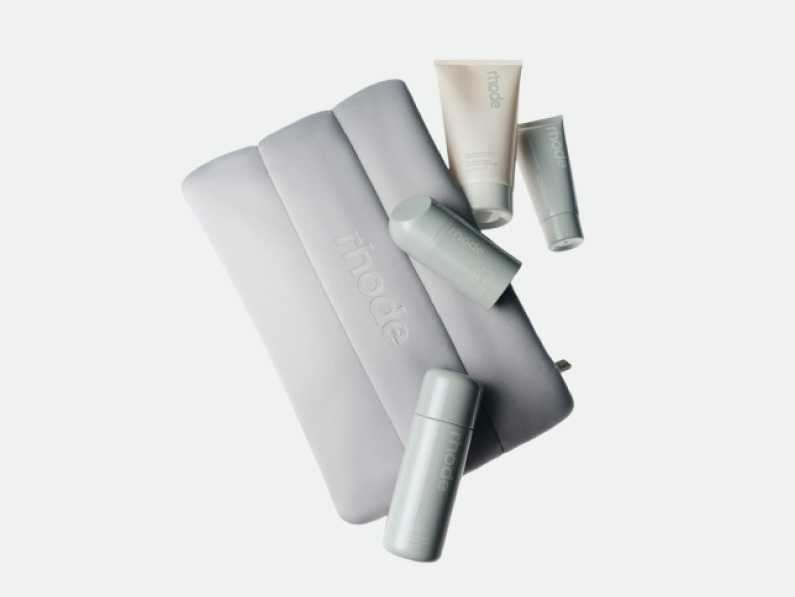
However, this arbitrage fails when brands populate bundles with proprietary applicators, low-cost textiles, or diluted promotional sizes. A makeup bag manufactured for pennies does not represent real value, yet brands routinely assign inflated retail values to these accessories to boost the advertised "total value" metric on the outer carton. Calculating true bundle efficiency requires dividing the total purchase price exclusively by the milliliters or grams of active, usable formulation, assigning a zero dollar value to non-consumable packaging extras.
Category-Level Risk and Utility Matrix
Evaluating specific beauty categories requires mapping their failure modes against their sensory payoff. Every product class carries distinct structural limitations that dictate whether it belongs in a gift box or a personal replenishment cart.
1. Olfactory Formulations (Fine Fragrance and Home Scent)
Fragrance exhibits the highest variance in subjective preference because scent perception is mediated by individual olfactory receptor genetics and skin pH. Gifting a 100ml bottle of a complex, single-profile eau de parfum is a low-probability wager.
The structural workaround is the discovery wardrobe—a multi-vial set containing 2ml to 5ml atomizers across distinct fragrance families (citrus, woody, amber, floral). This format converts a high-risk binary outcome into a low-friction experiential process. Even if the recipient dislikes four of the six vials, the remaining two provide sufficient utility to justify the acquisition cost, while the miniature vessels serve practical travel functions. Home fragrances, particularly paraffin-soy blend candles and reed diffusers, bypass skin chemistry entirely, operating strictly within ambient room volume constraints. They carry lower personal risk than wearable perfume, provided the throw (scent dispersion radius) matches standard residential room dimensions without triggering olfactory fatigue.
2. Lipid-Rich Body Care and Hand Treatments
Hand creams, body oils, and intensive lip balms represent the lowest-risk tier in beauty gifting. The epidermis on the hands and lips lacks sebaceous glands, making transepidermal water loss a universal human baseline, particularly during winter months when ambient humidity drops.
Because these areas tolerate higher concentrations of occlusive agents without developing comedones (clogged pores), formulations heavy in shea butter, beeswax, lanolin, or plant-derived triglycerides achieve near-universal compatibility. Furthermore, packaging plays an outsized functional role here. Aluminum tubes, weighted glass jars, and precision-machined metal lip applicators transform a mundane utility item into a tactile status object. The recipient interacts with the object multiple times daily in public settings, maximizing the psychological return on the giver's investment.
3. Haircare Systems and Scalp Treatments
Haircare gifting fails when buyers conflate hair texture with hair porosity. Two individuals can have identical curl patterns while possessing entirely different cuticle structures; low-porosity hair repels heavy proteins and thick butters, leading to buildup and limpness, whereas high-porosity hair requires those exact ingredients to fill structural gaps in the cortex.
Consequently, gifting targeted styling creams or protein-heavy masks requires precise diagnostic knowledge of the recipient's hair shaft condition. Safe haircare gifting is restricted to universal scalp clarifiers, lightweight pre-wash oils, or mechanical tools such as boar-bristle brushes and microfiber drying towels. Mechanical accessories eliminate biochemical incompatibility altogether, interacting purely with physical friction and moisture absorption coefficients.
4. Color Cosmetics and Complexion Tools
Color cosmetics divide sharply between high-friction complexion products and low-friction accent products. Foundations, concealers, and contour sticks fail as gifts due to undertone mismatch and oxidation shifts on the skin.
Conversely, sheer lip oils, universally flattering neutral glosses, and tubing mascaras exhibit high adoption rates. Sheer pigment dispersions allow the recipient's natural lip melanin to show through, self-adjusting the final hue to match their complexion. Tubing mascaras—which wrap individual lashes in water-resistant polymers rather than coating them in traditional waxes—eliminate smudging across varied eyelid anatomies and oily skin types, removing via warm water and mechanical pressure alone. Makeup brushes and precision eyelash curlers operate on the same principle as hair tools: they upgrade the application mechanics of the recipient's existing cosmetic inventory without altering their chemical routine.
Tactile Signaling and the Economics of Packaging
In standard consumer packaged goods, packaging is treated as a cost center to be minimized. In luxury beauty gifting, packaging is the primary vehicle for value signaling. When a consumer spends $80 on a lip balm or hand wash, the raw chemical ingredients inside the vessel rarely account for more than 5% to 8% of the retail price. The remaining margin funds brand equity, regulatory compliance, and structural packaging engineering.
Heavy-gauge glass, magnetic closures, knurled brass caps, and embossed heavy-stock cartons trigger specific haptic feedback loops. Behavioral research demonstrates that physical weight correlates subconsciously with perceived efficacy and luxury status. A lightweight plastic tube signals disposability; a refillable anodized aluminum case signals permanence.
When selecting gifts for external recipients, allocating budget toward superior structural packaging yields higher perceived generosity than spending the exact same capital on an uglier, clinically packaged formulation with superior active ingredients. When purchasing for oneself, the calculus reverses entirely: the rational buyer strips away the packaging premium and allocates capital strictly toward active ingredient concentration and formulation stability.
Operational Limitations of the Dual-Purpose Purchase
The strategy of buying gift sets to split between oneself and others carries distinct operational friction that retail marketing omits.
First, tamper-evident sealing and secondary packaging frequently prevent clean separation. Many holiday sets utilize thermoformed plastic inserts or glued cardboard trays designed to display all items simultaneously. Extracting a single full-size serum to keep for personal use often destroys the structural integrity of the outer box, leaving the buyer with loose, unboxed travel miniatures that look like free samples rather than intentional gifts.
Second, shelf-life degradation threatens multi-item hauls. Active ingredients such as L-ascorbic acid (vitamin C), retinol, and benzoyl peroxide begin oxidizing the moment they are exposed to heat, light, or oxygen. Stockpiling discounted bundles during fourth-quarter sales for personal use across the following year often results in applied formulations that have lost chemical potency before the bottle is even opened.
Third, fragrance cross-contamination occurs inside sealed coffrets. When brands package an unscented facial moisturizer inside the same enclosed cardboard box as a heavily perfumed body lotion or eau de parfum, volatile aromatic compounds migrate through permeable plastic packaging. Sensitive-skin recipients subsequently experience irritation from a "fragrance-free" product that absorbed ambient scent molecules during warehouse storage.
Execution Protocol for Rational Beauty Acquisition
To maximize utility and eliminate wasted capital across both external gifting and personal replenishment, execute the following four-step filtering protocol before finalizing any beauty purchase:
- Audit the Packaging Architecture: Inspect unboxing visuals or physical displays before buying a multi-piece set. Verify whether individual items inside the bundle possess standalone cartons or intact tamper seals. Never break apart a thermoformed tray intended for external gifting; only split bundles where the sub-components are independently boxed.
- Calculate Net Active Cost: Strip out the assigned retail value of cosmetic bags, mirrors, Gua Sha stones, and headbands. Divide the total price strictly by the combined volume of usable consumables. Reject any bundle where the cost-per-milliliter exceeds the standalone price of your regular replenishment items by more than 15%.
- Enforce the Barrier-First Rule for External Recipients: Unless you have direct, verified knowledge of a recipient's active skincare regimen and dermatological history, restrict all external skincare gifts to humectant-rich hand creams, occlusive lip treatments, body oils, or rinse-off cleansers. Leave retinoids, exfoliating acids, and pigment-correcting serums exclusively in your personal acquisition column.
- Deploy Discovery Formats for High-Variance Categories: Replace full-size fragrance and complex color palettes with miniature discovery wardrobes or sheer-tint formulations. Shift the burden of final shade and scent selection onto the recipient while preserving the luxury unboxing experience through high-weight, tactile outer packaging.