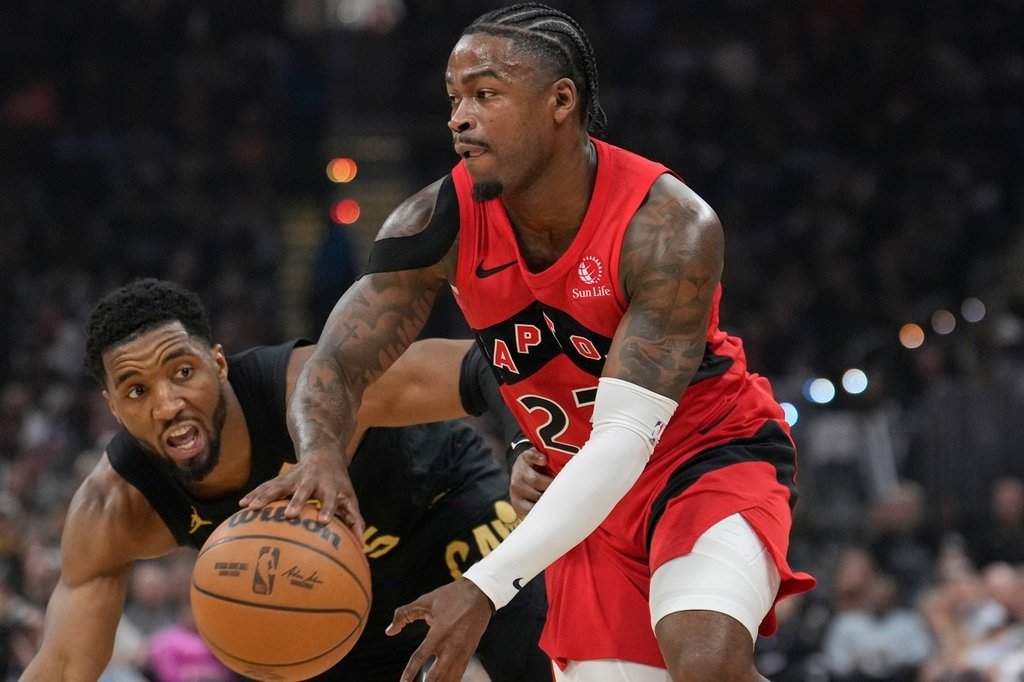
Roster construction in the modern salary cap environment is an exercise in resource allocation under extreme constraints. Every franchise operates within a rigid financial ceiling, forcing front offices to allocate maximum capital to elite top-tier talent while filling the remaining roster slots with cost-controlled assets. Within this architecture, the acquisition and retention of second-round draft picks or undrafted free agents on minimum-salary contracts represent high-leverage decisions. When the Toronto Raptors committed a contract extension to Jamal Shead, the move was frequently analyzed through standard media narratives regarding grit, energy, and leadership. Those descriptors, while qualitatively appealing, lack the analytical precision required to evaluate a modern professional basketball asset. A rigorous assessment of this transaction requires evaluating player valuation through three distinct lenses: cost-to-performance efficiency, positional archetype value, and asset liquidity under the collective bargaining agreement.
Evaluating cost-to-performance efficiency begins with the mechanics of the rookie scale and minimum contracts. Second-round selections and late-draft acquisitions do not command the guaranteed multi-year commitments of lottery picks, meaning their initial cap hits are minimal relative to their baseline production. Shead entered the league carrying the profile of an elite defensive point-of-attack disruptor with limited immediate floor-spacing gravity. In financial terms, a player who can execute defensive schemes at an above-average level while consuming less than two percent of the total salary cap provides positive surplus value. Surplus value is defined as the delta between a player's on-court production measured in wins or points above replacement and their actual financial compensation. When a front office extends a player of this archetype early, they are pricing in a hedge against future inflation of the minimum salary scale and securing cost certainty. If a replacement-level player on the open market demands a standard non-bird or room exception deal, locking in a cheap rotation piece protects flexible cap space for higher-order acquisitions.
The second variable in this transaction is positional archetype value, specifically the functional utility of a sub-six-foot guard who profiles as a defensive specialist. In contemporary offensive schemes, guards who lack perimeter shooting gravity face severe defensive coverage adjustments. Opponents routinely drop big men into the paint or switch screens to exploit individual spacing deficiencies. Therefore, for a non-shooting or low-shooting guard to justify minutes, their defensive impact must be high enough to offset the offensive constraints. Shead operates as an aggressive pressure defender, disrupting opponent initiation sequences and forcing turnovers at a high rate. This defensive disruption serves as an offensive catalyst through transition generation. Transition efficiency remains one of the most reliable methods for a low-spacing lineup to manufacture easy points, circumventing half-court offensive stagnation. By mapping Shead's defensive metrics against team defensive rating fluctuations when he is on versus off the court, the underlying rationale for the extension becomes clear: his presence stabilizes defensive performance during non-starter minutes.
Asset liquidity represents the third pillar of this roster decision. Under the current collective bargaining agreement, mid-tier contracts and rookie-scale extensions function as essential trade matching instruments. Trades in the NBA require salary aggregation and matching provisions that make multi-million dollar contracts difficult to move without attaching draft compensation. Conversely, cost-controlled players signed to team-friendly extensions possess high liquidity. They are affordable enough for contending teams to absorb without triggering restrictive apron penalties, yet talented enough to serve as rotation upgrades. If the Raptors' internal timeline shifts from developmental rebuilding to competitive consolidation, a player locked into a modest, multi-year deal becomes a valuable secondary asset in trade negotiations. The extension is therefore not merely a bet on individual career progression, but an exercise in maintaining structural flexibility for future roster iterations.
Understanding the mechanics of this move also requires examining the opportunity cost. Every roster spot occupied by a defensive specialist is a roster spot unavailable for developing an offensive wild card or shooting specialist. Front offices operate with finite developmental minutes and coaching resources. By committing to Shead, the Raptors' front office signaled a clear organizational philosophy: defensive identity, cultural baseline standards, and point-of-attack containment are prioritized as foundational prerequisites before offensive optionality can be layered on top. This philosophy diverges from franchises that chase high-variance, offense-first prospects who often fail to develop defensive fundamentals.
The limitations of this strategy are structural. Small guards who rely heavily on defensive intensity and physical disruption absorb high physical wear and tear over an 82-game schedule. Their offensive ceiling
The Economics of Jamal Shead Extension Under Collective Bargaining Realities
sports
Front office resource allocation in modern professional basketball relies on identifying and retaining cost-controlled assets that disproportionately impact marginal performance. The Toronto Raptors securing Jamal Shead to an extension is not merely a transaction of sentiment or baseline roster depth. It represents a calculated exercise in cap optimization, second-round valuation mechanics, and the exploitation of structural loopholes within the current Collective Bargaining Agreement.
Evaluating this signing requires deconstructing the financial architecture of rookie scale contracts, the defensive impact metrics of non-lottery guards, and the long-term roster construction strategy of a franchise navigating a rebuilding phase.
The Valuation Mechanics of Second-Round Picks
Under the previous labor agreements, second-round draft selections presented a structural hazard for front offices. If a player outperformed their draft slot immediately, teams lacked the mechanism to secure them to long-term, below-market extensions without risking unrestricted free agency prematurely. The modern labor agreement fundamentally alters this dynamic by introducing flexible extension mechanisms that allow front offices to lock in performance before market inflation occurs.
Shead entered the league carrying the profile of a high-floor, low-ceiling prospect—a defensive pressure point forged in a rigorous collegiate system whose offensive ceiling was discounted due to size and scoring efficiency limitations. Traditional scouting evaluations frequently misprice these players because standard box scores fail to capture defensive disruption value. When analyzing a defensive guard, the relevant metric is not individual scoring gravity, but the suppression of opposition offensive efficiency through point-of-attack pressure.
The cost function of a standard veteran backup point guard on the open market typically commands mid-level exception capital or reliable multi-year standard money. By contrast, locking in a player of Shead's specific defensive utility at a fraction of that cost creates surplus value. Surplus value is the delta between a player's on-court production value and their cap hit. In a restrictive tax environment, accumulating surplus value on the margins is the primary differentiator between sustained contention and perpetual cap hell.
Structural Incentives and Roster Flexibility
Roster construction in the current era is dictated by the apron thresholds of the collective bargaining framework. Teams that cross these financial boundaries face severe roster-building penalties, restricting their ability to acquire talent via the mid-level exception or execute trades. Consequently, the value of rookie-scale contracts and early extensions has appreciated significantly.
When a franchise extends a player like Shead, they achieve three distinct structural objectives:
- Cost Certainty: The annual salary escalation is fixed, allowing the front office to forecast cap sheets years in advance without exposure to sudden market inflation driven by television revenue spikes.
- Trade Ammunition: Fixed, below-market contracts represent highly liquid assets in the modern transaction market. Other franchises operating under strict apron constraints routinely seek out cost-controlled rotational guards to balance salary matching in complex trades.
- Positional Insurance: Elite defensive guards who can initiate offense against defensive pressure provide a stable floor for bench units, insulating the team against injury variance to primary starting contributors.
The risk profile of such an extension is inherently asymmetric. If the player plateaus as a third-string defensive specialist, the cap allocation is negligible enough to be absorbed or moved via minor draft compensation. If the player continues to refine their pick-and-roll navigation and floor spacing, the contract transforms into one of the most team-favorable assets on the roster.
The Tactical Impact on Floor Balance
On-court efficiency for a non-shooting guard requires hyper-competence in secondary decision-making. When a player commands defensive attention primarily through penetration rather than perimeter shooting gravity, the surrounding personnel must compensate through spatial discipline. Shead's utility relies on his ability to generate defensive rotation collapses and maintain high assist-to-turnover ratios under duress.
In structured half-court sets, defenses often treat non-shooting guards as liabilities, sagging off to clog driving lanes and neutralize roll men. To counter this structural defense, the player must operate as a secondary connector who moves the ball within two dribbles, punishing the sagging defender with rapid swing passes or pinpoint pocket deliveries. The evaluation of Shead's extension must account for how well his processing speed scales against elite playoff defensive coverages where space is compressed.
The tactical upside lies in defensive transition generation. Elite point-of-attack defenders create live-ball turnovers that bypass the opposing half-court defense entirely, yielding high-efficiency transition opportunities. For a franchise in a developmental phase, maximizing possessions through defensive disruption accelerates the evaluation timeline of young offensive centerpieces who thrive in unstructured play.
Strategic Execution and Roster Outlook
The decision by Toronto's front office to secure this extension underscores a disciplined approach to asset accumulation. Rather than allowing cost-controlled talent to drift toward restricted free agency—where market forces can artificially inflate a player's price tag based on scarcity—the organization has opted for preemptive cost certainty.
The success of this transaction will ultimately be judged not by individual box score outputs, but by the downstream optionality it provides the front office when constructing future trades or navigating tax constraints. Securing foundational defensive competence on a controlled financial ledger remains an immutable rule of sustainable roster management.