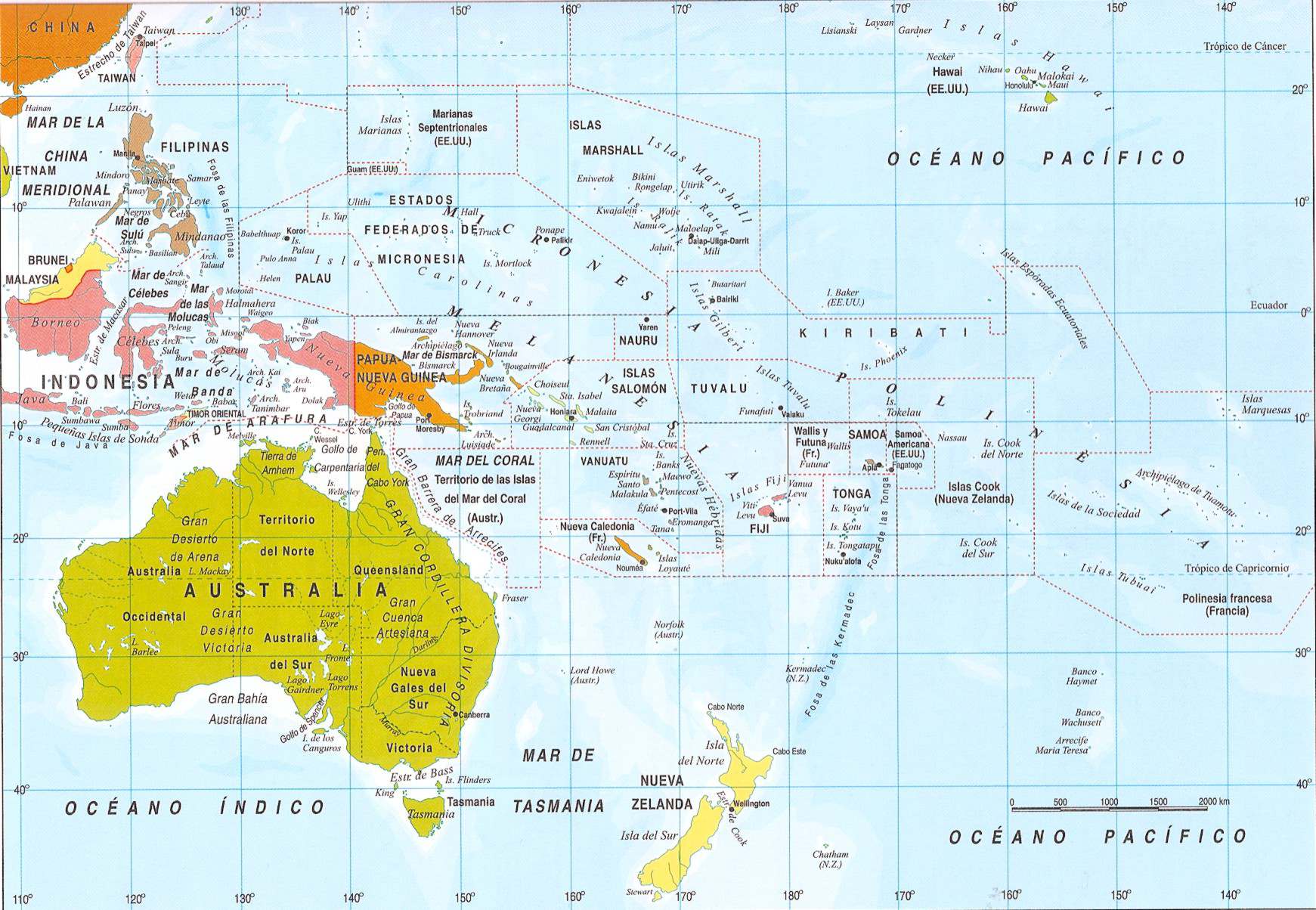
Federal directives to auction millions of hectares of Pacific seabed for mineral recovery expose a profound structural fracture between national security imperatives and regional economic realities. The Marine Minerals Administration, operating under Department of the Interior frameworks, has advanced proposed lease sales spanning federal waters near American Samoa, Guam, and the Commonwealth of the Northern Mariana Islands. This initiative accelerates a global competition for polymetallic nodules containing nickel, cobalt, copper, and manganese. Yet, the architectural design of this policy creates an asymmetrical distribution of risk and reward, placing ecological and localized economic burdens on territories while concentrating strategic assets elsewhere.
The Sovereign Mismatch and Revenue Allocation Mechanics
At the core of the friction between Washington and Pacific territories lies a systemic flaw in revenue distribution. Under current federal legal frameworks governing the outer continental shelf, unincorporated territories and commonwealths lack the revenue-sharing mechanisms granted to domestic states. Royalties and corporate tax receipts generated from extraction within federal waters flow directly to the United States Treasury rather than local territorial budgets.
This institutional reality produces a zero-sum economic model for the region:
- Local municipalities absorb permanent environmental risks without capturing primary fiscal rents.
- Primary economic beneficiaries remain corporate entities and federal supply chains focused on the defense industrial base.
- The absence of local processing facilities ensures that employment multipliers remain near zero for indigenous populations.
Territorial leaders face a governance dilemma. While national strategy frames deep-sea mining as a resource sovereignty necessity to counter foreign mineral monopolies, local administrations view the execution as a modern iteration of resource extraction that bypasses consent. Territorial governors have responded by enacting nearshore moratoria and demanding rigorous baseline studies, creating direct legal and political collisions with federal acceleration schedules.
The Environmental Cost Function and Marine Vulnerabilities
Evaluating the viability of deep-sea extraction requires analyzing the ecological cost function. The targeted abyssal plains and seamounts host fragile ecosystems characterized by slow biological growth rates and high endemism. Industrial mining machinery operating at depths exceeding four thousand meters introduces stressors that current environmental assessments struggle to quantify.
The operational footprint translates into three distinct physical disruptions:
- Benthic destruction occurs as heavy crawler units traverse the seafloor, permanently compacting substrate and crushing sessile organisms.
- Sediment plume dispersion introduces fine particulate matter into mid-water columns, potentially traveling hundreds of miles and disrupting vertical food webs.
- Acoustic pollution from surface vessels and subsea pumps creates persistent low-frequency noise that interferes with marine mammal communication and navigation.
In regions like American Samoa, where local economies rely heavily on commercial tuna fisheries, any disruption to pelagic food webs threatens the primary private-sector employer. The risk profile shifts the economic calculus: speculative mineral wealth traded against active, stable biological industries.
The Geopolitical Urgency Versus Execution Bottlenecks
The primary driver behind the federal push is supply chain vulnerability. Domestic manufacturing and defense sectors depend on foreign sources for critical energy transition inputs. Securing a domestic or controlled maritime supply of polymetallic nodules is viewed by strategists as an urgent national security requirement.
However, this urgency encounters severe execution bottlenecks. Commercial-scale deep-sea mining has no operational precedent; no firm has successfully proven a continuous, economically viable extraction and lifting system at commercial scale. Prototypes face intense mechanical wear from abrasive slurry, high hydrostatic pressure, and extreme logistical remoteness. By attempting to force lease sales before pilot-scale verification is complete, the regulatory framework substitutes technical speculation for operational reality.
Furthermore, skipping early and meaningful community consultation transforms administrative friction into active litigation. Legal challenges filed by regional environmental coalitions and indigenous groups assert violations of procedural due process and environmental review mandates. These judicial proceedings introduce long-term timeline uncertainty, stalling capital deployment for mining conglomerates even if lease auctions proceed.
Aligning maritime mineral policy with regional stability requires restructuring the financial architecture. Federal authorities must decouple resource extraction from unilateral imposition by establishing legally binding revenue-sharing parity for territories, independent scientific oversight committees with veto power over fragile zones, and mandatory liability bonds that internalize long-term environmental remediation costs. Without structural reform to address local fiscal deficits and ecological exposure, the push for Pacific seabed minerals will remain locked in a perpetual cycle of intergovernmental conflict.