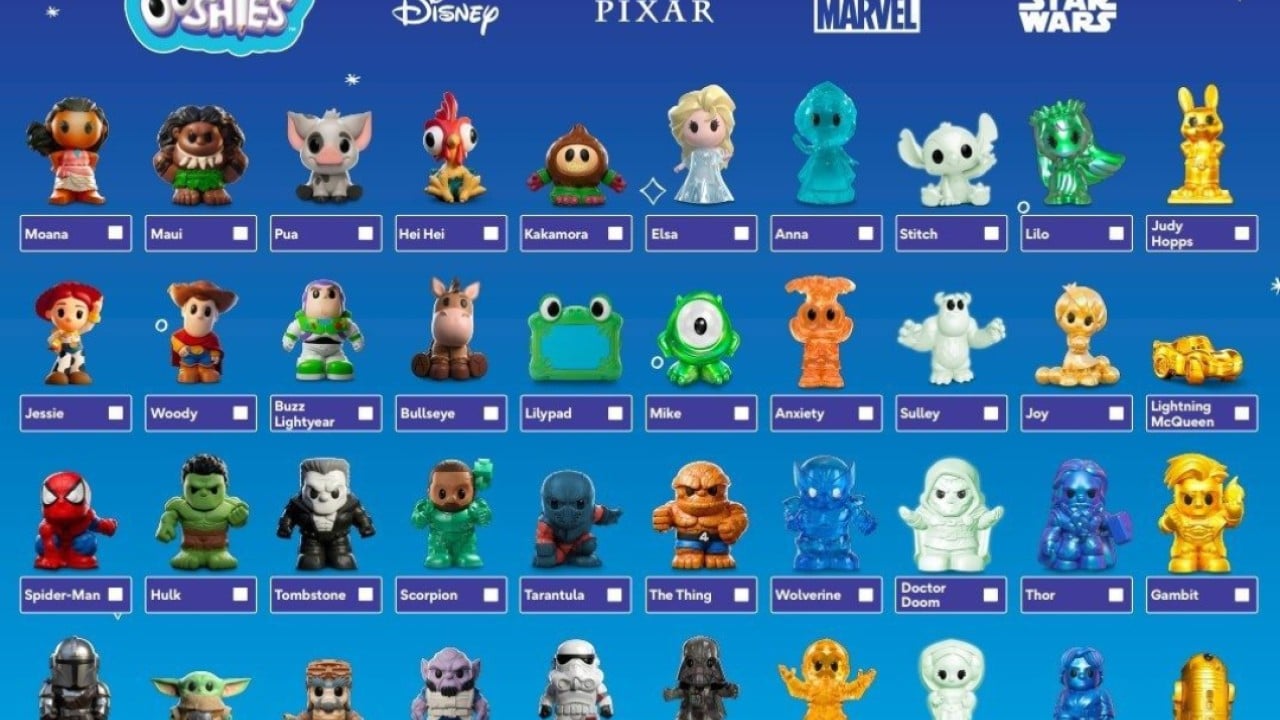
Retail market dominance in a consolidated duopoly rarely shifts through incremental adjustments to shelf pricing. When Woolworths deployed a targeted promotional campaign featuring Disney, Marvel, and Star Wars figurines distributed through opaque packaging upon reaching a thirty-dollar spending threshold, the intervention bypassed standard competitive equilibrium. Quantifiable metrics released in corporate earnings reports reveal that this operational maneuver generated an immediate top-line expansion, lifting total Australian food sales by 7.6 percent in the opening weeks of the fiscal period. Crucially, corporate disclosures attribute roughly 1.5 to 2 percentage points of that acceleration directly to the collectibles initiative, outperforming standard promotional yield models.
Market competitors face a specific structural vulnerability when consumer behavior transitions from rational utility optimization to affective engagement. Primary rival Coles experienced a documented transactional deceleration lasting nearly four weeks across physical stores, even as its broader annual metrics demonstrated stable baseline growth. Analyzing this divergence requires examining the mechanical levers of retail foot traffic, basket size distortion, and temporal demand shifting. Meanwhile, you can find related events here: Why Volkswagen CEO Oliver Blume Is Facing a Brutal Revolt Over Job Cuts.
The Mechanics of Basket Inflation and Threshold Optimization
The primary economic driver of the campaign rests on marginal basket inflation. Setting the eligibility threshold at thirty dollars acts as an artificial price floor for transaction value. Consumers whose natural basket totals twenty-two or twenty-five dollars routinely introduce supplementary items to clear the thirty-dollar hurdle, converting marginal non-buyers into participants.
This mechanism alters the cost-benefit calculus of the grocery run. The incremental cost of adding a low-margin household staple is psychologically offset by the acquisition of a randomized, high-desirability asset. To see the full picture, check out the excellent report by Bloomberg.
- The threshold forces a binary decision matrix upon the consumer: forfeit the collectible or increase basket spend.
- Randomized opaque packaging introduces variable-ratio reinforcement schedules, borrowing principles from behavioral psychology and gaming mechanics to encourage repeat visits.
- Secondary market liquidity, evidenced by thousands of active online trading communities and dedicated swap meets, establishes an external valuation floor for the items.
When parents alter routine shopping habits to consolidate trips at a single provider, competitor churn accelerates. Survey data from the intervention window indicates that nearly two-thirds of households with children actively redirected purchasing power to capture the promotional items. This demonstrates that emotional loyalty hooks can temporarily neutralize structural advantages like price-matching guarantees or proximity.
Asymmetric Vulnerability in Physical Versus Digital Channels
The impact of the promotional campaign was heavily skewed toward physical store networks rather than digital platforms. E-commerce grocery channels rely on algorithmic efficiency, substitution matrices, and friction-free reordering. They optimize for time minimization and cognitive ease. Conversely, physical retail formats depend on sensory immersion, serendipitous discovery, and tactile engagement.
The figurines functioned as a physical traffic catalyst. Because digital fulfillment centers distribute goods from centralized warehouses without the physical point-of-sale interaction required to hand over opaque promotional packs, online channels missed the direct behavioral feedback loop. Consequently, Coles absorbed the brunt of the shock in its brick-and-mortar storefronts, where physical foot traffic dropped while its digital grocery sector continued expanding.
This dynamic highlights a structural limitation in defensive retailing. When a competitor deploys an experiential asset tied exclusively to physical checkout counters, automated fulfillment models cannot execute a direct functional counter-play without altering the digital delivery experience.
Supply Chain Compression and Premature Inventory Depletion
Operational efficiency in retail inventory management typically aims to minimize holding costs while preventing stockouts. However, promotional campaigns utilizing high-velocity collectibles operate under inverse economic rules. Woolworths exhausted its inventory approximately one week ahead of the scheduled campaign termination date due to extreme demand velocity.
Premature depletion introduces a complex operational trade-off:
- Demand Amplification: Scarcity signaling accelerates final-week basket inflation as consumers rush to secure remaining inventory before complete stock exhaustion.
- Goodwill Erosion: Frustrated consumers unable to complete sets face promotional abandonment, risking sudden churn back to rival operators once the scarcity event concludes.
- Working Capital Precision: Over-procurement leaves the retailer holding obsolete licensed inventory with negative salvage value, while under-procurement prematurely caps top-line revenue gains.
The decision to let the inventory run dry rather than re-order underscores the transient nature of fad-driven retail engineering. Sustaining the program beyond a tightly bounded window risks diminishing marginal returns and heightening public scrutiny regarding environmental waste, given that molded thermoplastic items face inevitable disposal criticism.
Capital Allocation Toward Experiential Versus Functional Strategies
The divergence between the two major market participants exposes a fundamental schism in long-term retail strategy. One camp prioritizes capital deployment into automated fulfillment technology, private-label expansion, and perpetual everyday-low-pricing frameworks. The alternative approach reserves capital for periodic, high-impact marketing bursts that capture cultural mindshare and force short-term market share reallocation.
Functional strategies build durable, low-volatility margin stability but struggle to manufacture rapid top-line spikes in a flat macroeconomic environment characterized by constrained household budgets. Experiential campaigns accept high operational friction and margin dilution during the promotional window in exchange for customer acquisition velocity and database expansion.
Inventory depletion rates must be modeled against customer acquisition costs to evaluate the long-term utility of these campaigns. If the transient surge fails to convert temporary switchers into permanent baseline shoppers, the capital expenditure yields a negative net present value once churn normalizes.
Allocate future promotional budgets toward tiered, data-linked loyalty integrations rather than broad-market physical giveaways, deploying algorithmic personalization to target high-lifetime-value segments with exclusive redemption mechanics while insulating baseline margins from broad operational shocks.