The air at nine thousand feet does not warn you. It simply thins, cools, and waits.
When you pack a mountain bike for an afternoon ride in the Lake Tahoe high country, your mind naturally constructs a specific version of the day. You anticipate the satisfying crunch of decomposed granite under knobby tires. You picture the sharp, clean scent of Jeffrey pines baking in the midday sun. If you are a father bringing your toddler along in a specialized carrier, your mental loop is filled with the sound of small, delighted giggles bouncing off the granite walls.
You do not plan for the silence. You certainly do not plan for the whiteout.
The transition from a crisp autumn excursion to a survival situation is rarely a dramatic, cinematic event. It happens in the space between two breaths. One moment the trail is a clear ribbon of dirt; the next, a sudden, unforecasted drop in atmospheric pressure pulls a ceiling of heavy, moisture-laden clouds over the peaks. The temperature plummets thirty degrees in less than an hour. Then, the snow starts falling. Not the soft, picturesque flakes of a postcard, but a blinding, horizontal assault that erases the horizon, the trail, and the cellular signals we blindly rely on to anchor us to civilization.
This is the reality that caught a father and his very young child off guard on a trek into the Sierra Nevada backcountry. It is a stark reminder of a truth that modern outdoor enthusiasts frequently forget: technology has made the wilderness feel accessible, but it has not made it any less savage.
The Illusion of the Managed Wilderness
We live in an era of unprecedented outdoor access. High-performance gear, digital mapping applications, and lightweight child carriers have stripped away the traditional barriers to entry for extreme environments. It is easy to look at a digital screen, see a blue dot blinking on a downloaded map, and mistake that visual data for actual safety.
But a map cannot keep a two-year-old warm when the ambient temperature drops below freezing.
When the snow began accumulation on the high-altitude trails outside Tahoe, the father faced the immediate, terrifying math of hypothermia. In adults, the body protects itself by constricting blood flow to the extremities to keep the core warm. We shiver. We complain. We move faster. A toddler’s body lacks the sheer mass to regulate temperature effectively in a passive state. Sitting still in a bike seat or a backpack carrier, exposed to the biting wind, a child becomes a thermodynamic radiator, losing heat at an alarming rate.
The immediate instinct in a crisis is often to push through—to pedal harder, to find the trail by force of will. But the Sierra high country in a snowstorm becomes a labyrinth of identical white contours. Landmarks vanish. Tracks are buried within minutes. The father made the critical, counterintuitive decision that likely saved both of their lives: he stopped moving, sought what little shelter the subalpine terrain offered, and waited for help.
The Invisible Machinery of Rescue
While a stranded parent watches the snow pile up on their boots, an invisible, highly complex apparatus begins to turn back in the valley.
Search and rescue operations in alpine environments are masterpieces of improvised logistics. The moment the call comes in—often relayed through a faint, dying cellular ping or a worried spouse reporting an overdue return—local sheriff's departments, volunteer search teams, and state parks personnel mobilize.
They do not just hike into the woods with flashlights. They analyze cell tower handshakes, map the last known coordinates, and deploy specialized tracked vehicles capable of clawing through fresh, unpacked snow on steep gradients.
Consider the mental state of the rescuers driving those vehicles. They know the clock is ticking exponentially faster because a child is involved. They know that even a minor mechanical failure on their own equipment could turn rescuers into victims. They navigate through a white screen where the boundary between the trail and a hundred-foot drop-off is completely invisible.
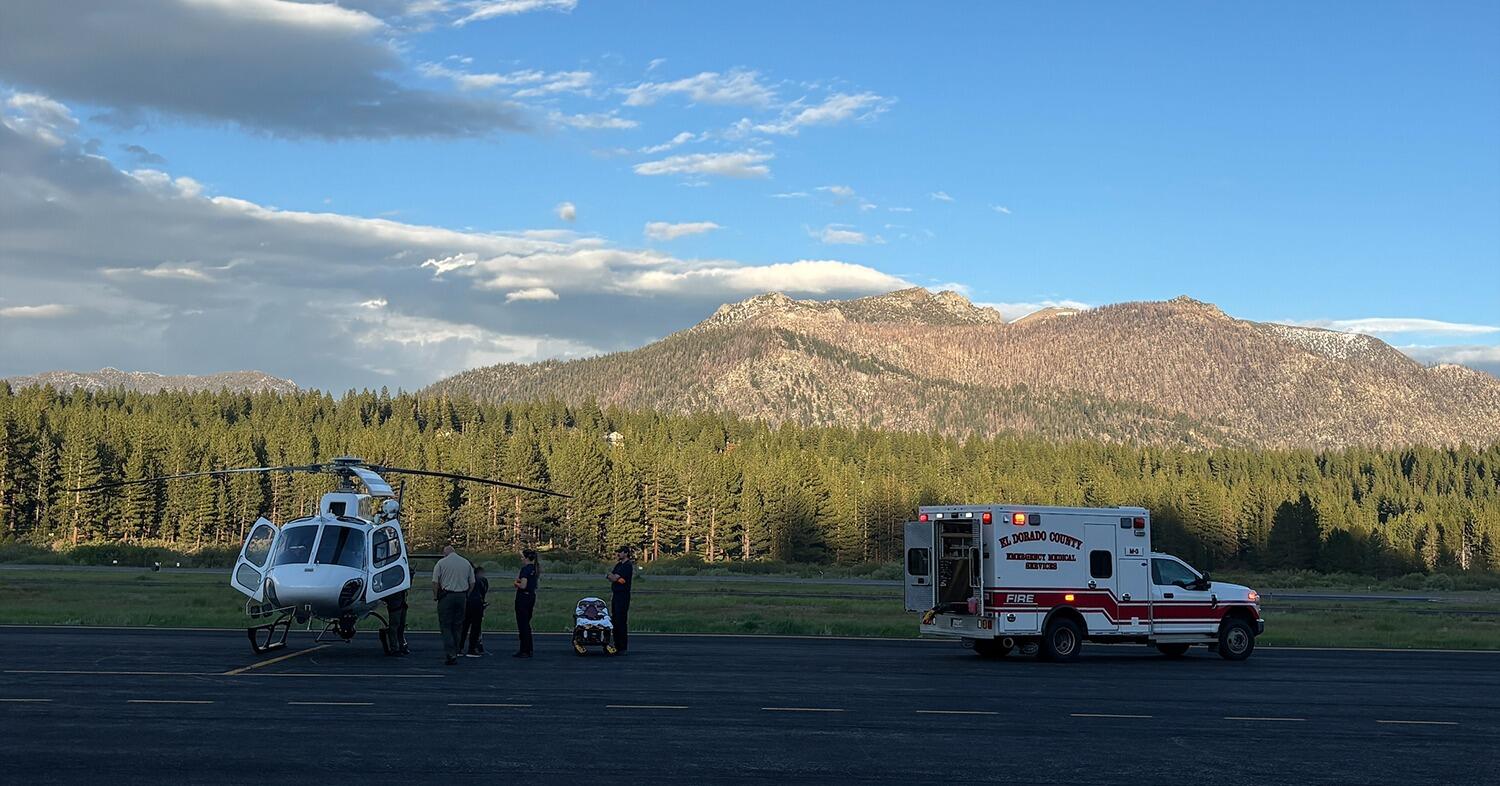
The rescuers eventually found the pair deep in the high country, shivering but alive, wrapped in whatever spare clothing the father had managed to pack. The child was treated immediately for exposure. The physical injuries healed quickly, but the psychological boundary line had been permanently crossed.
The Fine Line of the Packing List
Every experienced backcountry traveler knows the concept of the "Ten Essentials." It is a list we dutifully memorize but often trim down to save weight. A matches capsule here, an extra space blanket there—it seems harmless to leave them behind when the sky is blue at the trailhead.
The Tahoe incident forces a uncomfortable re-examination of our relationship with gear. When you travel with a child, your packing list is no longer about your own comfort; it is a literal life-support system.
An extra wool layer that seems bulky in the parking lot becomes the most valuable asset on earth when the wind begins to howl. A simple, analog whistle can cut through the roar of a mountain blizzard far better than a human voice screaming for help until the throat is raw. Most importantly, a reliable, satellite-based communication device—one that bypasses the cellular grid entirely—is the difference between a localized inconvenience and a multi-day tragedy.
The mistake isn't going into the mountains. The mistake is believing the mountains care that you are there.
The True Cost of Pushing the Boundary
There is a specific kind of quiet that settles over the Sierra Nevada after a heavy snowfall. The trees hold the weight of the white powder, and the wind eventually dies down to a soft, rhythmic whistle. It is beautiful, serene, and utterly indifferent to human survival.
The father and his child walked away from the high country because a line of dedicated volunteers risked their own safety to track them down through a blinding squall. They walked away with a profound story and a new understanding of the thin margin that separates an adventure from a disaster.
Next time you strap a helmet onto a child or check the tire pressure before a climb into the high country, look past the digital display on your phone. Look at the sky. Respect the clouds moving over the western ridge. The wilderness does not offer compromises, and it never signs a truce.