Eight hundred thousand.
Say it slowly, let the syllables sit in the back of your throat like dry dust from a mountain pass, and try to picture what that number actually means when a war shuts down the roads. In a press release or a ticker scrolling at the bottom of a news broadcast, eight hundred thousand people without food aid reads like a ceiling—a tidy statistic you skim before checking the weather. On the ground, it is eight hundred thousand separate kitchens going quiet at sundown. You might also find this connected coverage useful: Why the SIRA Act Sparks a Fierce Fight Over Taxpayer Research.
I have stood on enough dusty edges of supply lines to know what happens the day a relief truck does not come. You hear the silence first. Not the dramatic silence of a movie battle, just the flat, heavy quiet of a courtyard where no mortar is falling yet, where women are sweeping swept-earth floors they swept yesterday, waiting for an engine sound that never climbs the ridge. Anyone who has spent time near humanitarian corridors knows how quickly paper promises turn into empty tin cans when front lines shift or checkpoints harden.
Let me be honest with you right from the start: I do not have a neat fix for a conflict that has ground down Yemen for over a decade, and if you feel a cold knot of helplessness reading about another aid bottleneck, you are not alone. War is confusing. Shifting alliances, closed ports, bureaucratic stalls, fuel shortages, and sudden clashes blur into a tangle that makes even seasoned observers pause and ask how food meant for starving families gets trapped miles away from the mouths that need it. As discussed in detailed reports by Reuters, the effects are widespread.
To understand why eight hundred thousand people are being left without food assistance as fighting worsens, we have to move past the headline and follow the chain that carries a sack of wheat flour or a jug of cooking oil from a warehouse to a child's hand. Think of a humanitarian supply chain like a long, fragile relay race run across fractured glass. Every handoff—port unloading, customs clearance, fuel allocation, road security, local distribution—is a baton. Drop one baton in a war zone, and the runners behind it stall.
(Note: The following character is a hypothetical composite built to illustrate documented conditions faced by displaced families in Yemen; she is not a real individual.)
Call her Samira, a mother of three living in a tarp-and-mud shelter outside a contested district. In Samira's world, hunger does not arrive all at once like a lightning strike. It creeps in by degrees. First, meat disappears from the pot, replaced on rare days by boiled lentils or whatever greens can be gathered along a dry wadi. Then the rice shrinks from two cups to one, stretched thin with water until the broth looks milky and thin as dishwater. By the time a scheduled food ration is delayed—or cut off entirely because fighting has flared along the route—her youngest son's ribs are already counting themselves every time he breathes.
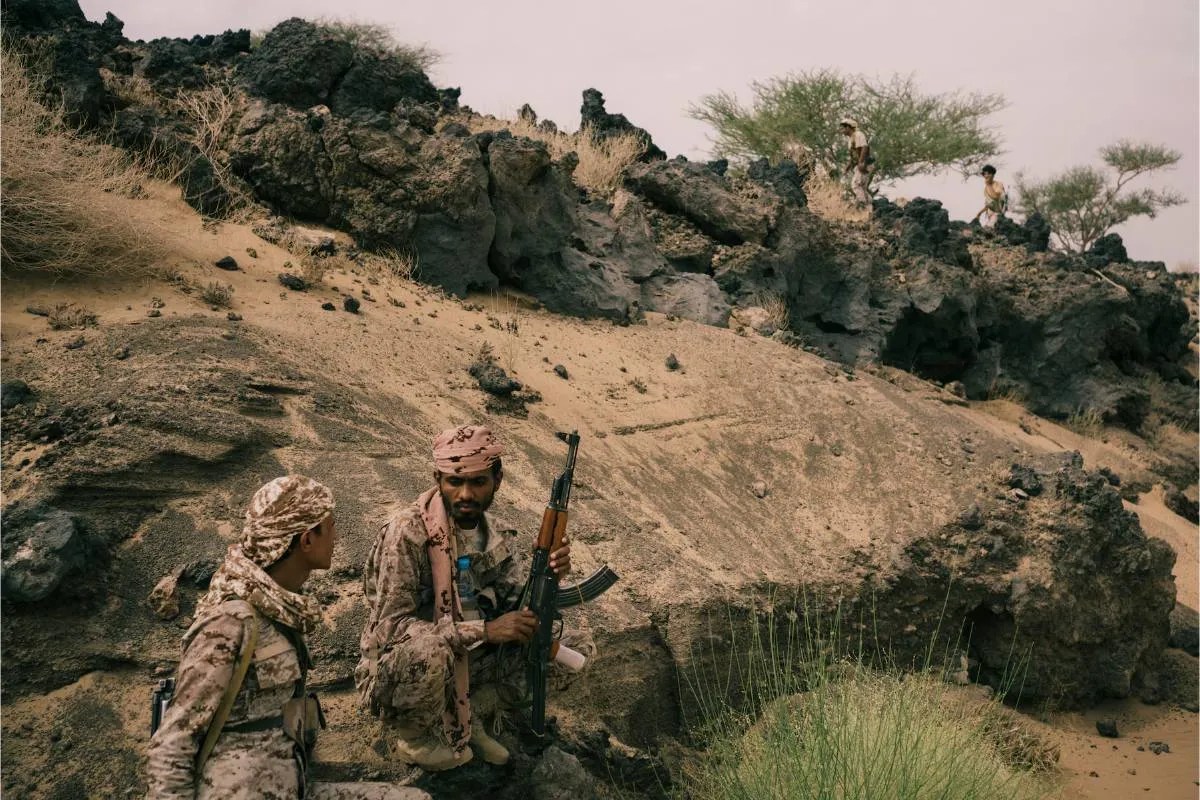
When fighting escalates in Yemen, food does not simply vanish from the planet; it gets severed from the people who cannot walk to it or pay for it. Active clashes turn highways into gamble zones. Drivers who already risk their lives hauling cargo through checkpoints and damaged bridges cannot move safely when artillery exchanges begin or armed groups tighten movement controls. Even when food sits in regional hubs, conflict fractures the logistics web: fuel prices spike, local markets buckle, currency values erode, and families who have already been displaced once or twice lose the last sliver of income they had to buy a loaf of bread.
Consider what happens next: a family that was already living on the razor's edge of food insecurity has zero cushion. There is no pantry reserve, no savings account waiting in a bank branch down the street, no uncle with a pickup truck who can drive twenty miles to the next town without risking an ambush or an extortion fee at a makeshift barrier. When aid access drops or distributions pause because of security risks and operational hurdles, the gap between "delayed" and "catastrophic" closes in days, not months.
Look at the ribbon of asphalt winding through dry hills and pale stone in the image below. From high above, a line of vehicles on an arid mountain road looks almost peaceful—small white shapes moving across ochre earth beneath a wide sky. Down at ground level, that same stretch of road can mean the difference between a full flour sack and an empty stove.
Why do eight hundred thousand people feel like both a massive crowd and a blur? Because human brains are wired for faces, not millions. If I tell you that one family in Taiz or Hajjah or Marib missed their monthly food basket, you can picture a table with nothing on it. Multiply that by eight hundred thousand and the number goes numb. Yet each of those eight hundred thousand lives has its own clock. A toddler fighting acute malnutrition cannot wait three weeks for a ceasefire negotiation to finish. An elderly grandparent with hypertension or diabetes cannot live on tea and dry scraps while negotiations stall over a transit corridor.
Historical memory matters here too. Yemen has faced overlapping crises for years—protracted civil war, economic collapse, cholera outbreaks, destroyed health clinics, and repeated waves of displacement that have turned millions into perpetual newcomers in their own country. When a conflict flares up again, it does not hit a healthy society that can bounce back quickly. It hits a house whose foundation has already been weakened by rain, tremors, and years of neglect. Every new round of fighting tears away another piece of what little stability remained.
People often ask a simple, piercing question when they read numbers like this: Why doesn't the food just get through anyway? It is a fair question, and the answer is rarely one villain flipping a switch. Sometimes roads are physically blown out or mined. Sometimes warring parties block convoys or impose impossible delays on permits and clearances. Sometimes local insecurity makes an area too dangerous for aid workers and truckers to enter without risking lives—and if a convoy is attacked or seized, not only is that shipment lost, future deliveries become even harder to organize. Money shortages and funding gaps also shrink what agencies can deliver even when access opens briefly.
Another question lingers just underneath: Does missing food aid mean people starve overnight? No, and that slowness is part of the trap. Starvation in protracted conflicts is usually a grinding wear-down rather than a single dramatic day. Families skip meals. Parents eat last—or not at all—so children get a handful of grain. Immune systems weaken, turning a common cold or stomach bug into something life-threatening. Children pull out of school to forage, fetch water, or beg, trading their future away just to survive the afternoon.
(Note: The following logistics coordinator is also a hypothetical composite created to explain the practical friction behind aid delivery in active conflict zones.)
Imagine Tariq, a local logistics coordinator staring at a map marked with red pins and crosshatched zones. At dawn, two trucks are cleared to move; by mid-morning, a clash erupts near a crossroads, and the route is red-lined. Tariq has to make a gut-wrenching call: push forward into active danger and risk losing the crew and the cargo, or hold the trucks in a depot while families three hours away wait by empty cooking pots. Every hour he waits feels like betrayal; every mile he sends them into gunfire feels like recklessness. There is no heroic shortcut in that room—only bad choices and narrower margins.
When aid agencies warn that eight hundred thousand people are not receiving food assistance amid worsening fighting, they are sounding an alarm before the worst dominoes fall. Early warnings exist to spur urgent diplomatic pressure for safe, unimpeded humanitarian access, to push donors to keep emergency pipelines funded, and to keep the world from treating a worsening crisis as background noise.
Still, I catch myself wondering how much outrage a headline can buy when the news cycle moves so fast. One day a conflict is urgent; the next day another crisis crowds the screen, and the people in the camps or mountain villages are still there, counting grains in the bottom of a sack.
Watch what happens when food assistance stops reaching eight hundred thousand people: markets tighten, prices climb out of reach for non-recipients too, and desperate choices multiply. A family sells a door frame or a piece of iron sheeting for cash to buy a few kilos of flour. A young man takes a dangerous job just to send home a fraction of what used to be enough. The damage ripples outward long after the immediate headline fades.
You do not need to memorize every faction name or every district boundary to grasp what is at stake. All you need to hold onto is the simplest truth of human survival: when war blocks the road between food and hunger, the bill always comes due in human bodies.
Somewhere tonight, a mother will look into an empty pot, listen to a child cough in the dark, and wonder if tomorrow morning will bring the sound of tires on gravel—or nothing at all.