The camera light blinked red. Just a tiny, silent dot in the corner of a cramped studio, yet it held the weight of a city.
Outside, the evening air smelled of damp asphalt and exhausted car exhaust. Inside, the clock ticked down. Three, two, one. Live.
Local elections usually arrive with the quiet dignity of a fog rolling in. Press releases pile up in unread inboxes. Debates drone on in auditoriums half-filled with politicians' relatives and volunteers passing around lukewarm coffee. Voters tune out because the language sounds like a foreign dialect translated by a malfunctioning algorithm. Policy points. Budget allocations. Statutory requirements. It is a wall of gray built to keep ordinary people out.
Then came Tuesday night.
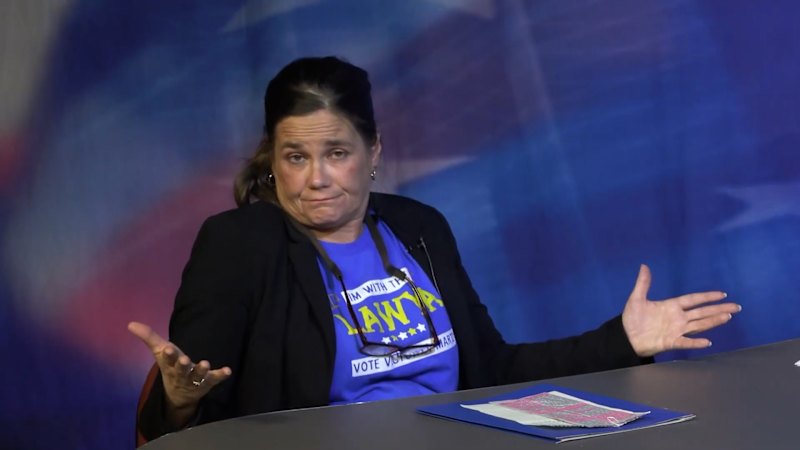
A Democratic candidate for a local council seat sat under the harsh glare of the studio lights, facing an interviewer whose questions were designed to box her into a corner. It was supposed to be routine. Another five-minute segment slotted between commercial breaks, destined for the digital graveyard of municipal access television.
Instead, it caught fire.
By midnight, the clip had escaped local boundaries. By morning, it was looping on phones across the country, shared by teenagers who couldn't vote yet, commuters stuck on crowded trains, and cynical adults who had long since given up on civic participation.
Why? Because for eight fleeting minutes, politics stopped sounding like a press release and started sounding like human speech.
We have built an entire culture around polish. Every public figure is supposed to be wrapped in Teflon, armed with talking points that deflect meaning rather than convey it. When someone stumbles over a statistic, breathes audibly, or looks a hard truth directly in the eye without a safety net, it feels revolutionary.
Consider what happens when a politician refuses to hide behind jargon.
The question was simple. It was about funding for a neglected transit line that serves the industrial edge of the district. The kind of place politicians visit in October and forget by November. The interviewer leaned forward, weaponizing a statistic about municipal debt like a gavel.
The candidate didn't pivot. She didn't launch into a pre-packaged speech about fiscal responsibility or community partnerships.
She paused.
In television, silence is treated as a mortal sin. Producers panic if dead air stretches past two seconds. But in that silence, millions of viewers leaned toward their screens. They saw a person remembering.
"My uncle worked the night shift at the manufacturing plant at the end of that line," she said, her voice dropping an octave. "He didn't care about municipal debt ratios. He cared if the 5:15 bus was going to show up when the temperature dropped to twelve degrees."
It wasn't a policy paper. It was a memory. And it unlocked something dormant in the audience.
We are starving for authenticity in public life. We live in an era where every word is scrutinized for angle, where communication feels transactional, where trust has eroded into a fine, gray dust. When someone breaks character—when they drop the mask of the polished candidate and reveal the nervous, genuine citizen underneath—the impact is seismic.
The viral spread of that interview wasn't an accident of the algorithm. It was a referendum on how we talk to one another.
Algorithms chase engagement, yes. But human beings chase resonance. We share things that put words to the frustrations we feel in our bones. We amplify voices that sound like our own kitchen tables rather than a corporate boardroom.
By sunrise, the local campaign office was unrecognizable. Phones were ringing off the hook. Volunteers who had been ghosted for weeks were suddenly swamped with text messages from people asking how they could help. Donations trickled in, then flooded.
A single moment of unscripted honesty had pierced the noise.
Yet, the danger of viral moments is that they burn bright and fast, turning complex political realities into fleeting entertainment. A ten-second soundbite can launch a movement, but it cannot pave a road, balance a budget, or fix a broken transit system. The real test begins when the cameras turn off, the internet moves on to the next shiny distraction, and the hard, grinding work of governance resumes.
The red light on the camera went dark. The studio lights cooled down.
The candidate unclipped her microphone, walked out of the building, and stepped back into the cold night air, where the 5:15 bus was still running late.