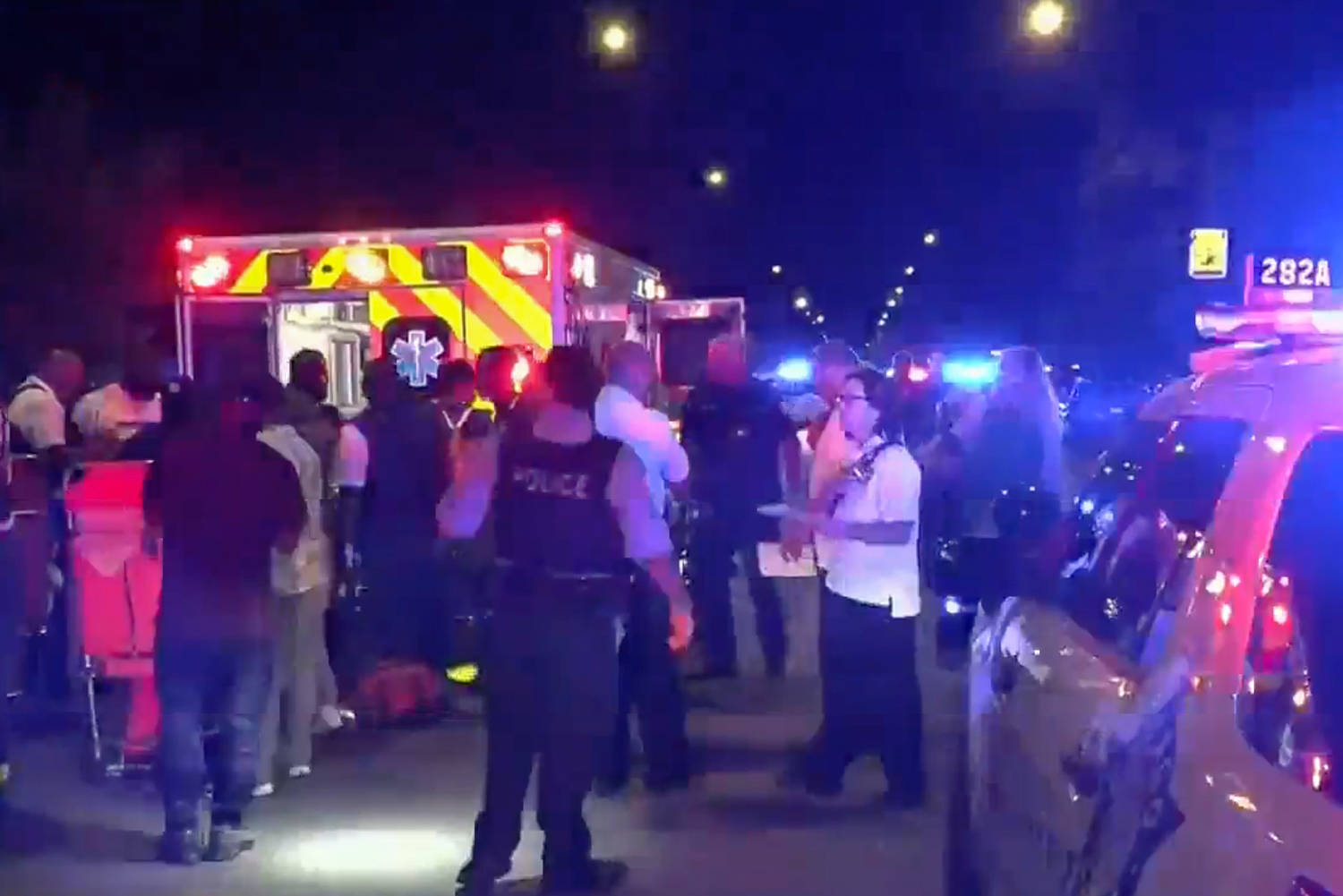
Every single time gunfire erupts on a Chicago weekend, the media machinery kicks into a predictable, exhausted gear. The ticker updates the body count. The talking heads wring their hands over gun laws or police response times. Then, everyone goes home to wait for the next incident.
We are measuring the wrong things, having the wrong fights, and expecting structural miracles from tactical Band-Aids.
I have spent years looking at urban violence data, and the standard reporting misses the fundamental reality of how these crises actually unfold on the ground. The consensus narrative focuses entirely on the immediate tragedy—the police sirens, the hospital intake doors, the political finger-pointing. That focus is a trap. It keeps us trapped in a perpetual loop of grief and reaction while ignoring the structural failures that make these Saturday night shootings inevitable.
The Fallacy of the Response Metric
The public obsession is always speed. How fast did the ambulance arrive? How many squad cars responded? Did the trauma center have enough beds?
These questions matter, but they are downstream from the actual failure. When a mass shooting occurs in a Chicago neighborhood, the city treats it as a medical emergency or a criminal justice failure. It is neither, primarily. It is an infrastructure failure of community stabilization.
If your entire strategy relies on how quickly a surgeon can patch a severed artery after the trigger is pulled, you have already lost. You are managing the carnage, not stopping it. We pour billions into the tail end of the violence pipeline while starving the mechanics of prevention that actually alter human behavior.
What the Data Actually Tells Us About Saturday Nights
Look past the breaking news alerts. The concentration of weekend violence in specific corridors is not random, nor is it merely a function of illegal firearm supply. It correlates directly with environmental degradation, institutional abandonment, and the complete collapse of third places where young people can exist without threat.
When neighborhoods are stripped of economic gravity, public spaces become contested territories. The gun is simply the terminal tool of a much deeper territorial dispute born of desperation and the absence of legitimate conflict resolution structures.
Municipal leaders love to announce new task forces and overtime saturation patrols whenever a weekend spikes. It plays well on the six o'clock news. But saturation policing treats symptoms while eroding whatever fragile trust remains between residents and the state. It creates a high-tension fishbowl where minor infractions escalate because the baseline anxiety is permanently dialed to maximum.
The Uncomfortable Truth About Intervention
Real intervention is boring, unglamorous, and expensive in ways that politicians hate because it does not yield a ribbon-cutting photo opportunity before the next election cycle.
It requires funding hyper-local, street-level mediators who know the individuals involved long before a gun is drawn—people who operate outside the traditional badge-and-gun framework. It requires stabilizing housing markets so families aren't constantly uprooted, destroying social cohesion. It requires lighting dark streets, cleaning vacant lots, and funding round-the-clock youth infrastructure that competes effectively with the street economy.
Most critics of this approach claim it is too soft or takes too long. They demand immediate crackdowns. But the crackdown model has had decades to prove itself in Chicago, and the recurrence of these Saturday night tragedies is its scorecard. It does not work.
We keep doubling down on a broken strategy because admitting that the solution requires generational, structural investment is politically inconvenient. So we stay trapped in the cycle. We count the dead, argue about legislation that remains gridlocked, and wait for next weekend.
Stop asking how fast the ambulances got there. Start asking why the neighborhood was a war zone in the first place.