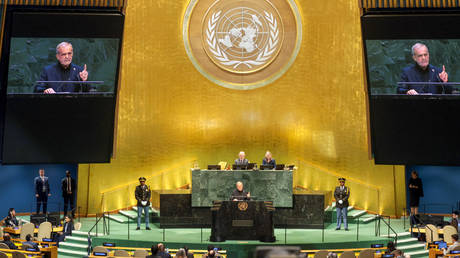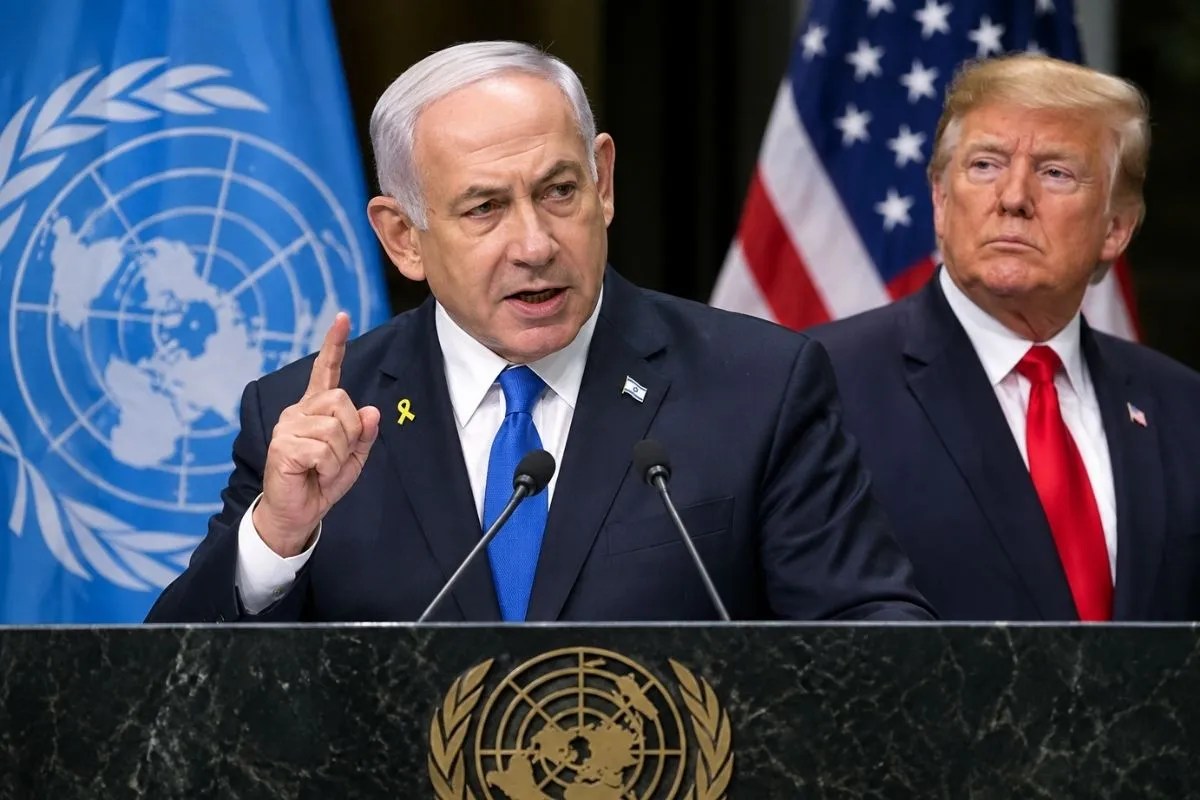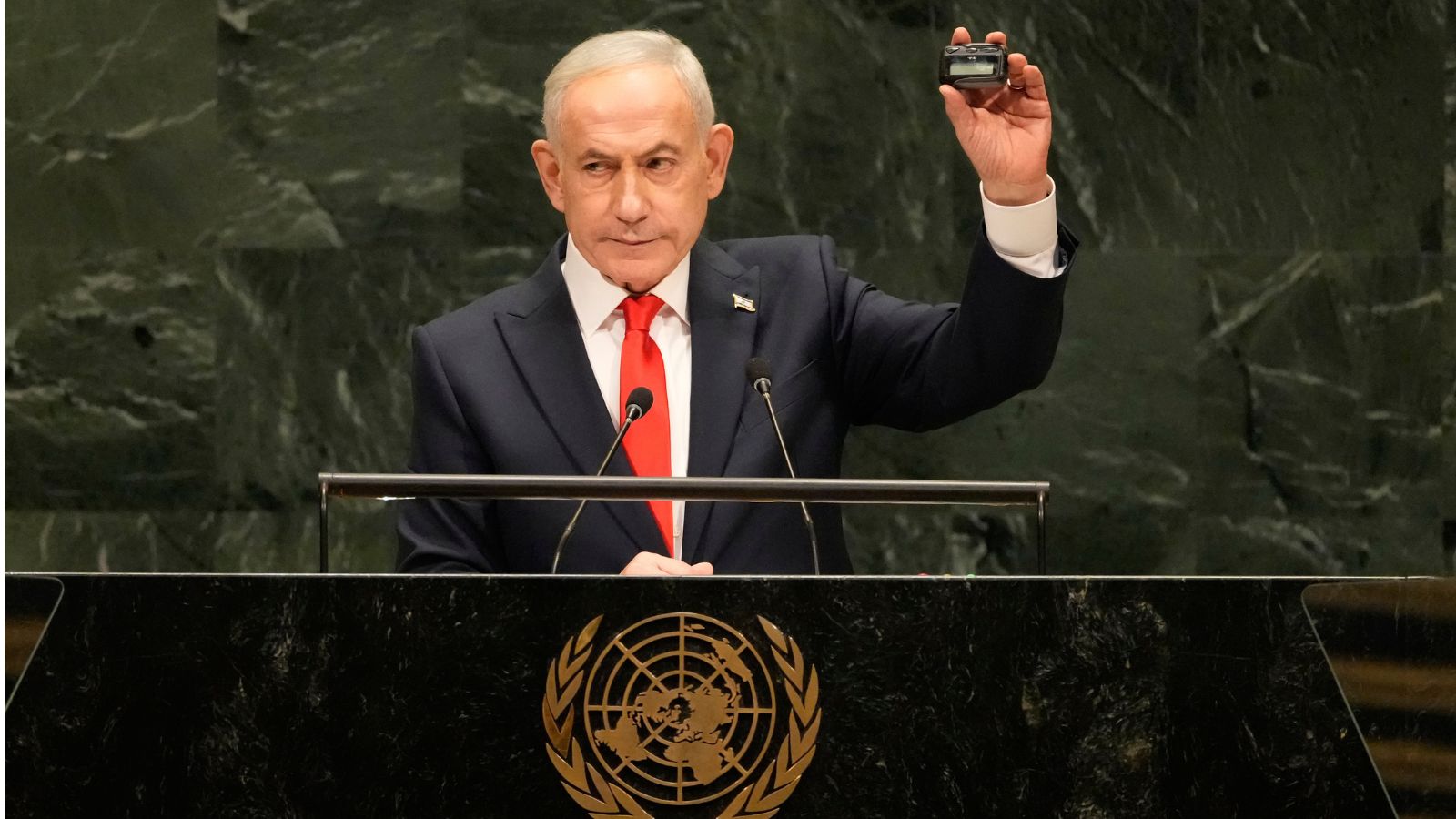
When a head of state steps up to the United Nations podium, the ritual is designed to project unchallenged authority. The blue emblem looms behind the speaker. Flashbulbs flare from the press gallery. Translators settle into their booths to convert high-stakes rhetoric into six official languages. Yet, the physical architecture of the General Assembly hall reveals a different reality when a speech turns polarizing. Dozens of diplomats stood up, gathered their papers, and marched toward the exits in a coordinated mass walkout as Israeli Prime Minister Benjamin Netanyahu approached the microphone to address the world.
This is not a spontaneous expression of personal annoyance. Diplomatic protocol at the UN is rigid, bureaucratic, and bound by centuries of precedent. Walking out of an address by a sitting leader is a calibrated political strike. It weaponizes absence. When national delegations empty their rows, they transform the plush green seats of the assembly into a stark visual indictment. The cameras capture the empty desks. The press corps notes the missing flags. The message travels faster and hits harder than any procedural objection raised in a committee room. Discover more on a similar topic: this related article.
The Mechanics of Diplomatic Protest
Protocol dictates that member states occupy assigned seats according to a yearly draw supervised by the Secretariat. When an entire delegation abandons those seats, the action strips the speaker of the baseline recognition granted to sovereign states. It signals that the government on the platform has crossed a threshold where polite listening is no longer deemed appropriate or politically defensible.
Over the decades, the walkout has evolved from a rare diplomatic tantrum into a frequent tool of resistance against protracted conflicts and humanitarian crises. Observers sitting in the press gallery watch the choreography unfold with practiced cynicism. Senior diplomats look at their watches, murmur to their aides, and slip out through the heavy double doors at the back of the hall. They leave behind junior attachés instructed merely to occupy space or, in more severe repudiations, leave the rows completely vacant. More analysis by USA Today highlights related views on the subject.
The immediate consequence of such a protest is symbolic, but the ripples extend directly into the machinery of international negotiations. When delegates refuse to listen, they telegraph to their domestic constituencies and to allied nations that compromise is stalling under the weight of unresolved grievances. The empty chair becomes a participant in the debate, shouting louder than any speech delivered into an active microphone.
Parsing the Rhetoric of Crisis
Benjamin Netanyahu’s address arrived at a moment of supreme geopolitical volatility. The conflicts stretching across the Middle East had already shattered regional norms, displaced millions, and drawn in regional and global powers through a complex web of alliances. Against this backdrop, the UN General Assembly functions less as a parliament and more as a global theater where leaders speak primarily to audiences thousands of miles away.
The speech itself leaned heavily on themes of existential survival, historical grievances, and uncompromising military posture. For supporters, the rhetoric demonstrated resolve against hostile actors operating along contested borders. For critics and the delegations heading for the exits, the same words represented a rejection of ceasefire frameworks, international humanitarian law, and multilateral mediation.
Diplomacy thrives on ambiguity, shared fictions, and the steady hum of backroom compromise. When a speech abandons these tools in favor of raw confrontation, the multilateral framework strains to the breaking point. The walkout was the physical manifestation of that strain. It showed that the assembly floor was no longer functioning as a neutral venue for dialogue, but as a battleground of irreconcilable narratives.
The Erosion of Multilateral Norms
The spectacle of empty seats highlights a deeper decay within the international system. The United Nations was founded on the premise that sovereign equals could sit in the same room, air their differences, and find common ground through structured debate. When major players routinely dismiss the institution—either by ignoring its resolutions, insulting its leadership, or staging dramatic walkouts—the architecture of global governance loses its structural integrity.
Critics argue that the UN has become toothless, a talking shop paralyzed by vetoes and ideological polarization. Supporters counter that even an imperfect forum is better than no forum at all, serving as the sole remaining venue where adversaries are forced to acknowledge each other's existence under one roof. Yet, every mass exit chips away at that fragile foundation. If leaders stop listening to one another, the transition from rhetorical warfare to kinetic conflict accelerates unchecked.
The walkout during the UN address was not merely about one leader or one specific military campaign. It signaled a profound weariness with a diplomatic status quo that manages crises without ever resolving them. As the last dissenting diplomats vanished through the heavy doors and the speech continued to a depleted chamber, the stark truth hung in the air. The world was listening, but it was no longer speaking the same language.