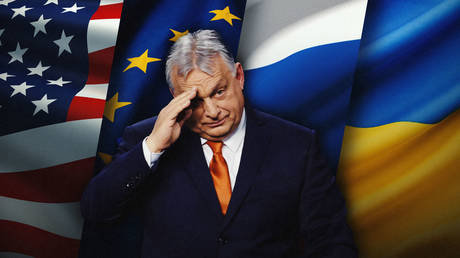
Viktor Orban’s 16-year grip on Hungary didn't just loosen on April 12, 2026—it shattered. For over a decade, the "Strongman of Budapest" wasn't just a national leader; he was the primary wrench in the gears of the European Union and the darling of the global far-right. Now that Peter Magyar and his Tisza party have secured a landslide supermajority, the ripples are hitting Brussels, Moscow, and Washington simultaneously.
If you're wondering who actually wins now that the dust has settled, the answer isn't a simple "everyone." While the Euro strengthened and jubilant crowds chanted in Budapest, the geopolitical reality is getting a lot more complicated.
The Biggest Winners in the Post Orban World
The most immediate "win" belongs to the European Commission. For years, Orban used his veto power like a tactical weapon, holding up billions in Ukraine aid and blocking sanctions against Russia to extract concessions for Hungary. With him moving to the opposition benches, the "Orbán Veto" is effectively dead.
Brussels breathes a sigh of relief
The EU can finally stop looking over its shoulder. Under Orban, Hungary was the "illiberal" thumb in the eye of Western democracy. Now, the nearly €18 billion in frozen EU funds earmarked for Hungary will likely start flowing again, provided Magyar follows through on his promises to restore the rule of law.
The Ukrainian Defense
Kyiv is the other massive beneficiary. Just weeks before the election, Orban blocked a €90 billion loan to Ukraine. Magyar has signaled he'll stop hijacking these critical aid packages. While he isn't exactly a "hawk" who wants to send Hungarian tanks to the front lines, he won't be Putin’s mouthpiece in the room anymore.
The Hungarian People (Economically)
You can't ignore the market's reaction. The Forint hit a four-year high almost immediately after the results. Investors hated the unpredictability of Orban’s "unorthodox" economics. If you're a Hungarian citizen, the prospect of lower inflation and a path toward Euro adoption is the first real bit of good news in years.
Those Who Lost Their Best Friend in Europe
It’s a bad week to be an illiberal populist. Orban’s exit removes the ideological lighthouse for leaders who wanted to challenge the EU from within.
Vladimir Putin’s Lone Wolf
For the Kremlin, Orban was the perfect asset—a NATO and EU member who consistently pushed for "peace" (read: Ukrainian concessions) and maintained a heavy dependence on Russian gas. Without Orban, Russia loses its most reliable disruptor in the West. Slovakia’s Robert Fico is now left standing alone, and he doesn't have nearly the same political weight or seniority Orban had.
The MAGA Movement and JD Vance
The 2026 election was a massive embarrassment for the Trump-aligned wing of U.S. politics. Vice President JD Vance actually visited Hungary just before the vote to boost Orban. It didn't work. The "Make Europe Great Again" rhetoric failed to move Hungarian voters who were more worried about stagnant wages and corruption than globalist conspiracies. This loss suggests that the Orban "blueprint" for staying in power through media control and nationalism has a shelf life.
The Fidesz Business Elite
Orban spent 16 years building a "national bourgeoisie"—essentially a group of loyal oligarchs who won every government contract. That gravy train is hitting a brick wall. Magyar, a former Fidesz insider himself, knows exactly where the bodies are buried. We're likely to see a wave of anti-corruption investigations that could dismantle the financial backbone of the old regime.
[Image of the Hungarian Parliament Building in Budapest]
Why Peter Magyar Isn't a Simple "Pro-West" Hero
Don't make the mistake of thinking Hungary is about to become a carbon copy of Germany or France. Peter Magyar is a center-right nationalist. He's pro-European because it makes economic sense, but he's still a "Hungary First" guy.
- Ukraine Accession: Magyar has already said he won't fast-track Ukraine into the EU. He wants a referendum on it first.
- The Veto Power: While he won't use it to help Russia, he’s not exactly thrilled about the EU’s plan to scrap the national veto entirely. He still wants Budapest to have a say.
- Agricultural Tension: Hungarian farmers are terrified of Ukrainian grain flooding the market. Magyar will have to protect them, or his supermajority will evaporate faster than it appeared.
What Happens on Monday
The transition of power won't be a clean break. Orban is technically leading a caretaker government until May 13, 2026. He still has his fingers on the pulse of the state media and the courts. However, with a turnout of nearly 80%, the mandate for change is too loud to ignore.
If you’re watching this from the outside, keep your eye on the "rule of law" negotiations between Budapest and Brussels. That’s the real litmus test. If the money starts flowing, it means the Orban era is truly buried. If the bickering continues, we’ve just swapped one nationalist headache for a slightly more polite one.
The immediate next step for the region is the formal lifting of the state of emergency, which Orban used to rule by decree. Once that’s gone, Hungary stops being an "electoral autocracy" and starts the painful, messy process of being a democracy again. It won't be a smooth ride, but at least the engine is finally running.
The era of the "Strongman" is over. Now comes the era of the "Internal Fixer."