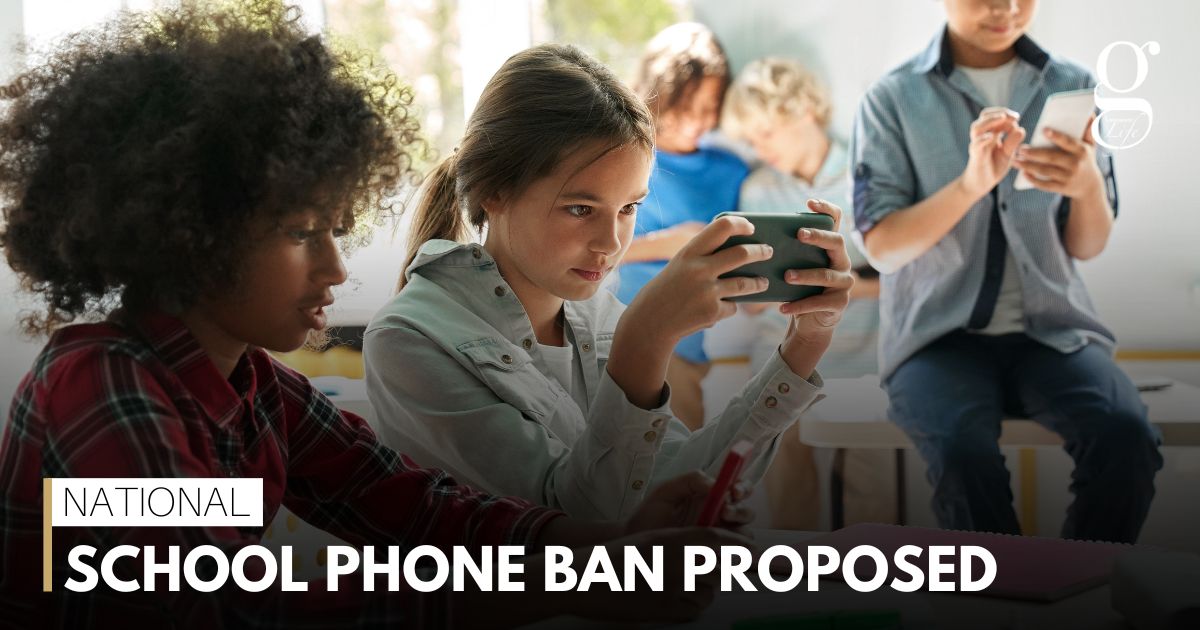
England is trading the future for a fleeting moment of quiet.
The Department for Education’s decision to push for a total smartphone ban in schools is not a victory for "discipline" or "mental health." It is a white flag. It is an admission that our educational system is too rigid, too outdated, and too terrified to compete with a five-inch piece of glass for a teenager’s attention.
Banning phones is the pedagogical equivalent of banning calculators because students forgot how to do long division. It solves a symptom while the underlying disease—a curriculum that feels increasingly irrelevant in a post-AGI world—continues to rot.
We are told this is about "removing distractions." But distraction is not a bug of the digital age; it is a feature of a bored mind. If a student finds a TikTok loop more compelling than a history lecture, the problem isn't just the algorithm. The problem is that the lecture hasn't evolved since the Victorian era.
The Great Digital Literacy Hoax
Policy makers love the phrase "digital literacy," yet they move to strip the very tools of that literacy from the classroom. You do not teach a child to swim by keeping them away from the water. You do not teach a generation to navigate the most complex information environment in human history by pretending it doesn't exist between 9:00 AM and 3:30 PM.
By implementing a blanket ban, schools are offloading their responsibility to parents—many of whom are just as addicted and ill-equipped as their children. We are creating a vacuum where the only time a child uses a smartphone is in an unmonitored, recreational, and often toxic context.
We are missing the chance to turn the smartphone into a portable laboratory.
Imagine a physics student using the internal accelerometer of their device to calculate the $g$-force of a pendulum, or a biology student using high-resolution macro lenses to document local biodiversity in real-time. Instead, we tell them to put the most powerful tool in history in a locker and pick up a battered, thirty-year-old textbook.
The Myth of the "Phone-Free" Focus
The argument for the ban rests on the idea that removing the device magically restores cognitive "presence."
It doesn't.
I have spent two decades observing how technology integrates into high-performance environments. In the corporate world, the people who thrive aren't the ones who hide from their notifications; they are the ones who have mastered attentional filtering.
By banning phones, we are creating a sterile environment that bears zero resemblance to the modern workplace. We are raising "hothouse flowers" who will experience a massive, unregulated dopamine shock the moment they hit university or their first job.
We are effectively saying: "We can't teach you how to manage this, so we’ll just delay the inevitable explosion until you’re no longer our problem."
The False Correlation of Test Scores
Proponents of the ban often cite a 2015 study from the London School of Economics which suggested that banning phones led to an improvement in test scores, particularly for underachieving students.
This is a classic case of measuring what is easy rather than what is important.
Standardized test scores measure a student's ability to recall information and follow instructions within a closed system. They do not measure:
- Critical source verification.
- Asynchronous collaboration.
- Technical troubleshooting.
- Creative synthesis of disparate data points.
If your goal is to produce compliant factory workers, the ban is a masterstroke. If your goal is to produce innovators who can compete with 2026-era automation, the ban is a disaster.
The Social Cost of the "Off and Away" Policy
The "Off and Away" policy assumes that school is purely for academic instruction. It ignores the reality that school is the primary site for social development.
The ban doesn't stop cyberbullying; it just moves it to the bus ride home, where there are no teachers to intervene, no "teachable moments" to be had, and no oversight. When conflict happens on a screen, it provides a digital paper trail that can be used for mediation and resolution. When we ban the screen, we drive the conflict underground.
We are also ignoring the safety and equity implications. For many students from marginalized backgrounds, that device is their primary link to safety, family coordination, and even essential translation tools. A blanket ban is a blunt instrument that bruises the most vulnerable students the hardest.
Redefining the Classroom: Integration over Isolation
The "lazy consensus" says we must choose between a distracted classroom and a phone-free classroom. This is a false dichotomy.
The third way is Active Integration.
Instead of a ban, schools should be pivoting toward a "Bring Your Own Device" (BYOD) framework that treats the smartphone as a workstation. This requires:
- Network-level curation: Use school Wi-Fi to manage access, not to block the world.
- Gamified Learning: If students are addicted to feedback loops, use them. Platforms that turn curriculum into competitive, social experiences win every time.
- Digital Etiquette Training: Make "Device Management" a core subject. Teach them when to use "Do Not Disturb," how to curate a feed, and how to identify AI-generated misinformation.
I have seen schools in Northern Europe take this approach. They don't have "phone problems" because the phone isn't a forbidden fruit—it’s just another tool, like a pen or a protractor.
The Economic Reality of the Locker
Let’s talk about the sheer waste of hardware. The average smartphone has more computing power than the systems that put humans on the moon. Every classroom in England currently contains millions of pounds worth of high-end sensors, cameras, and processors—all sitting idle in backpacks.
At a time when school budgets are stretched thin and "digital divide" rhetoric is at an all-time high, the government is essentially telling students to mothball the most expensive piece of tech they will ever own. It’s an economic absurdity.
We are effectively paying for IT suites full of sluggish, stationary PCs while the students carry superior machines in their pockets. It’s like a construction company banning power tools because they're "too loud" and forcing workers to use hand saws.
Addressing the "People Also Ask" Fallacies
Does banning phones reduce bullying?
No. It moves it. It makes it invisible to the institution. You solve bullying by addressing behavior and empathy, not by confiscating the medium. A bully doesn't need a phone to be a bully; they just need a target.
Do phones ruin children's brains?
The "digital dementia" narrative is largely a moral panic. The brain is plastic. It adapts to the tools it uses. If we want kids to have "deep focus," we need to give them reasons to focus that are more interesting than a 15-second video. If we can't do that, the fault lies with us, not the hardware.
Is it easier for teachers?
In the short term, yes. It's easier to manage a room of people who have been stripped of their agency. But "easier" is not the metric for a world-class education. Teachers deserve better training on how to facilitate a high-tech classroom, not a mandate to act as security guards.
The Professional Cowardice of the Ban
This policy is a populist play. it appeals to parents who are frustrated with their own screen time and politicians who want to look "tough" on discipline without actually investing in the systemic overhaul our education system requires.
It is easy to ban a device. It is hard to rewrite a curriculum to be so engaging that the device becomes an asset rather than a distraction.
We are preparing our children for a world that no longer exists. We are telling them that to learn, they must disconnect from the global network of human knowledge. We are teaching them that technology is something to be feared and suppressed, rather than mastered and directed.
When these students enter a workforce that demands 24/7 connectivity, rapid-fire digital communication, and the ability to leverage AI tools on the fly, they will realize they were lied to. They will realize that their school didn't protect them from "distraction"—it just handicapped their ability to function in the 21st century.
Stop the ban. Start the integration. Or accept that we are intentionally raising a generation of digital illiterates.
The choice is that simple, and that brutal.