The traditional understanding of honeybee (Apis mellifera) development simplifies queen differentiation down to a single variable: the consumption of royal jelly. This dietary model implies a direct, deterministic relationship between a nutrient substance and morphological supremacy. The reality represents a highly complex, multi-variable epigenetic optimization problem.
Royal jelly is not a magical elixir that single-handedly builds a queen. Instead, phenotypic differentiation operates on a dual-mechanism framework: the presence of specific metabolic drivers alongside the strategic withdrawal of plant-derived genetic suppressors. Queen development requires a precise combination of nutritional density, spatial freedom, and biochemical signaling. Understanding this process reveals the mechanics of phenotypic plasticity and how environmental inputs can fundamentally alter genetic expression without modifying the underlying DNA sequence.
The Epigenetic Architecture of Caste Differentiation
Every female honeybee larva begins life with an identical genomic blueprint. The divergence into either a highly reproductive queen or a sterile worker represents one of nature's most stark examples of polyphenism. This divergence is governed by epigenetic modifications, specifically DNA methylation, which acts as an on-off switch for massive gene networks.
                  [ Bipotential Larva ]
                            |
         +------------------+------------------+
         |                                     |
         v                                     v
[ Queen Trajectory ]                 [ Worker Trajectory ]
 - Continuous Royal Jelly             - Beebread / Honey Diet
 - Low DNA Methylation                - High DNA Methylation
 - High Juvenile Hormone              - Low Juvenile Hormone
 - Developed Ovaries                  - Atrophied Ovaries
In worker larvae, specific regions of the genome undergo heavy methylation, effectively locking down the genes required for ovarian development, increased body size, and extended longevity. When a larva is selected for the queen trajectory, this silencing mechanism is interrupted. The primary driver of this genetic unlocking is the silencing of an enzyme known as Dnmt3 (DNA methyltransferase 3).
When Dnmt3 is active, it methylates the genome, steering the larva toward the worker phenotype. When Dnmt3 is down-regulated, the genome remains unmethylated and accessible, allowing the expression of queen-specific traits. Diet is the primary tool used to manipulate this enzyme, operating through a carefully managed biochemical pathway.
The Dual-Engine Nutritional Framework
To understand how diet alters genetic expression, the larval menu must be broken down into its functional components. The nutritional strategy relies on two distinct mechanisms: nutritional acceleration and chemical castration.
1. Metabolic Acceleration via Royal Jelly
Royal jelly is a nutrient-dense secretion produced by the hypopharyngeal and mandibular glands of nurse bees. It is exceptionally rich in proteins (such as Major Royal Jelly Proteins, or MRJPs), sugars, and lipids.
The critical component driving development is 10-hydroxy-2-decenoic acid (10-HDA). This fatty acid acts as a histone deacetylase (HDAC) inhibitor. By inhibiting HDACs, 10-HDA maintains chromatin in an open, transcriptionally active state, allowing the rapid transcription of growth and reproductive genes.
This intense nutrient intake triggers the insulin/insulin-like growth factor signaling (IIS) pathway and the mechanistic target of rapamycin (mTOR) pathway. These interconnected systems sense nutrient abundance and signal the endocrine system to ramp up production of Juvenile Hormone (JH). High titers of JH during critical larval instars permanently alter the bee's developmental trajectory, preventing the programmed cell death (apoptosis) that typically destroys ovary tissue in worker larvae.
2. The Suppression Bottleneck of the Worker Diet
Focusing only on what queens eat misses the restrictive nature of the worker diet. Worker larvae are fed royal jelly for only the first three days of life. After this window, their diet shifts to "beebread"—a mixture of pollen and honey.
Beebread contains high levels of plant-derived phytochemicals, most notably p-coumaric acid. This compound is not just a neutral food source; it functions as a metabolic suppressor. P-coumaric acid up-regulates genes responsible for detoxifying xenobiotics, forcing worker larvae to expend metabolic energy on processing plant compounds rather than investing that energy in physical development.
Furthermore, p-coumaric acid and other pollen components help keep Juvenile Hormone levels low, ensuring the activation of the Dnmt3 enzyme. This targeted exposure to plant chemicals actively suppresses the development of the reproductive organs, effectively steering the larvae away from the queen phenotype.
Spatial Architecture as a Physical Signal
The physical environment of the hive serves as an equally vital mechanical input. The hive operates under strict spatial constraints that dictate developmental outcomes.
+-------------------------------------------------------------+
|                     SPATIAL ARCHITECTURE                    |
+----------------------------+--------------------------------+
|       Worker Cell          |           Queen Cell           |
+----------------------------+--------------------------------+
| - Horizontal Orientation   | - Vertical Orientation         |
| - Hexagonal, Constrained   | - Large, Elongated, Pendant    |
| - Gravity Neutral          | - Gravity Vectorized           |
+----------------------------+--------------------------------+
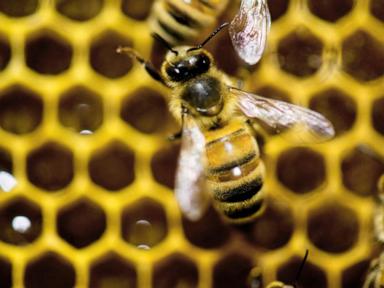
Worker larvae are raised in horizontal, tightly packed hexagonal cells. This constrained space physically limits larval growth and forces a specific body posture. Conversely, queen larvae are housed in large, vertically oriented, peanut-shaped cells that hang downward.
This vertical orientation exposes the developing larva to a unique gravitational vector. While the exact bio-mechanical feedback loops are still being researched, evidence suggests that the physical freedom of the queen cell allows for unconstrained abdominal expansion, which is necessary to accommodate the massive ovarian growth triggered by the IIS and mTOR pathways. The cell's shape also allows nurse bees to deposit massive amounts of royal jelly, ensuring the larva can literally float in its food supply and feed continuously without restriction.
Pheromonal Control and Corporate Governance of the Hive
The choice to raise a queen is never made by an individual larva; it is a collective decision governed by the chemical state of the colony. The hive operates as a superorganism where information flows via a complex network of pheromones.
The resident queen secretes Queen Mandibular Pheromone (QMP). This chemical signal spreads throughout the hive via grooming and food sharing, acting as a powerful systemic inhibitor. The presence of QMP directly suppresses the rearing behaviors of worker bees. It prevents nurse bees from building vertical queen cells and feeding larvae the exclusive royal jelly diet required for queen development.
When a queen dies, ages, or the hive becomes overcrowded, the concentration of QMP drops below a critical threshold. This deficit acts as a release mechanism. The lack of chemical suppression triggers a behavioral shift in the worker force, prompting them to construct emergency queen cells around existing young larvae. The epigenetic shift that follows is a direct reaction to a breakdown in the hive's macro-chemical signaling network.
Critical Limitations of current Epigenetic Models
While the biochemical pathways of caste determination are well documented, several gaps challenge a purely deterministic view of the process.
- The Symmetrical Paradox: In rare instances, worker larvae fed exclusively on beebread can develop functional ovaries if the colony undergoes extreme stress or becomes queenless. This phenomenon, known as worker laying, indicates that the genetic blocks enforced by DNA methylation are not entirely permanent and can be overridden by adult environmental stressors.
- Nutritional Threshold Variations: Not all larvae fed royal jelly develop into high-quality queens. Genetic variations across different patrilines within the same colony introduce varying sensitivity thresholds to 10-HDA and p-coumaric acid, meaning the exact same chemical input can yield varying degrees of reproductive fitness.
- The Micro-RNA Bottleneck: Royal jelly contains various microRNAs (miRNAs) that can survive digestion and alter gene expression in the consumer. Sorting out which changes are driven by the bee's own metabolic response versus direct regulation by these ingested plant and animal miRNAs remains a significant analytical challenge.
Operational Playbook for Bio-Chemical Optimization
For commercial apiculturalists and biological researchers looking to leverage these mechanisms, relying on natural queen rearing is inefficient. Maximizing queen quality and reproductive output requires a precise, multi-tiered intervention strategy based on the dual-engine framework.
- Enforce Strict Larval Age Thresholds during Grafting: Larvae must be transferred from worker cells to queen cups before they exceed 24 to 36 hours of age. Grafting larvae past this window ensures they have already ingested p-coumaric acid from worker food, initiating the methylation pathways that permanently restrict ovary development.
- Manually Disrupt the Chemical Feedback Loop: To achieve maximum queen cell acceptance and investment from nurse bees, colonies must be completely separated from QMP sources at least 4 to 6 hours prior to introducing grafted larvae. This complete drop in pheromone levels maximizes the nurse bees' drive to feed the new larvae heavy volumes of royal jelly.
- Standardize Artificial Diet Frameworks: When rearing queens in artificial environments, the larval diet must maintain a minimum concentration of 10-HDA while remaining completely free of pollen-derived phytochemicals. Eliminating p-coumaric acid removes the chemical suppressors that restrict growth, ensuring the unhindered down-regulation of the Dnmt3 enzyme.