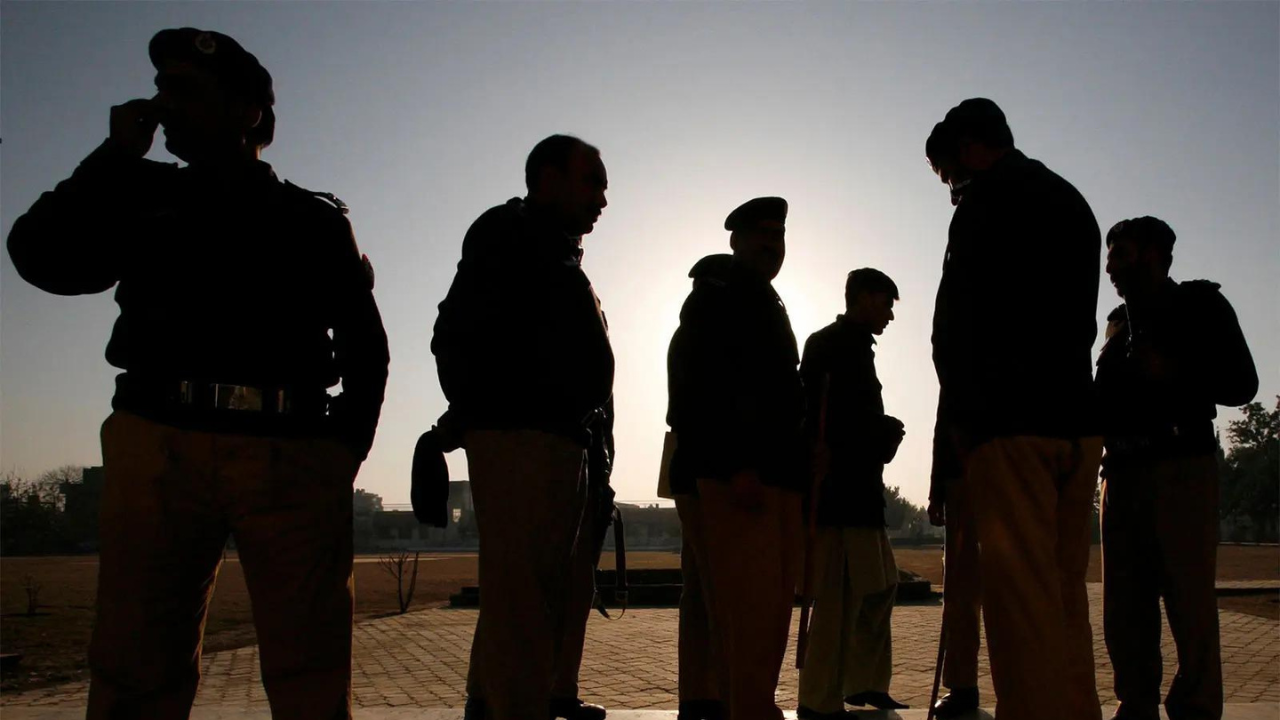
The security situation in Gwadar just shattered any lingering illusions of stability. On Friday evening, an explosive-laden Mazda truck tore through the gates of a heavily fortified Pakistan Coast Guard camp in the Panwan area of Jiwani. The Baloch Liberation Army quickly claimed responsibility for the devastating fidayee assault, asserting that more than 30 security personnel died in the blast and subsequent firefight.
While official confirmation of the exact casualty count from Islamabad remains slow, the sheer scale of the operation signals a terrifying shift. This isn't a minor hit-and-run by a disorganized militia. It's a highly coordinated, multi-tiered strike on a critical node of Pakistan’s maritime defense system. If you want to understand why Balochistan is unraveling right now, you have to look past the official press releases and examine the tactical evolution on the ground.
Inside the Panwan Camp Strike
At exactly 6:32 PM local time, a suicide bomber named Attaullah Baloch, driving under the alias Ajmal, rammed the explosive-filled truck straight into the facility. The initial blast tore the camp apart. According to statements released by Jeeyand Baloch, the spokesperson for the outlawed separatist group, the explosion reduced the fortified structures to a heap of rubble.
But the initial blast was only phase one. What happened next points to an alarming level of combat sophistication. The BLA’s elite Majeed Brigade utilized a multi-layered attack strategy:
- The Breaching Charge: The vehicle-borne improvised explosive device neutralized the outer defenses and created total chaos inside the perimeter.
- The Ground Assault: Immediately following the detonation, the group’s vanguard unit, the Fateh Squad, moved in. They launched a coordinated, 360-degree ground assault on the surviving personnel trapped in the wreckage.
- Close Combat Tactics: Insurgents engaged the remaining Coast Guard troops at close range, preventing a swift counter-offensive or coordinated defense.
The BLA's media wing, Hakkal, promptly backed up these assertions by releasing a 43-second video showing the truck entering the base. The tactical precision displayed here confirms that insurgent operational capabilities have reached an unprecedented level.
The Broader Context of an Unraveling Province
This strike didn't happen in a vacuum. It follows a highly volatile year for the region. Just months ago, the BLA launched Operation Herof Phase II, a massive offensive spanning multiple districts that resulted in over 120 deaths in a single weekend. Additionally, a catastrophic train bombing in Quetta in May left more than 30 dead, highlighting the group's relentless focus on infrastructure and security forces.
Recent Major Insurgent Operations in Balochistan (2026)
-----------------------------------------------------------------
Date            Location        Target / Type         Reported Impact
-----------------------------------------------------------------
Jan/Feb 2026    Multi-district  Operation Herof II    120+ total deaths
April 2026      Jiwani Sea      Coast Guard Boat      First maritime strike
May 2026        Quetta          Train Car Bombing     30+ fatalities
June 2026       Gwadar          Police Station Raid   Armory looted
July 2026       Jiwani (Panwan) Coast Guard Camp      30+ claimed dead
-----------------------------------------------------------------
The state’s internal vulnerabilities complicate the situation further. In late June, Gwadar’s security apparatus suffered a major embarrassment when militants walked into the city's main police station, disarmed the guards, and emptied the armory without facing any resistance. That incident led to the dismissal of 14 police officers for gross negligence. When local law enforcement lacks the morale or capability to defend their own stations, military outposts become dangerously isolated.
Why Gwadar is the Center of the Storm
Gwadar is the crown jewel of the China-Pakistan Economic Corridor. Millions of dollars in foreign investments rest on the assumption that Pakistan can secure this deep-sea port. The BLA openly frames its campaign as an economic war against Islamabad’s exploitation of Balochistan’s mineral wealth and natural resources. By striking targets near the Iranian border and the Arabian Sea, the insurgents send a clear message to international investors: Pakistan cannot guarantee your safety.
We're also seeing an unprecedented expansion into naval warfare. In April, the BLA launched its first-ever maritime strike, targeting a Coast Guard patrol boat near Jiwani and killing three personnel. Moving from mountain ambushes to sea-based operations and complex urban suicide bombings proves the insurgency is evolving faster than state counter-measures.
The Tactical Failures and What Happens Next
Islamabad's standard response relies on brute-force counter-insurgency operations. Government data points to hundreds of insurgents killed over the past year. Yet, the supply line of recruits, including highly committed fidayeen fighters and specialized units like the Fateh Squad, isn't drying up.
The immediate next steps require an entirely fresh approach to security in the coastal belt:
- Overhaul Perimeter Intelligence: Hardened walls and checkpoints don't stop heavy vehicles moving at high speeds. Forward intelligence and early-warning detection systems along the coastal highways are broken and need immediate replacement.
- Rebuild Local Policing: Relying entirely on paramilitary units like the Frontier Corps or the Coast Guard to hold ground creates friction. Local police forces must be properly vetted, retrained, and re-armed to prevent catastrophic failures like the June armory raid.
- Address the Local Trust Deficit: As long as the local population feels completely alienated from the economic benefits of the Gwadar port development, insurgent groups will find safe harbor, logistical support, and fresh intelligence to plan operations.
The Panwan camp attack proves that passive defense is a losing strategy in Balochistan. If the state continues to ignore the strategic shifts and intelligence gaps plaguing the coast, these highly coordinated fidayee assaults will become the norm, completely crippling the economic ambitions tied to the region.