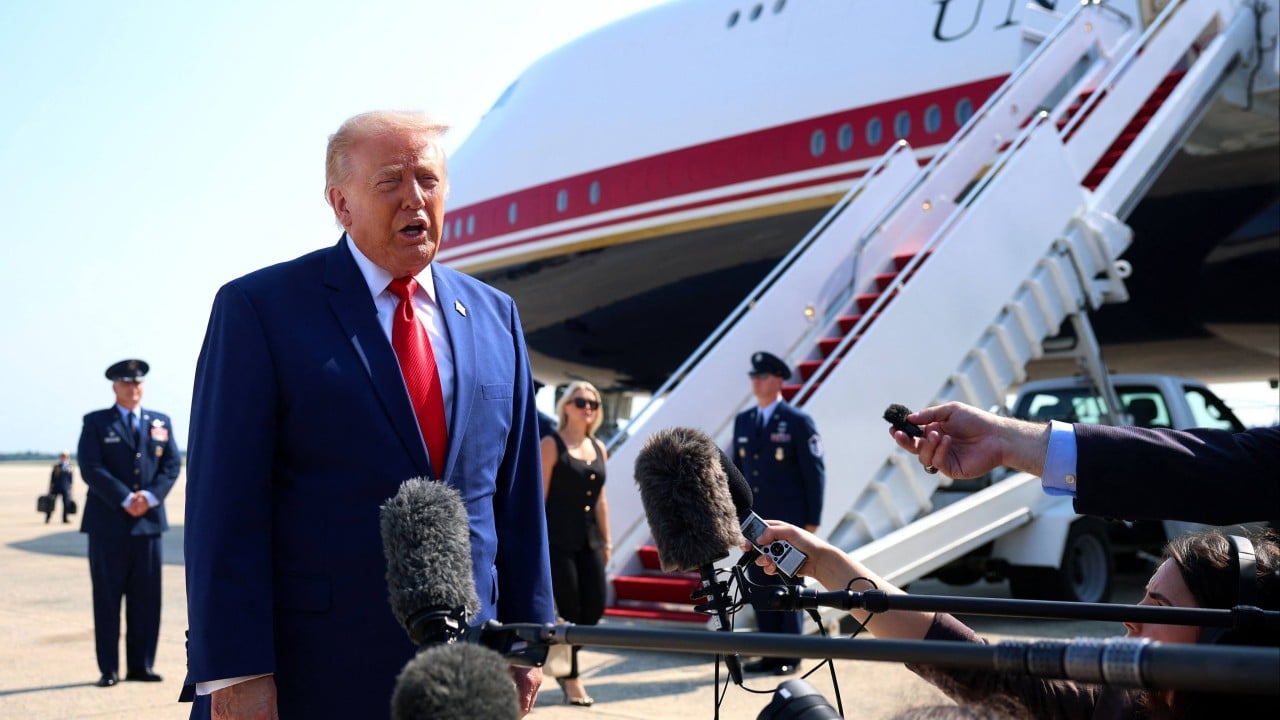
President Donald Trump issued an explicit ultimatum to Tehran, declaring that American forces will destroy one Iranian bridge or power plant for every vessel targeted in the Strait of Hormuz. The declaration came via Truth Social after an eleventh consecutive night of U.S. strikes on Iranian targets, marking a dangerous shift from military deterrence to infrastructure retaliation. With Washington expanding targets to infrastructure in and around Tehran, the strategy aims to break Iran’s naval blockade. Yet, this eye-for-an-eye doctrine exposes deep vulnerabilities in global supply lines, energy security, and regional stability.
The Threat That Redefines Asymmetric Warfare
The doctrine of proportional destruction sounds simple on paper. Shoot a missile at a commercial tanker, lose a bridge in Tehran. Hit a container ship with a drone, watch a power plant go dark.
It is an attempt to impose immediate, tangible domestic costs on the Islamic Revolutionary Guard Corps (IRGC) without relying on ground forces. However, this mechanical tit-for-tat framework fundamentally misunderstands the nature of modern asymmetric conflict.
Iran does not need to win a fleet battle against the U.S. Navy. It never intended to. Tehran’s goal is to turn the Strait of Hormuz into an uninsurable hazard zone where commercial traffic ceases to flow. By threatening civil infrastructure, Washington is escalating a tactical maritime dispute into an open-ended campaign against an entire nation's basic utilities.
The U.S. military has already spent an estimated $37.5 billion on this campaign. A single wave of precision-guided munitions cost millions of dollars, whereas a towed maritime mine or a cheap kamikaze drone costs a fraction of that. Trump’s public commitment to target civilian infrastructure like bridges and electrical grids pushes the conflict beyond standard rules of engagement, raising serious questions among international legal scholars and NATO allies regarding war crimes and civilian harm.
Iran’s response was immediate and predictably defiant. The Khatam Al-Anbiya Central Headquarters warned that any strike on civilian infrastructure would trigger retaliatory strikes against power grids, energy facilities, and transport links across Gulf Arab states host to American bases. The threat creates a structural loop where every strike guarantees a regional counter-strike.
The Math Behind a Broken Maritime Conduit
The Strait of Hormuz is not just a body of water. It is the choke point through which roughly 20 percent of global petroleum and liquid natural gas transits daily.
When Washington claims the strait remains open, military planners are referring to international legal doctrine. When commercial shipowners look at the water, they see a shooting gallery.
Peacetime vs Current Strait of Hormuz Transit Dynamics
+-------------------------+-----------------------+------------------------+
| Metric                  | Peacetime Baseline    | Active Conflict Era    |
+-------------------------+-----------------------+------------------------+
| Daily Crude Volume      | ~20-21 Million bpd    | Under 4 Million bpd    |
| Hull Insurance Premium  | ~0.05% Vessel Value   | Exceeds 5-7% or Denied |
| Daily Charter Rates     | $40,000 - $60,000     | $220,000+ (Risk-Add)  |
| Primary Transit Route   | Open Channel          | Navy-Guarded Corridor  |
+-------------------------+-----------------------+------------------------+
The gap between military statements and commercial reality is massive. U.S. Central Command insists that shipping corridors are open under military escort. Marine insurers, on the other hand, have canceled war-risk coverage across the Persian Gulf, forcing energy traders to either dock their vessels or pay exorbitant premiums that destroy commercial margins.
A single hit on an unarmored crude carrier sets off alarm bells across the global shipping sector. Even if 95 percent of missiles are intercepted by naval air defense, the remaining 5 percent make the transit commercially unviable.
Consider the structural impact on regional oil producers. Iraq lost more than $40 billion in revenue within weeks as its storage tanks filled to capacity, forcing oil fields across Basra to shut down production. Neighboring Gulf states face a similar predicament. Redirection routes, such as Saudi Arabia's East-West pipeline to the Red Sea, lack the capacity to handle the volume normally routed through Hormuz. To make matters worse, Yemen’s Houthi movement opened a secondary front by threatening vessels attempting to bypass the blockage via the Bab el-Mandeb Strait.
The Flawed Logic of Pickaxe Mountain and Infrastructure Warfare
Beyond the threat to bridges and power stations, U.S. targeting has shifted toward deeply buried strategic assets. Washington highlighted the complex known as Pickaxe Mountain, or Kolang Gazla, near Natanz, where intelligence officials suspect Iran is constructing an underground enrichment facility.
Striking a facility buried hundreds of feet under granite requires specialized bunker-busting ordnance like the GBU-57 Massive Ordnance Penetrator. Yet, bombing hardened facilities rarely ends a technical program. It buries it deeper, drives the leadership into an existential corner, and eliminates any diplomatic off-ramp.
The administration's operational logic rests on the idea that inflicting economic pain on the domestic population will force Tehran to capitulate. Historical precedent suggests the opposite.
When civilian infrastructure like power transmission lines, water facilities, and transit hubs are systematically destroyed, societies rarely turn against their military leadership during active bombardment. Instead, state media frames the destruction as an existential war waged by foreign aggressors, consolidating internal control and silencing moderate voices calling for negotiation.
"If our security is not ensured, no infrastructure will be safe, and the security of the strait is in the absence of American forces," stated Iranian Parliament Speaker Mohammad Bagher Qalibaf. "The situation of the strait will not return to prewar conditions."
This statement reflects Tehran's broader posture. Iran’s security apparatus views the conflict not as a temporary dispute over transit rights, but as a fight over regional sovereignty. Threatening to turn off Tehran's lights does not change that math; it only accelerates Iran's willingness to export the disruption to neighboring economies.
The Spillover to Allied Infrastructure
The tactical reality on the ground is that Iran’s retaliatory envelope extends far beyond its own borders. Over a 48-hour span, ballistic missiles and drone waves targeted U.S. installations and allied infrastructure in Jordan, Kuwait, Bahrain, and Saudi Arabia.
In Aqaba, Jordan, air defenses engaged incoming warheads within sight of Israeli territory, demonstrating the expanding geography of the theater. Missile sirens in Bahrain and air defense engagements over Dammam, Saudi Arabia, demonstrate that every strike on Iranian domestic soil brings counter-strikes against Gulf partners.
These partner nations find themselves caught in a terrible dilemma. They rely on the American military umbrella for defensive cover, yet the presence of U.S. bases makes them primary targets for Iranian saturation attacks.
- Kuwait: Engagement of incoming drone swarms near critical air bases.
- Bahrain: Siren activations and hits near command infrastructure for the U.S. Fifth Fleet.
- Jordan: Interceptions over southern port cities threatening logistical corridors.
- Saudi Arabia: Heightened alerts surrounding eastern oil facilities and export terminals.
The financial toll on these nations is mounting fast. Refineries are scaling back operations, regional aviation routes are disrupted, and sovereign wealth funds are diverting capital to fund emergency defense initiatives. If Iran carries out its pledge to match U.S. infrastructure attacks by striking regional energy facilities, the global economy will face a structural energy deficit not seen since the 1970s.
Domestic Pressures and the Search for an Off-Ramp
For the White House, the geopolitical calculation is inextricably linked to domestic economic realities. Brent crude benchmark prices jumped past $94 a barrel, sending domestic retail gasoline prices upward right ahead of critical U.S. midterm elections.
Voters do not pay attention to maritime transit law in the Persian Gulf. They notice the price per gallon at the pump. High energy prices act as a direct tax on consumer spending, reigniting inflationary pressures that the central bank spent years trying to cool.
Political resistance is mounting within the administration's own base. Lawmakers like Senator Rand Paul have openly criticized the military campaign, pointing out that militarizing the Strait of Hormuz has failed to secure commercial shipping while dragging the nation into an expensive conflict. The administration is trapped between two bad options: back down and risk appearing weak, or double down on infrastructure threats that push crude prices higher.
Diplomatic channels via regional mediators remain technically active, but trust has disintegrated. A temporary memorandum of understanding collapsed within weeks over fundamental disagreements regarding transit management and oversight. Washington demands total freedom of navigation without Iranian interference or tolls. Tehran demands recognition of its sovereign rights over coastal waters and an end to foreign military presence.
The U.S. assumption that threatening Tehran's power plants and bridges will force Iran to capitulate fails to account for a regime that considers regional confrontation a core pillar of its survival. As military spending passes $37.5 billion and energy markets brace for deeper supply shocks, tit-for-tat infrastructure targeting does not build an off-ramp; it destroys the bridge back to diplomacy.


