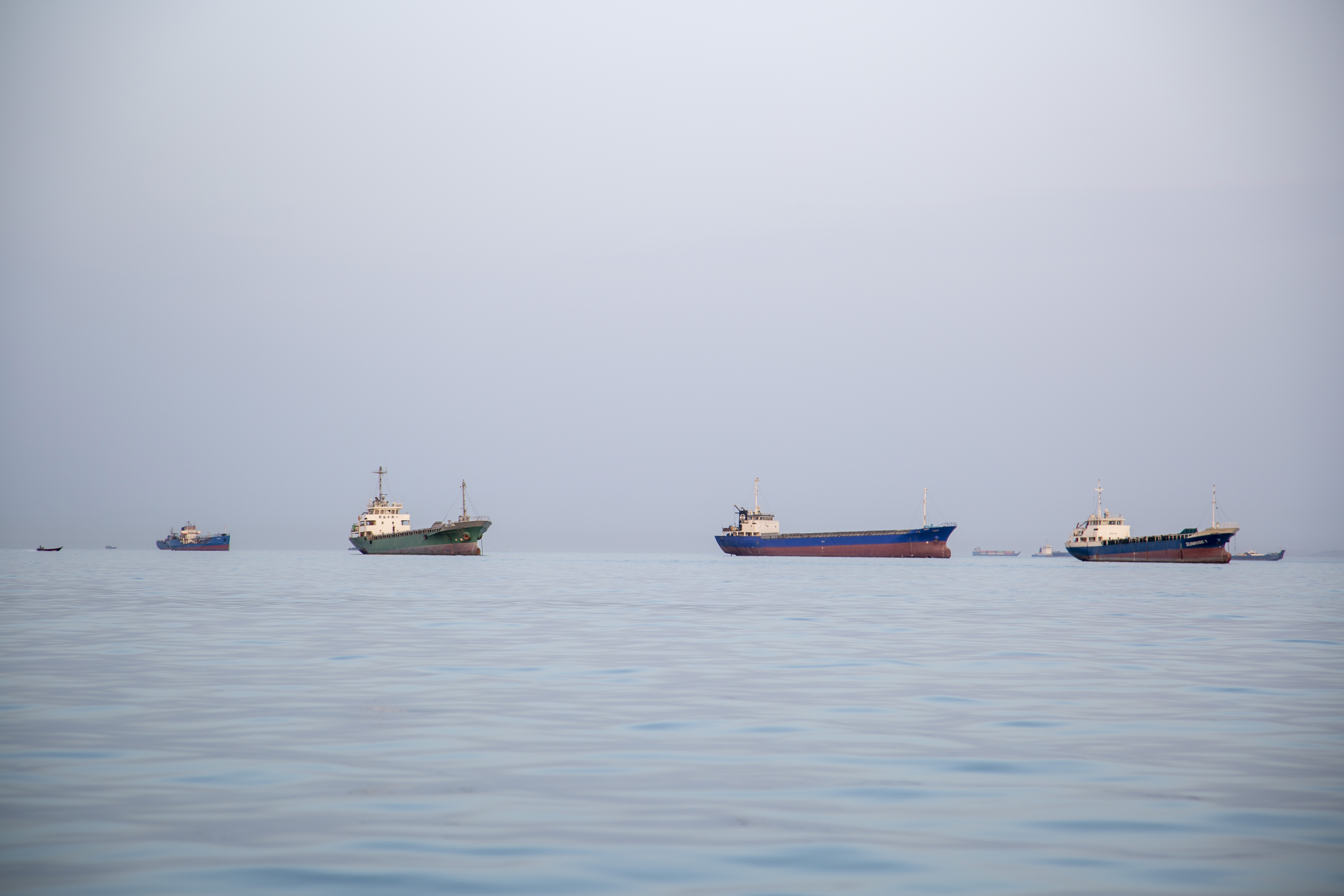
The shift in American engagement rules regarding Iranian Fast Inshore Attack Craft (FIAC) represents a transition from a posture of reactive de-escalation to a doctrine of pre-emptive kinetic deterrence. When the executive branch issues a directive to "shoot down and destroy" naval assets engaged in harassment, it alters the cost-benefit calculus for non-state and state-sponsored maritime actors. This change is not merely rhetorical; it is a recalibration of the Rules of Engagement (ROE) designed to close the gap between "hostile intent" and "hostile act."
Traditional maritime security in the Persian Gulf has long been plagued by the asymmetry of "swarm" tactics. Small, agile, and relatively inexpensive vessels utilize high-speed maneuvers to disrupt the transit of multi-billion-dollar naval assets. By formalizing a lethal response to these maneuvers, the U.S. military is attempting to re-establish a "red line" that had become blurred by years of incremental provocations.
The Mechanics of Asymmetric Maritime Friction
To understand the necessity of this shift, one must first deconstruct the operational reality of the North Persian Gulf. The Iranian Revolutionary Guard Corps Navy (IRGCN) utilizes a strategy predicated on Saturation Tactics. This involves deploying dozens of FIACs to surround a single high-value target (HVT), such as an Arleigh Burke-class destroyer or a commercial tanker.
The Triad of Tactical Provocation
The IRGCN operates within a specific framework of harassment that relies on three primary variables:
- Proximity Violations: Crossing the bow of a ship at distances of less than 100 yards, which creates immediate collision risks and forces the larger vessel to lose steerage way.
- Sensory Overload: Utilizing multiple vessels to approach from 360 degrees, forcing the target ship’s Bridge Resource Management (BRM) to track dozens of high-speed targets simultaneously.
- Ambiguous Intent: Operating without active weapon systems energized, but maintaining a trajectory that suggests a suicide or boarding mission.
The previous ROE required commanders to demonstrate a high threshold of "imminent danger" before discharging weapons. This created a tactical bottleneck where the U.S. vessel was forced into a defensive crouch, yielding the initiative to the aggressor. The new directive aims to eliminate this hesitation by categorizing specific harassment behaviors as inherently lethal threats.
The Mathematical Failure of Passive Deterrence
Deterrence is a function of the Probability of Retaliation ($P_r$) multiplied by the Cost of Loss ($C_l$). For years, the Iranian side of the equation functioned on the assumption that $P_r$ was near zero for non-lethal swarming.
$$Deterrence = P_r \times C_l$$
When the U.S. military communicates that the probability of retaliation is now 1.0 (certainty) for any vessel engaging in harassment, the equation shifts. Even if the cost of losing a small boat is low ($C_l$ is small), the certainty of that loss creates a cumulative drain on IRGCN resources and, more importantly, erodes the psychological advantage of their "invincible" swarm.
However, this strategy introduces the Escalation Ladder Paradox. By lowering the threshold for kinetic force, the U.S. risks a scenario where a localized tactical error (e.g., a boat engine failure appearing as a charge) triggers a theater-wide conflict. The precision of the "shoot and kill" order depends entirely on the clarity of the definition of "harassment."
Defining the Kinetic Threshold
In naval warfare, the transition from "shadowing" to "harassing" is often subjective. To move this into a structured analytical framework, the U.S. Navy utilizes the Seaward Continuum of Force (SCOF).
Level 1: Presence and Communication
This involves blue lights, sirens, and radio warnings on Bridge-to-Bridge Channel 16. At this stage, the intent is to establish a legal record of the encounter.
Level 2: Non-Lethal Deterrence
The use of Long Range Acoustic Devices (LRAD), high-intensity lasers (dazzlers), and warning shots across the bow. Historically, IRGCN vessels have frequently ignored these signals, viewing them as signs of American hesitation.
Level 3: Destructive Kinetic Force
The direct engagement of the target with crew-served weapons, such as the M240 machine gun, the .50 caliber M2, or the Mk 38 25mm chain gun.
The core of the recent directive is to bypass Level 2 when Level 1 is ignored. This compression of the SCOF timeline is intended to deny the adversary the time required to coordinate a multi-axis swarm attack. If the first boat to break the 100-yard perimeter is destroyed, the remaining vessels in the swarm face a binary choice: retreat or engage in a high-intensity conflict for which they are qualitatively outmatched.
Geopolitical Implications of Operational Aggression
This policy shift does not exist in a vacuum. It is a component of a broader Maximum Pressure campaign. From a strategic consulting perspective, the move serves two non-military functions:
- Domestic Signaling: It projects a posture of strength and decisiveness to a domestic audience, reinforcing the narrative that the military is no longer "handcuffed" by restrictive engagement protocols.
- Economic Insurance: By asserting total control over the Strait of Hormuz and surrounding waters, the U.S. attempts to stabilize global oil markets. Volatility in these waters leads to increased "war risk" premiums for maritime insurance, which has a direct inflationary effect on global energy prices.
The risk, however, is Asymmetric Retaliation. If the IRGCN finds its FIAC tactics neutralized, logic dictates they will pivot to less visible methods of disruption. This includes the deployment of limpet mines (as seen in the 2019 tanker attacks) or the use of unmanned aerial vehicles (UAVs) to strike targets from distances that circumvent the "100-yard" rule.
The Burden of Command and Tactical Validity
The most significant pressure of this directive falls on the Tactical Action Officer (TAO) and the Commanding Officer (CO) of the individual ship. The "shoot and kill" order provides political cover, but it does not absolve the CO of the legal requirements under the Uniform Code of Military Justice (UCMJ) and international law.
A commander must weigh the Proportionality Principle. Is destroying a $50,000 fiberglass boat a proportional response to a dangerous maneuver? Under the new directive, the answer is "yes," because the threat is no longer defined by the boat itself, but by the potential for that boat to carry an improvised explosive device (IED) or to distract the ship's defenses from a secondary, more lethal attack.
Structural Bottlenecks in Implementation
- Identification Friend or Foe (IFF): In the crowded waters of the Gulf, fishing dhows and commercial traffic often mingle with IRGCN vessels. The high-speed nature of FIAC maneuvers makes positive identification (PID) difficult at the ranges required for a "pre-emptive" strike.
- The "First Shot" Dilemma: The first time a U.S. ship executes this order, it breaks a decades-old status quo. The global media reaction and the potential for captured "martyrdom" footage from the Iranian side create a significant information warfare vulnerability.
Strategic Forecast
The "shoot and kill" order will likely result in a temporary cessation of close-quarters harassment as the IRGCN assesses the validity of the threat. However, this is a tactical pause, not a strategic retreat.
Analysts should expect a shift toward Unmanned Systems Integration. Iran has significantly advanced its "suicide drone" capabilities. By moving from manned FIACs to low-cost, GPS-guided UAVs and Unmanned Surface Vessels (USVs), the IRGCN can achieve the same "swarm" effect without the cost of human life, thereby testing the U.S. resolve to use lethal force against non-human targets.
For the U.S. Navy, the next logical step is the deployment of Directed Energy Weapons (DEW). Lasers offer a lower cost-per-shot and a more scalable response than traditional ammunition. A laser can disable a boat's engine or optical sensors without necessarily sinking it, providing a middle ground on the SCOF that maintains deterrence while mitigating the risks of total escalation.
The directive to use lethal force has successfully moved the goalposts of maritime engagement. The challenge now lies in managing the secondary effects of this new reality, where the margin for error on the high seas has been reduced to zero.
Commanders must now treat every approach as a terminal threat, effectively ending the era of "maritime chicken" in the Persian Gulf. The strategic play is no longer about avoiding contact; it is about defining the exact coordinates where contact becomes a terminal event for the provocateur. This requires a rigid adherence to the new SCOF and an immediate investment in automated defensive systems that can process the "swarm" threat faster than a human operator, ensuring that when the order to shoot is given, it is executed with mathematical precision rather than emotional reaction.