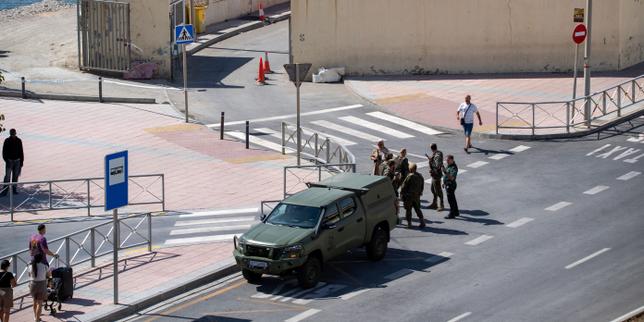
Money doesn't fix borders. It just changes the theater. Brussels keeps handing over giant checks to stop migration, hoping cash will buy security.
Let's talk about the real cost of keeping people out. For a more detailed analysis into similar topics, we recommend: this related article.
The European Union recently approved a massive funding package of 115 million euros for Spain. This cash injection comes straight on the heels of major migrant influxes at Ceuta, that strange little Spanish enclave stuck onto the northern coast of Africa. You've got two tiny European territories on the African continent—Ceuta and Melilla—surrounded by heavy fences, barbed wire, and Moroccan territory. When thousands of people swim around breakwaters or rush the border at once, panic sets in across European capitals.
So what's the knee-jerk reaction? Write a check. For further background on this issue, extensive coverage can be read at The New York Times.
Brussels loves a financial band-aid. The official line from the European Commission is that this money strengthens border management, improves cooperation with third countries like Morocco, and protects fundamental rights. But if you look past the bureaucratic PR, you see a familiar cycle. A spike in arrivals happens. Politicians look weak. Money gets transferred. Fences get taller. Technology gets slicker.
Nothing actually gets solved at the root.
The Ceuta Pressure Cooker
Ceuta is a unique geography trap. It's barely twenty square kilometers. When desperate young men, families, and unaccompanied minors look across the strait toward Europe, Ceuta is the closest physical foothold of the wealthy West. They aren't looking at statistical models or geopolitical treaties. They see a European Union border just past a concrete wall.
In past crises, thousands crossed in a matter of days. Moroccan border forces sometimes loosen their grip for political leverage against Madrid. That's the messy geopolitical reality nobody likes to shout about in public diplomatic circles. Migration isn't just a humanitarian issue. It's a diplomatic chess piece.
When you inject 115 million euros into this specific friction point, you have to ask where the dollars actually land. Surveillance cameras, thermal imaging gear, biometric scanners, and upgraded patrol boats. Private defense contractors love this stuff. They cash the checks, ship the gear, and count their profits. Meanwhile, the underlying push factors—poverty, conflict, lack of opportunity across sub-Saharan Africa and parts of the Middle East—remain completely untouched.
You can build the highest wall in the world. If someone has nothing left to lose, they will find a ladder, a boat, or a tunnel.
Where the Money Actually Goes
Tracking EU migration funds is notoriously frustrating. Member states treat border security budgets like state secrets half the time. Spain claims the funds will upgrade infrastructure and speed up asylum processing. But human rights groups raise red flags every single time a new tranche of cash gets approved.
Why? Because strengthening borders usually means outsourcing dirty work.
By paying third countries to police their own borders, Europe effectively pushes the humanitarian crisis out of sight and out of mind. Instead of migrants reaching Spanish soil, they get stopped further south under brutal conditions. It keeps the political optics clean in Madrid and Brussels. Out of sight, out of mind.
You're watching a massive shell game. The EU funds external partners to act as gatekeepers. The gatekeepers use the leverage to extract more aid, more political concessions, and more diplomatic silence on internal human rights issues. It's a transactional dirty dance.
Let's look at the actual numbers. The 115 million euros sounds like a lot to an ordinary taxpayer. In the scale of EU budgets, it's pocket change. Yet, it carries immense symbolic weight. It signals to domestic voters that the government is taking action. It projects toughness.
Toughness plays well in election seasons. It rarely stops desperate human movement.
The Human Toll Behind the Bureaucracy
Behind every policy debate are human beings taking terrifying risks. People aren't migrating because Brussels forgot to build a better fence. They are migrating because their home economies are collapsing, local governance is failing, or climate shifts are destroying arable land.
When you rely entirely on physical deterrence, you force migrants into more dangerous routes. When land borders get heavily fortified, people take to the sea in rubber dinghies. The death toll in the Mediterranean and the Atlantic routes to the Canary Islands proves this grim math every single year. Make one path impassable, and desperate people simply choose a deadlier one.
Experts who study migration patterns point out a glaring blind spot in European strategy. There are almost zero legal pathways for low-skilled laborers who want to work in Europe legally. European economies desperately need labor—agriculture, construction, elder care, hospitality sectors are crying out for workers. Yet, the legal framework remains locked down.
If you refuse to create legal channels, you create a booming black market for smugglers. You hand a monopoly to criminal networks. Every time the EU tightens a border with cash, the price of crossing illegally goes up, and the cartels get richer.
It's a policy failure hiding behind a security success story.
What Actually Needs to Happen
If Europe wants to stop reacting with panic every time a few thousand people arrive in Ceuta, leadership needs a radical shift in perspective.
First, stop pretending walls are permanent solutions. They buy temporary breathing room, nothing more.
Second, align border management with honest labor economics. Create regulated, safe pathways for seasonal and permanent workers. Take the profit margins away from human traffickers by letting people apply for work visas from their home countries without risking their lives at sea.
Third, tie development aid directly to accountable local governance rather than just writing checks to authoritarian regimes to act as border guards. If local populations have economic stability and rule of law at home, they don't pack up and walk thousands of miles toward a barbed-wire fence in North Africa.
Until European leaders muster the political courage to ditch the fortress mentality, expect more of the same. More headlines about sudden influxes, more emergency meetings in Brussels, and another hundred million euros funneled into fences that only delay the inevitable.
Stop looking at the border as a military frontline. Start treating it like a human reality that requires smart management, not brute force. Next time you see a headline about a massive multi-million euro border package, look past the PR spin. Ask who benefits from the walls, and who pays the price.