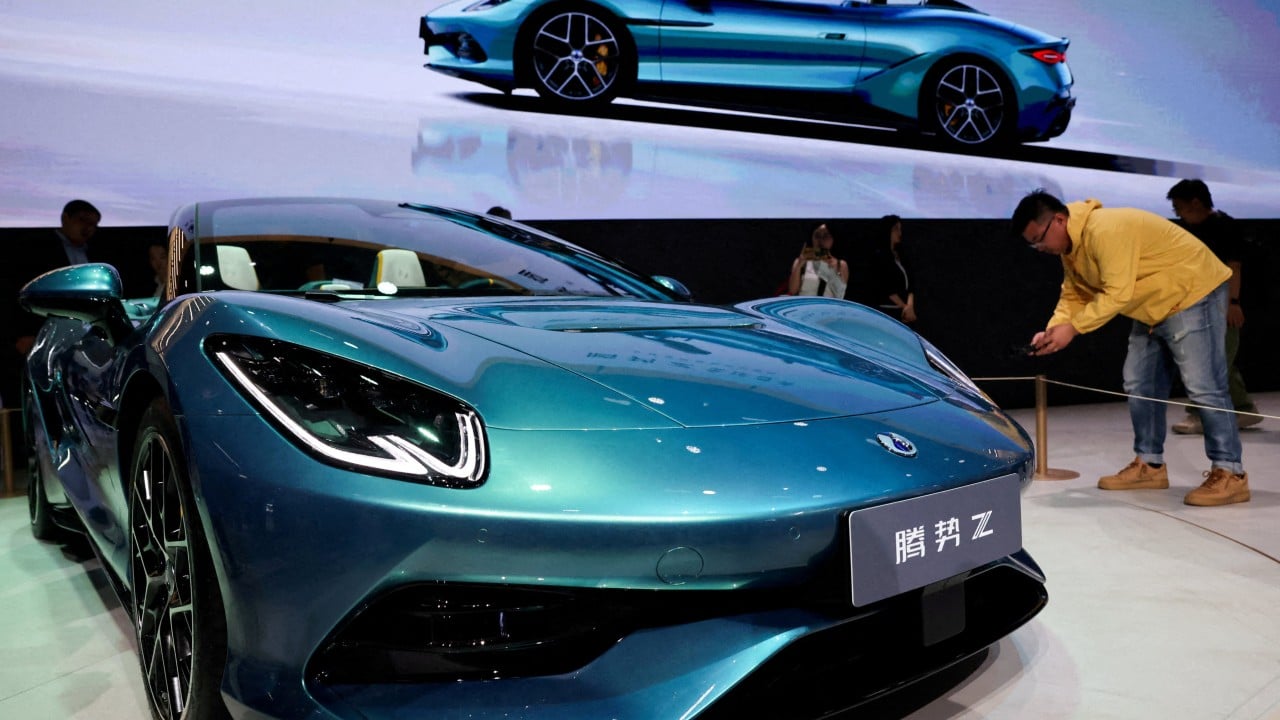
Everybody loves a good panic narrative. Pick up any trade rag or financial daily, and you will read the exact same boilerplate script about the electric vehicle market. The headlines scream about a brutal slowdown, cooling consumer demand, and an inevitable bloodbath that will force legacy automakers to tap the brakes on electrification. According to the mainstream consensus, giants like BYD and Leapmotor are bucking a universally sinking ship, surviving purely through sheer scale while smaller players bleed out under mounting pressure.
It is a clean, lazy narrative. And it is entirely wrong.
I have spent the last decade watching legacy boardrooms panic-pivot based on quarterly noise while missing the structural floor dropping out beneath them. The truth nobody in the executive suite wants to admit over dinner at Davos is simple. There is no broad demand collapse. There is only a panic attack among incumbents who built the wrong cars at the wrong price for people who simply refuse to overpay for a badge.
When you hear analysts drone on about how the electric transition is stalling, look closer at who is actually suffering. It is not the market running out of buyers. It is traditional manufacturers discovering that their legacy cost structures, dealer networks, and bloated supplier contracts cannot survive in an environment where a Chinese startup can turn a profit on a twenty-thousand-dollar hatchback packed with compute.
The Myth of the Cooling Market
Let us look at the data that the doom-mongers conveniently ignore. Global adoption curves do not move in straight lines. They step-function. Every disruptive technology hits an early adoption ceiling where the initial wave of wealthy early adopters and tech enthusiasts saturates the market. When you run out of affluent buyers willing to drop six figures on a status symbol, total sales growth naturally flattens on a percentage basis.
That plateau is routinely misdiagnosed as a structural collapse.
+------------------------+---------------------------------------+
| Conventional View      | Market Reality                        |
+------------------------+---------------------------------------+
| Demand is falling      | Premium segment is saturated          |
| Small rivals are dying | Inefficient cost models are expiring  |
| Price wars are a curse | Price wars are a survival mechanism   |
+------------------------+---------------------------------------+
Look at the underlying volume. Unit sales continue to climb year-over-year. What has actually changed is the margin profile. For years, legacy automakers relied on fat margins from gas-guzzling SUVs to subsidize their compliance-car electric programs. They assumed they could charge a premium simply because a vehicle plugged into a wall. That pricing power evaporated the moment nimble competitors proved that a battery-electric vehicle is fundamentally a consumer electronics product wrapped in aluminum.
When BYD undercuts the domestic competition, they are not engaging in some reckless charity mission to burn cash. They are weaponizing vertical integration. They own the supply chain from the lithium mine to the cockpit display. When you design your own chips and build your own battery packs, your cost floor is fundamentally different from a company that outsources every bolt to three tiers of legacy suppliers who all demand their cut.
Why Small Rivals Are Actually Crashing
The narrative that small electric vehicle startups are dying solely because of a "market slowdown" lets management off the hook. Small rivals are not perishing because consumers suddenly hate clean energy. They are perishing because they built luxury vanity projects instead of industrial engines.
I have watched venture-backed startups burn through billions of dollars in capital expenditure trying to build bespoke aluminum stamping plants and custom infotainment software instead of focusing on unit economics. They chased the Tesla model without having the charging infrastructure network, the brand equity, or the manufacturing discipline.
When capital markets dried up and interest rates shifted from zero to restrictive, the music stopped. The companies folding right now are the ones whose business plans relied on endless rounds of cheap debt and equity dilution. Blaming a "market slowdown" is a great way to hide the fact that your product-market fit was an illusion subsidized by cheap money.
The survivors—whether they are massive Chinese industrial conglomerates or hyper-lean domestic upstarts—share one defining trait. They treat manufacturing efficiency as a religion.
The Margin Trap and the Pricing Illusion
Let us address the elephant in the room: pricing pressure. Mainstream commentators treat price cuts as a symptom of a diseased market. They write breathless warnings about a race to the bottom, predicting that everyone will go bankrupt trying to out-cheap each other.
This perspective misunderstands how hardware commoditization works.
Price competition is not a temporary anomaly in the automotive sector; it is the permanent operating system of mass manufacturing. Every major industrial revolution follows the exact same arc. Initial high margins attract capital. Capital floods the sector. Overcapacity hits. Efficiency weeds out the weak. Prices drop permanently, unlocking mass-market volume that was previously locked out by artificial scarcity.
When legacy executives complain about margin compression, what they are really mourning is the death of the luxury markup on basic transportation. They built corporate structures sized for thirty percent gross margins on internal combustion engines with two thousand moving parts. An electric vehicle has a fraction of those moving parts. It requires less labor to assemble, less maintenance over its lifecycle, and simpler structural framing.
If your cost structure cannot handle lower price points, your engineering is obsolete. Period.
The Geographic Blind Spot
There is another glaring flaw in the Western narrative surrounding companies like BYD and Leapmotor: the assumption that their dominance is an unreplicable fluke born of state subsidies and cheap labor.
Western trade protectionism loves to lean on the subsidy crutch. Do not get me wrong; state support played a role in kickstarting industrial capacity in Asia. But pretending that subsidies are the sole reason these companies are eating the lunch of legacy automakers is intellectual laziness.
The real advantage is speed of iteration. While a traditional European or American automaker spends four years in committee debating whether to update a dashboard toggle, Chinese competitors iterate their software stacks and hardware configurations every six months. They treat the car like a smartphone. If a component is too expensive or underperforming, they swap it out in the next production sprint.
Western legacy brands are anchored by legacy dealer networks that actively sabotage electric vehicle sales because EVs require ninety percent less maintenance revenue. Think about that for a second. Your primary retail channel—the dealership franchise—has a built-in financial incentive to keep selling you oil changes and spark plug replacements.
How can a traditional automaker win a tech war when their own distribution partners are quietly steering buyers back toward gas-powered inventory?
What the Contrarian Actually Does
If you are running an automotive outfit today, stop listening to consultants who tell you to slow down your transition until the market "recovers." The market is not coming back to your comfort zone.
- Rip up your supplier contracts. If your supply chain relies on three tiers of middlemen who take a cut of every component, you are dead on arrival. Vertical integration is no longer a luxury strategy for tech titans; it is basic table stakes for survival.
- Accept margin compression. Stop trying to protect historical margins on legacy architectures. Accept that the price point of a viable mass-market electric vehicle is lower than your accountants want to admit, and engineer backward from that reality.
- Bypass the dealer anchor. If your retail model relies on traditional franchise dealers who make their living off internal combustion maintenance, you are paying an army of saboteurs to sell your cars.
The companies winning right now are not the ones whining about market slowdowns. They are the ones treating the transition as an opportunity to purge decades of industrial bloat. The slowdown narrative is nothing more than a comforting bedtime story told by executives who are terrified of waking up to reality.
Stop waiting for the storm to pass. The weather has changed permanently.