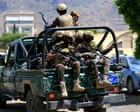
The headline drops with surgical, bureaucratic precision. A member of the British armed forces dies in a vehicle crash inside Ukraine. The Ministry of Defence issues a sterile, carefully scrubbed press release. The mainstream media dutifully copies and pastes it, stripping away any context that might disturb the public's delicate sensibilities.
We are told it was a non-combat incident. We are told thoughts are with the family. We are told nothing else.
Everyone nods, offers digital condolences, and scrolls past. Another tragic anomaly. Another unfortunate accident in a war zone where Britain supposedly maintains a strict, arms-length distance from the front lines.
It is a lie by omission.
I have watched defense bureaucracies sanitize operational realities for over a decade. I have seen how language is weaponized to protect political narratives while burying the structural truths of modern proxy warfare. When a Western soldier dies in a vehicle crash thousands of miles from home, the public is spoon-fed a comforting fairy tale: that this was a random stroke of bad luck, a freak accident that could have happened on a training ground in Wiltshire just as easily as on a muddy supply route in the Donbas.
That narrative is insulting, dishonest, and dangerously misleading. Let us pull apart the lazy consensus governing how we talk about foreign military deaths in Ukraine, and expose the machine that keeps the public comfortably in the dark.
The Fiction of the Non-Combat Distinction
In military administration, the term "non-combat" is a legalistic shield. It does not mean safe. It does not mean routine. It simply means the casualty was not struck by direct enemy fire in a face-to-face firefight.
If a soldier's vehicle rolls over into a ditch while evading a drone strike, it is logged as a transport accident. If a logistics officer suffers a fatal heart attack induced by forty-eight continuous hours of operational stress under the constant hum of electronic warfare jamming, it is coded as natural causes. If a technical specialist hits a concealed mine while inspecting a damaged supply line, the bureaucratic categorization depends entirely on proximity to the forward line of own troops and the classification of the mission profile.
The media swallows this terminology whole because it requires zero critical thinking. Reporters take the Ministry of Defence press release, change a few adjectives, and call it a day. They treat "non-combat" as an exoneration of risk.
Think about the physical reality of driving a heavy military vehicle through a theater of war like Ukraine. Roads are shattered by artillery craters. Bridges are blown. Streetlights are dark under strict blackout orders. GPS signals are routinely spoofed or jammed to uselessness by electronic warfare systems, turning satellite navigation into a liability. Drone swarms buzz overhead, forcing drivers to move at breakneck speeds without headlights, relying on night-vision equipment that compresses depth perception and narrows field of view.
This is not a morning commute. It is a high-stakes operational gauntlet. Calling a fatal crash in this environment a "non-combat incident" is like saying a race car driver who dies when their brakes fail at two hundred miles per hour died of mechanical failure, ignoring the fact that they were racing at two hundred miles per hour. The environment creates the hazard. The mission forces the exposure.
The Invisible Footprint
To understand why these deaths happen, we have to stop pretending Western personnel in Ukraine are sitting safely in secure embassy basements in Kyiv drinking coffee and writing diplomatic memos.
The footprint is larger, deeper, and far more operational than governments care to admit. While large-scale combat units of NATO troops are politically toxic and officially absent, the gray-zone architecture required to keep Ukraine's military functioning is massive.
Who do you think maintains the complex Western artillery systems, air defense batteries, and armored vehicles sent to the front? Do you imagine Ukrainian technicians attended a weekend workshop in Poland and magically mastered the proprietary software and maintenance schedules of advanced military hardware?
Of course not.
Contractors, specialists, advisors, and uniformed personnel operate on a rotation through Ukraine. They are embedded with logistics hubs, intelligence units, and maintenance depots. They manage supply chains that stretch from Western Europe directly into active combat zones. They train local forces on live equipment under operational timelines.
When a British service member dies in a crash in Ukraine, the immediate question should never be whether they were fighting on the front line. The question is why they were driving down a high-risk supply corridor in the first place, what payload or intelligence they were carrying, and which operational command structure authorized the movement.
By framing every deployment as purely advisory or administrative, defense ministries create a rhetorical loophole. They can claim they have "no boots on the ground" in a combat role while quietly exposing hundreds of specialists to the exact same kinetic hazards as combat troops.
The Media Complicity Machine
Why do journalists accept the sanitized narrative without a fight? Because access is currency.
If a defense correspondent starts digging into the exact unit the deceased soldier belonged to, questions the official timeline, or interviews unverified sources about the nature of the supply route, defense PR apparatuses freeze them out. Background briefings dry up. Invitations to exclusive military embeds disappear. Editors, anxious for speed and fearful of legal pushback or accusations of undermining national security, prefer the path of least resistance.
They print the official line: A brave service member has died. Investigations are underway.
Investigations into what? Whether gravity still works? Whether black ice exists?
The investigation into a military crash in a war zone is rarely about discovering if a steering wheel broke. It is about damage control. It is about determining what operational details leaked, whether the incident creates an inconvenient political headache for the government of the day, and how to craft the next statement so it generates the minimum amount of public scrutiny.
When the media treats these announcements as sacred text rather than heavily managed public relations, they fail their primary mandate. They protect the state from accountability at the exact moment the public deserves total transparency.
The Strategic Cost of Sanitization
There is a profound strategic danger to this persistent dishonesty. When you lie to the public about the nature of military involvement, you distort the democratic debate over foreign policy and escalation.
If every death is brushed off as a freak accident, the public never has to confront the true cost of our commitments. They never have to ask whether the incremental escalation of technical and logistical support is worth the steady drip of casualties. They are lulled into believing we can wage high-stakes proxy warfare with zero friction, zero hazard, and zero human toll.
This is a dangerous illusion. War has friction. Proxy war has blowback. When you insert personnel into a degraded, high-threat zone, accidents are not anomalies; they are statistical certainties. Every month those supply lines remain open, every week those maintenance teams operate near active strike zones, the probability of more incidents approaches one.
Governments know this. The generals know this. Yet they prefer the drip-feed of quiet, sanitized obituaries over an honest public conversation about the reality of our engagement. They would rather manage the fallout one quiet funeral at a time than risk a headline that forces voters to ask hard questions about strategy.
The Mechanics of the Cover-Up
Let us look at how the machinery operates when an incident occurs.
First comes the delay. Hours, sometimes days, pass between the actual event and the public announcement. This window is not used for rescue operations—those have already concluded. It is used for notification protocols, certainly, but also for operational sanitization. Hard drives are wiped or secured. Personal devices are scrubbed. Social media profiles of the deceased and their peers are locked down.
Second comes the minimization of context. The location is kept vague. "In Ukraine" is broad. Was it near the Polish border in Lviv? Or was it near a logistics node in the east? The distinction matters immensely, yet the press release treats geography as a state secret. By erasing the location, the Ministry of Defence erases the risk profile.
Third comes the emotional deflection. The focus is shifted entirely onto grief, patriotism, and service. Now, any attempt to question the strategic context of the death is framed as disrespectful to the fallen. It is a brilliant, ruthless rhetorical trap. Criticize the mission, and you are attacking the soldier.
I refuse to fall into that trap.
True respect for those who serve requires telling the unvarnished truth about why they are put in harm's way. Wrapping operational failures and systemic hazards in the flag does a disservice to the men and women wearing the uniform.
The Uncomfortable Truth
Let us stop pretending that a military vehicle crash in a war zone is just bad luck.
It is the direct result of a policy that creeps closer and closer to the fire while publicly insisting we are standing safely outside the room. It is the human cost of a shadow deployment strategy that relies on technical specialists operating in hyper-dangerous conditions without the political courage to debate those deployments in the open.
The next time a sterile press release crosses the wire about a non-combat casualty in Eastern Europe, do not just read the headline and murmur condolences. Ask about the route. Ask about the mission. Ask why a supposedly non-combatant nation has personnel driving vehicles through a theater where electronic warfare blinds sensors and artillery shreds asphalt.
The answers will not be in the press release. They never are.
Stop accepting the sanitized obituary. Stop buying the myth of the safe deployment. The machinery of war does not care about your comfort, and it is time we stopped pretending it does.