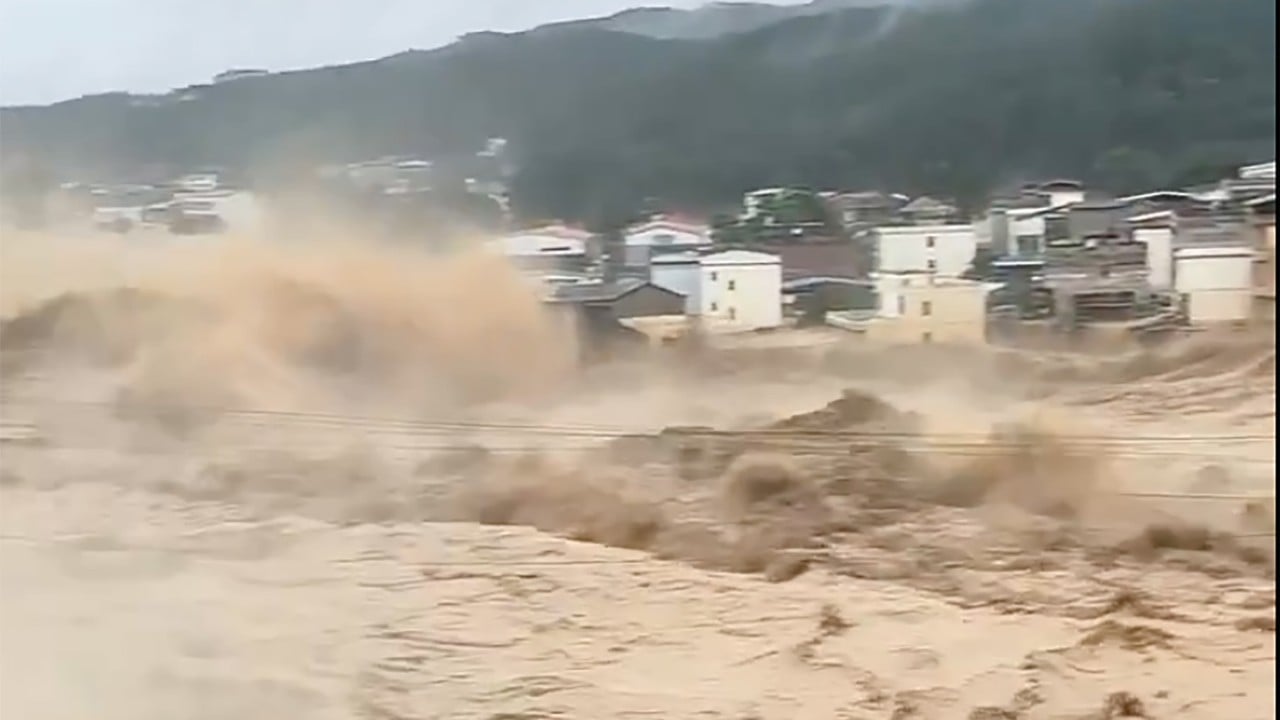
The mainstream media loves a good structural apocalypse story. Every time a severe tropical storm rolls through southern China, newsrooms run the exact same script. They find a piece of buckling infrastructure, screen-grab some chaotic social media footage, and declare that an entire nation’s engineering foundation is a house of cards.
The recent coverage of Typhoon Maysak slamming into Guangxi is a masterclass in this lazy reporting.
We saw the breathless alerts. A dam collapsed. A major cross-border railway ground to a halt. The immediate consensus from talking heads who have never spent a single day on a concrete pouring site was simple: systemic failure, structural corner-cutting, and imminent catastrophe.
It is a compelling narrative. It is also completely wrong.
If you actually understand civil engineering, hydrology, and modern asset management, what happened in Guangxi tells the exact opposite story. It shows a highly calculated, risk-mitigated response to an extreme weather event. The media is misinterpreting routine safety thresholds and legacy agricultural failures as a collapse of modern engineering.
The Earth-Fill Illusion
Let’s start with the word "dam."
When the average reader hears that a dam collapsed, they picture a massive, towering concrete wall like the Three Gorges or Hoover Dam failing catastrophically, sending a wall of water wiping out entire cities. The media counts on this mental image to drive clicks.
What actually failed in rural Guangxi was an entirely different animal. It was a small, legacy, earth-fill agricultural dike built more than half a century ago.
- The Reality of Earth Dikes: These small barriers were constructed by local cooperatives in the 1960s and 1970s using compacted soil, clay, and stone. They were designed to manage local irrigation for rice paddies, not to withstand generational typhoon systems.
- Controlled Breaching: In modern hydraulic management, allowing a low-risk, rural earth embankment to overtop or breach is frequently a strategic choice. It acts as a natural pressure valve.
- The Math of Inundation: If a localized barrier breaks and floods empty farmland, it prevents that same volume of water from stacking up downstream where it could threaten high-density urban populations or major concrete structures.
I have spent years analyzing hydrological risk models for heavy infrastructure. When an extreme weather event dumps hundreds of millimeters of rain in a few hours, water has to go somewhere. You cannot compress it. You cannot wish it away. You choose where it goes.
Shedding water into agricultural zones via the failure of a non-critical asset is not an engineering failure. It is basic triage. The fact that the main concrete flood-control reservoirs downstream held perfectly during Typhoon Maysak proves the broader system worked exactly as intended.
The Cross-Border Railway Panic
The second piece of the panic puzzle was the immediate halt of the cross-border railway line. The headlines treated this as proof that the rail network is fragile. "Infrastructure paralyzed," they screamed.
This is a profound misunderstanding of modern rail operations.
Stopping a train during a Category 4 or 5 equivalent storm is not a sign of weakness. It is a sign of operational discipline.
[Typhoon Rainfall] -> [Automatic Sensors Triggered] -> [Power Grid Isolation] -> [Controlled Traffic Halt]
Modern high-speed and cross-border rail networks are heavily instrumented environments. They are covered in fiber-optic acoustic sensors, gyroscopes, and rain gauges that feedback data to centralized command centers in real time.
When rainfall exceeds a specific millimeter-per-hour threshold, or when wind speeds hit a defined knot limit, the system automatically pulls the plug. The power grids feeding the overhead lines are isolated, and trains are held at pre-designated safe stations.
If you run a heavy passenger or freight train over a track bed that is currently experiencing a 100-year flash flood event, you risk a catastrophic derailment due to potential ballast washout. You do not wait for the track to wash out to stop the train. You stop the train before the water even reaches the ballast.
Calling a proactive safety shutdown "paralysis" is like saying your car is broken because the anti-lock brakes kicked in on an icy road. The system didn't break; the system saved your life because it was smart enough to stop you from doing something incredibly stupid.
The Real Crisis is Asset Lifecycle Management
The real story in Guangxi isn’t that modern engineering is failing. The real story is the staggering logistical challenge of decommissioning millions of legacy, mid-century assets across the globe.
This is not a problem unique to Asia. Look at the United States, where the American Society of Civil Engineers routinely gives the nation's infrastructure a D-grade. Look at Europe's aging rail bridges. The world is full of forgotten, small-scale concrete and earth structures built during the post-WWII boom that are reaching the end of their design lives.
The challenge is prioritizing which assets to upgrade, which to maintain, and which to intentionally abandon.
| Asset Type | Original Design Life | Current Risk Level | Modern Function |
|---|---|---|---|
| Mega-Concrete Dams | 100+ Years | Extremely Low | Primary Flood Control / Hydro |
| High-Speed Rail Lines | 50+ Years (Active Maintenance) | Low | National Transportation |
| Legacy Earth Dikes | 20–30 Years | High | Localized Agriculture Only |
When you try to protect everything, you protect nothing. If engineering teams spent billions of dollars reinforcing every single dirt berm in rural provinces to withstand 500-year storm events, there would be no capital left to build the hardened urban defenses, storm-water networks, and high-speed transit systems that actually keep millions of people safe.
Admitting this requires a level of nuance that doesn’t fit into a sensationalized headline. It requires accepting that in the era of intensified weather patterns, asset failure is a statistical certainty. The goal of top-tier infrastructure design is not to achieve zero failure; it is to achieve graceful failure.
Stop Asking if Infrastructure Will Break
The public and the media are asking the wrong question. They want to know: "Is this infrastructure completely indestructible?"
The answer is always no. Nothing is indestructible.
The question we should be asking is: "When this asset inevitably reaches its breaking point under extreme stress, does it fail safely, or does it cause a catastrophe?"
In Guangxi, an old earth wall washed out into fields. A rail line went dark for a couple of days while engineering crews inspected the tracks for debris and ballast integrity. No major cities were submerged. No passenger trains derailed.
That is what a resilient system looks like. It bends, it takes a localized hit, it pauses operations, and then it resets. The sensationalist reporters who see this as a collapse are fundamentally blind to how reality is built. They want a world of perfect, unyielding steel that never breaks, ignoring the fact that flexibility is the only thing that keeps us standing.