Every time Washington and Beijing schedule a bureaucratic photo-op, the financial press loses its mind. Markets hang on every whispered rumor of a breakthrough, while pundits breathlessly analyze the exact phrasing of a press release as if it held the hidden codes to global prosperity. It is theater. High-priced, multi-million-dollar theater designed to soothe nervous investors and give politicians something to tweet about while the underlying structural reality remains entirely unchanged.
I have spent years watching corporate supply chains fracture under the weight of these staged spectacles. I have seen executives panic-buy warehouse space in Vietnam because a negotiator sneezed the wrong way during a closed-door session, only to watch the tariff rates stay pinned to the ceiling six months later. The lazy consensus in standard reporting treats these negotiations like a chess match where someone is about to checkmate. That is a fantasy. This is not a negotiation seeking resolution; it is an ongoing economic containment strategy disguised as diplomacy.
The Myth of the Grand Bargain
The prevailing narrative suggests that if we just find the right combination of concessions, import quotas, and intellectual property protections, we will return to the golden age of friction-free globalization. That world is dead. It is not coming back next Monday, and it is not coming back next year.
When officials step up to the microphones to release details on bilateral discussions, they focus on superficial metrics: agricultural purchase targets, minor tweaks to customs enforcement, or temporary waivers for specific tech components. These are distraction tactics. They are designed to create headline volatility that benefits algorithmic traders while blinding long-term operators to the permanent shift in how capital and goods move across borders.
Take the obsession over trade deficits. Economists who should know better still treat bilateral trade balances as a scoreboard. If the US runs a deficit with China, the amateur hour punditry screams that we are losing. That betrays a fundamental misunderstanding of modern manufacturing ecosystems. A smartphone assembled in Zhengzhou is not a Chinese product beating an American product; it is a node in a heavily integrated multinational network involving American software, Japanese semiconductors, Korean displays, and Taiwanese silicon.
When politicians talk about decoupling or de-risking, they ignore the physical laws of supply chain gravity. You cannot un-invent thirty years of co-dependent manufacturing infrastructure by signing a memorandum of understanding on a Monday morning. The capital investments required to build redundant capacity elsewhere take decades, not electoral cycles.
What the Press Gets Wrong About Tariffs
Let us address the core mechanism that everyone loves to mischaracterize: tariffs.
The standard media line is that tariffs are a weapon used by one nation to bludgeon another into submission. In practice, they function more like a clumsy, regressive consumption tax paid almost entirely by domestic importers and consumers. Yet, whenever trade talks stall, the immediate threat is always more tariffs, as if doubling down on a broken tax policy will somehow yield a different result.
Imagine a scenario where a mid-sized industrial manufacturer in the Midwest relies on specialized alloy steel sourced from a specific mill in Hebei. A new round of trade restrictions hits, and the tariff jumps by twenty-five percent. Does the company instantly pivot to an American supplier? No. Because domestic mills do not produce that specific grade at scale, and tooling a new furnace takes eighteen months and millions of dollars. Instead, the company absorbs the cost, trims its R and új budget, and raises prices on its industrial clients. That is the real-world transmission mechanism of trade politics. It does not punish Beijing; it starves local innovation.
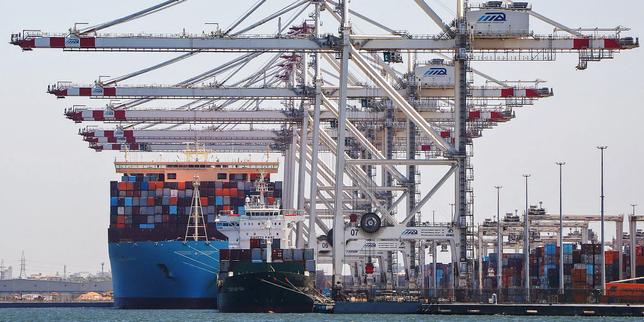
The people writing these updates rarely have to manage a bill of materials or deal with customs clearance delays at the Port of Long Beach. They live in a theoretical space where policy equals reality. But reality has friction.
The Real Agenda Nobody is Discussing
While the public watches the shiny object of official communique releases, the actual battle is happening elsewhere. It is happening in standard-setting bodies for artificial intelligence, in rare earth mineral processing facilities in Inner Mongolia and Malaysia, and in venture capital allocations for quantum computing and biotechnology.
The talks you read about in the morning news are the smoke. The strategic decoupling of digital infrastructure is the fire.
Beijing and Washington are not arguing over soybean shipments or textile quotas anymore. Those are legacy disputes. The new frontier is technological sovereignty. Both superpowers are actively building parallel universes—separate internet standards, isolated supply chains for semiconductors, and distinct financial messaging networks. When officials brief the press about progress in trade talks, they are papering over a permanent fracture with soothing vocabulary.
If you are running a business today, waiting for a grand trade deal to clear the fog is a recipe for bankruptcy. You have to operate as if the current barriers are the permanent baseline. Build your redundancies now. Assume that every cross-border transaction will face higher compliance costs, longer lead times, and sudden regulatory pivots.
Stop reading the tea leaves of Monday press briefings. Look at the balance sheets of the companies quietly restructuring their asset footprints away from geopolitical choke points. They are the ones surviving. The rest are just waiting for an announcement that will never change their bottom line.
Stop asking when the trade war will end. It will not. Adapt your model to the friction or get out of the way.