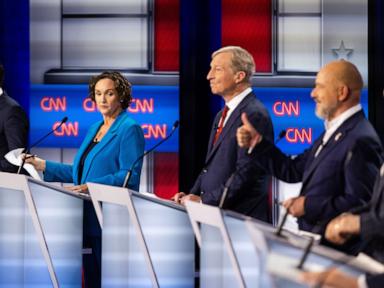
The political press corps is panicking over California because they do not understand how the state actually runs. Mainstream commentators look at the June 2026 jungle primary and see a "packed race" full of "voter apathy." They write lazy, hand-wringing columns about how California Democrats are shrugging at their choices to replace Gavin Newsom. They fret that a crowded field of eight major Democrats—including Xavier Becerra, Katie Porter, Matt Mahan, and Tom Steyer—will split the progressive vote so thin that two Republicans, like Chad Bianco and Steve Hilton, might slip into the November runoff.
This narrative is pure fiction. Voters are not shrugging because they are bored; they are ignoring the race because they have correctly realized that the identity of the next governor does not actually matter.
I have watched political campaigns waste tens of millions of dollars trying to manufacture "star power" in Sacramento. The media wants a repeat of the glossy, high-stakes showdowns of the past. They miss the celebrity aura of Arnold Schwarzenegger or the carefully manicured national ambition of Gavin Newsom. Because the current 2026 lineup looks more like a technocratic committee than a Hollywood casting call, pundits assume the electorate is disengaged.
The truth is far more cynical. California’s electorate has achieved a state of enlightened indifference. They understand a reality that political scientists and mainstream journalists refuse to admit: the modern California governorship has been systematically hollowed out. Thanks to a hyper-weaponized supermajority in the state legislature, structural ballot initiatives, and an unyielding civil service bureaucracy, the executive office is no longer an engine of drastic policy shifts. It is a middle-management position.
The Illusion of Choice in a One-Party Supermajority
The media treats the ideological differences between the Democratic frontrunners as a battle for the soul of the Golden State. We are told to care deeply about whether the state tilts toward the consumer advocacy of Katie Porter, the legacy bureaucratic resume of Xavier Becerra, the Silicon Valley pragmatism of San Jose Mayor Matt Mahan, or the progressive wallet of billionaire Tom Steyer.
This is a distinction without a meaningful difference.
Let’s look at the institutional reality. The California State Legislature holds a secure Democratic supermajority. In Sacramento, the legislative leadership—the Speaker of the Assembly and the Senate President pro Tem—holds the real keys to the kingdom. They write the budget. They kill or advance bills long before they ever reach the governor's desk.
Imagine a scenario where a newly elected governor tries to implement a radical, disruptive agenda that deviates from the party establishment's blueprint. If a moderate like Matt Mahan tries to aggressively scale back state spending or roll back environmental regulations to appease business interests, the legislature can simply bypass him or starve his initiatives. Conversely, if a hard-left progressive like Tony Thurmond attempts to impose a wealth tax on billionaires to backfill Medi-Cal, the business-friendly "mod squad" of centrist Democrats in the Assembly can quietly suffocate the bill in committee.
The governor can sign what is given to them, veto the extremes, and adjust the margins using line-item vetoes on the budget. Beyond that, they are a glorified rubber stamp for a legislative machine that moves in only one direction.
PAA: Why are California voters so undecided in 2026?
The establishment media views the high percentage of undecided voters in the UC Berkeley Institute of Governmental Studies (IGS) polls as a crisis of democracy. They claim a lack of information or a toxic national political tone is keeping people from committing to a candidate.
The premise of the question is entirely wrong. Voters are undecided because the political marketplace is offering identical products in different packaging.
When every leading candidate promises to address the exact same three crises—the cost of living, healthcare delivery, and housing affordability—using the exact same micro-targeted rhetoric, remaining undecided is the only logical response. It is not apathy; it is a rational refusal to participate in a marketing gimmick. Pundits interpret low primary turnout as a failure of civic duty. In reality, it is a sign that the public has wised up to the fact that the primary is just an expensive vetting process for the state’s political class, not a turning point for their daily lives.
The Bureaucracy and the Ballot Box Have Eaten the Executive
Even if a governor possesses immense political will, the structural mechanics of California’s government prevent them from exercising unilateral power.
- The Ballot Initiative Monopoly: California is governed by the ballot box, not the governor's office. Decades of voter-approved propositions have locked the state into mandatory spending requirements. Proposition 98, for instance, legally mandates that roughly 40% of the state’s general fund must go to K-14 education. Other initiatives have locked in transportation funding, property tax caps, and criminal justice frameworks. The governor does not control the state's financial destiny; a messy web of historical voter initiatives does.
- The Independent Executive Branch: Unlike the federal system, where the President appoints their entire cabinet, California elects its executive officials independently. The governor does not command a unified team. They must work alongside an independently elected Attorney General, an independent Lieutenant Governor, an independent Controller, and an independent Insurance Commissioner. If the governor wants to take a regulatory stance that conflicts with the ambitions of an independent Attorney General eyeing the next election, the executive branch fractures instantly.
- The Unkillable Civil Service: The state’s massive regulatory agencies—from the California Air Resources Board (CARB) to the California Department of Transportation (Caltrans)—are staffed by career bureaucrats protected by powerful public sector unions. A new governor cannot simply sweep into Sacramento and overhaul the regulatory framework. The bureaucracy moves at its own glacial pace, outlasting administrations and effectively neutralizing any disruptive agenda.
The Real Risk the Media is Ignoring
The true danger of the 2026 election cycle is not that voters are bored. The danger is that this administrative stagnation is driving a massive generational and economic flight that no gubernatorial candidate can stop.
While the press focuses on whether Gen Z will show up to vote on June 2, they ignore why young people are disconnected. A recent IGS poll noted that 47% of young voters who are unlikely to vote stated they feel underinformed. But look deeper at the economic data: they are checked out because they are priced out. When the median home price in the state hovers around $900,000, a minor tweak to state zoning laws by an incoming governor feels like rearranging deck chairs on the Titanic.
The tech executives, venture capitalists, and major employers funding these candidates—names like Garry Tan, Reid Hoffman, and Vinod Khosla—are playing a legacy game of political influence. They pour millions into independent expenditure committees to back institutional figures like Becerra or business-aligned pragmatists like Mahan. They buy access, but they are buying access to an administrative state that is fundamentally incapable of fixing its own structural rot.
Stop waiting for a political savior to emerge from the crowded 2026 field. Stop analyzing candidate debates as if they hold the key to the state’s future. The next governor of California will not save the state, nor will they ruin it. They will simply manage its managed decline, constrained by a legislature that holds the real power, a ballot structure that dictates the budget, and an electorate that has finally realized that the circus in Sacramento is no longer worth the price of admission.