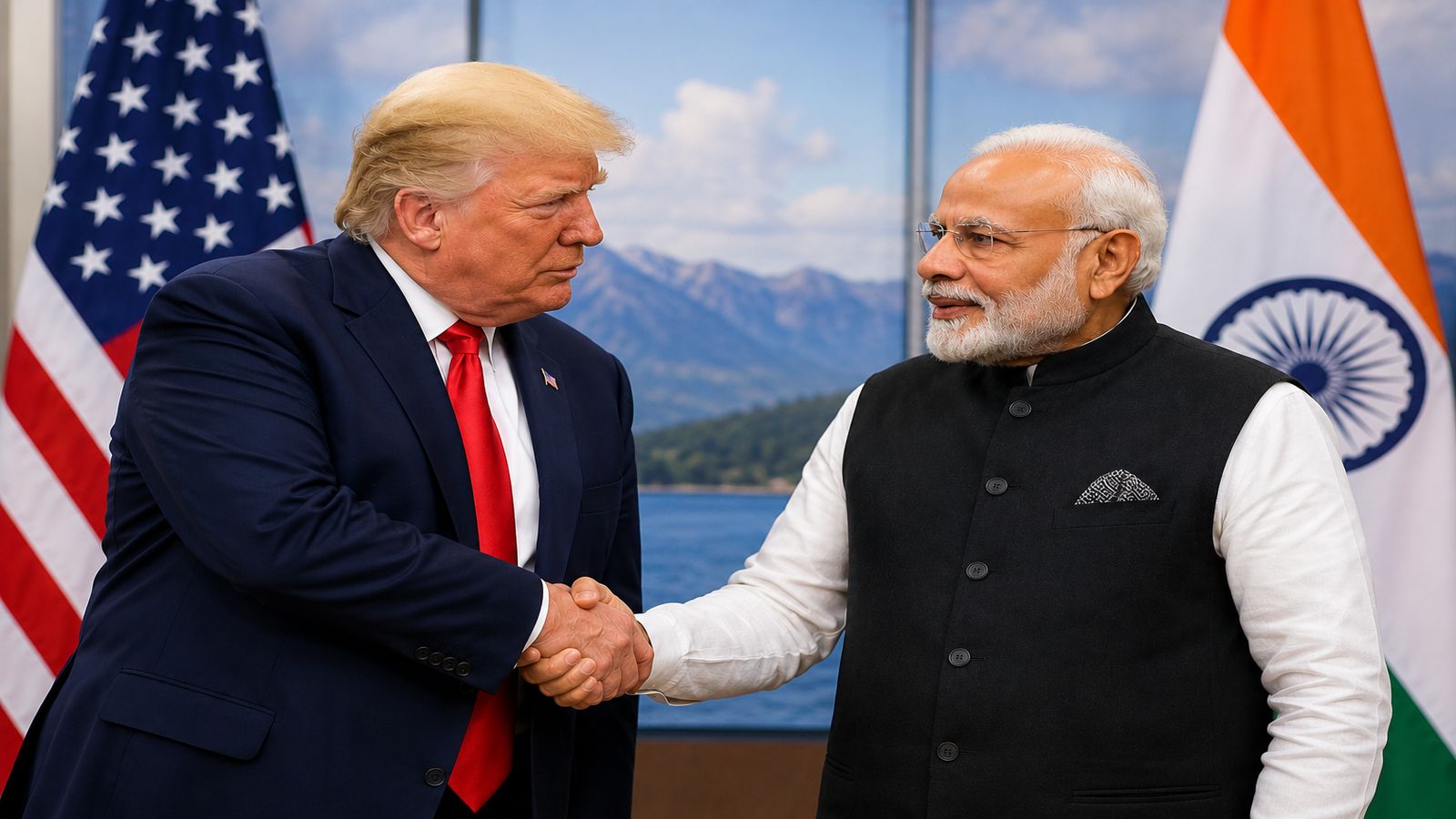
The headlines repeat themselves every few years like a broken metronome. Prime Minister Modi and the sitting American president sit down, flash tight handshakes for the cameras, and mumble platitudes about a shared democratic vision and unlocking economic potential through an interim trade deal. Bureaucrats pop champagne. Analysts on cable news nod solemnly about bilateral momentum.
It is theater. Expensive, exhausting, predictable theater.
I have spent the better part of two decades watching corporate strategists and trade lobbyists blow millions of dollars trying to crack the code of India-US commerce. They arrive in New Delhi armed with western spreadsheets, convinced that if they can just optimize tariff schedules or sweeten intellectual property protection, the great bureaucratic machine of South Block will suddenly pivot toward open-market capitalism.
They are delusional.
The lazy consensus in international trade circles is that New Delhi and Washington are natural allies divided only by minor protectionist squabbles and agricultural stubbornness. Fix the dairy access, sort out the medical device price caps, and the golden gates of bilateral commerce swing wide open.
Wrong. The friction between these two economies is not a communication error or a temporary negotiation hurdle. It is structural, ideological, and deeply rooted in the divergent survival strategies of two very different political states.
Let us look at why the constant obsession with an interim trade deal misses the point entirely.
The Mirage of the Comprehensive Accord
Ask any trade lawyer what is holding up a substantive bilateral agreement between the United States and India, and they will point to a familiar laundry list. India wants its Generalized System of Preferences benefits restored. Washington wants market access for dairy, poultry, and medical technology. Both sides squabble over digital trade rules and data localization.
This framing assumes both capitals actually want a comprehensive free trade agreement. They do not.
For Washington, India is a geopolitical wedge against Beijing, not an export destination of primary economic necessity. When American trade negotiators fly to Delhi, their primary mandate is containment disguised as commerce. They want India inside the security
Why an India US Interim Trade Deal is a Trap for New Delhi
business, news
Everybody in Washington and New Delhi is popping cheap champagne over the latest diplomatic theater. Prime Minister Narendra Modi and President Donald Trump sit across from each other, flash synchronized grins, and jawbone about a quick-hit interim trade deal to patch up a decade of bureaucratic friction. The lazy consensus across every financial terminal and cable news desk is simple: a mini-trade agreement will lower tariffs, unlock market access, and kick-start a golden era of bilateral commerce.
It is a complete fantasy.
I have watched corporate legal teams and trade lobbyists burn millions of dollars chasing phantom bilateral breakthroughs for years. What the political pundits miss is that an interim trade deal is not a stepping stone to economic harmony. It is a sugar rush that masks structural incompatibility. New Delhi wants guaranteed protection for domestic agriculture and data sovereignty, while Washington wants absolute access to India's dairy, poultry, and digital markets without offering predictable H-1B visa quotas or permanent Generalized System of Preferences reinstatement in return.
When you rush an agreement between two populist leaders desperate for a headline win, you do not solve structural trade deficits. You institutionalize friction.
The Sovereignty Tax Washington Refuses to Pay
The fundamental misunderstanding driving this entire push is the belief that India and the United States share a unified vision for globalization. They do not.
Washington operates on a doctrine of market fundamentalism wrapped in national security rhetoric. When American trade representatives demand reduced duties on agricultural goods, they are talking about industrial-scale, heavily subsidized corporate farming entering a domestic market dominated by tens of millions of smallholders. For New Delhi, agriculture is not just an economic sector; it is a social safety net of last resort. Yielding on dairy or poultry is political suicide.
Conversely, India's insistence on data localization and strict digital taxation drives Silicon Valley executives into a frenzy. American multinationals view data as a frictionless global asset. Indian policymakers view data as a sovereign resource that should stay within national borders to prevent foreign corporate colonisation of local intelligence.
Trying to paper over these philosophical chasms with an interim trade deal is like trying to fix a blown engine with duct tape. You might stop the rattling for a mile, but the transmission is still going to seize.
Why Mini Deals Are Diplomatic Placebos
Let us look at the mechanics of what an interim package actually contains. We are talking about minor tariff adjustments on niche manufacturing components, a few token gestures toward aerospace cooperation, and vague promises about energy security.
Meanwhile, the major structural hurdles remain untouched.
- The Visa Wall: Every single negotiation between these two nations eventually hits the immigration wall. India makes concessions on market access, expecting relief for its tech talent. Washington's domestic political climate treats high-skilled immigration as a third-rail issue. An interim deal that bypasses visa reform is a bad deal for New Delhi by default.
- The Enforcement Vacuum: Interim agreements bypass the rigorous congressional approval process in the United States. That sounds efficient until you realize it means any subsequent administration can dismantle the deal with a single executive stroke or a wave of anti-dumping duties. You are building commercial strategy on shifting sand.
I have seen mid-sized manufacturing exporters restructure their entire supply chains around these temporary political wins, only to get crushed six months later when a retaliatory tariff lands because a completely unrelated dispute flared up in the World Trade Organization.
Stop Waiting for Washington to Save Your Supply Chain
If you run a business or manage capital based on the assumption that a grand trade bargain is going to magically lower your input costs, you are abdicating your responsibilities as an operator.
Stop waiting for bureaucrats in South Block and the USTR to clear your path. The companies winning right now are not the ones lobbying for bilateral breakthroughs. They are the ones building redundancies that make bilateral spats irrelevant. They are diversifying supplier bases across Southeast Asia, investing in localized compliance, and treating trade agreements as background noise rather than strategic catalysts.
The Modi-Trump handshake makes for great television. It provides a momentary bump in market sentiment and gives cable news anchors something to talk about between commercial breaks. But if you are deploying serious capital into the Indo-American corridor on the promise of an interim trade deal, you are betting your balance sheet on a political photo op.
The next time a trade minister tells you a historic breakthrough is just around the corner, check your wallet, check your supply chain redundancy, and prepare for the exact opposite.