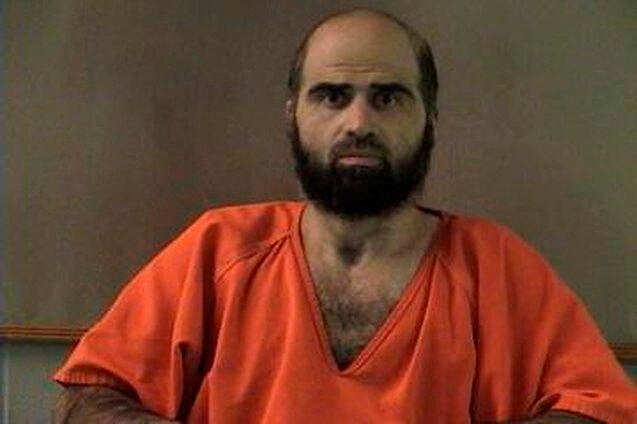
Donald Trump has publicly endorsed the execution of Nidal Hasan, the former Army psychiatrist convicted of the 2009 mass shooting at Fort Hood, Texas, while simultaneously questioning the feasibility or wisdom of a proposed public livestream of the event. Hasan killed 13 people and wounded more than thirty others in the deadliest mass shooting on a U.S. military base. His death sentence has languished for over a decade within the military appellate system.
The political posturing surrounding military executions collides directly with the rigid, protracted mechanics of the Uniform Code of Military Justice. Executions within the American armed forces are exceedingly rare, heavily bureaucratic, and subject to layers of judicial review that even a sitting commander-in-chief cannot bypass by executive fiat.
Understanding why Hasan remains alive on death row requires examining the intersection of military jurisprudence, presidential authority, and the historical aversion to carrying out federal and military capital punishment.
The Fort Hood Massacre and the Legal Legacy
On November 5, 2009, Major Nidal Hasan opened fire inside the Soldier Readiness Processing Center at Fort Hood. Armed with a legally purchased FN Herstal Five-seven semi-automatic pistol and laser sights, Hasan shouted "Allahu Akbar" before firing into a crowd of unarmed service members preparing for deployment.
The attack left 13 people dead and 32 injured. Hasan was shot and paralyzed from the waist down by civilian police officers responding to the scene.
In August 2013, a military jury at Fort Hood convicted Hasan on 13 counts of premeditated murder and 32 counts of attempted premeditated murder. The panel sentenced him to death. Throughout his court-martial, Hasan chose to represent himself, offered little defense, and later stated in letters to media organizations that he considered himself a soldier fighting against what he viewed as an illegal war against Muslims.
Yet a conviction and a sentence from a military court-martial represent merely the opening phase of a multi-tiered appellate labyrinth.
The Mechanics of Military Death Row
Unlike the civilian federal system or state courts, the path to execution for a service member involves specific military appellate bodies before ever reaching the civilian federal judiciary or the President's desk.
Following his 2013 conviction, Hasan's case automatically moved to the Army Court of Criminal Appeals. In 2020, that court affirmed both the conviction and the death sentence. The case then escalated to the United States Court of Appeals for the Armed Forces, the highest civilian court responsible for reviewing military justice matters.
The military death penalty process requires meticulous adherence to constitutional standards and procedural rules precisely to prevent reversals on appeal. Every aspect of the trial, from the handling of classified intelligence to Hasan's self-representation and mental competency, faces exhaustive scrutiny. Any perceived misstep by the prosecution or the military judge can provide grounds for defense attorneys to challenge the verdict.
Furthermore, a military execution cannot proceed without the personal signature of the President of the United States. Under Article 71 of the Uniform Code of Military Justice, a sentence extending to death against a general or flag officer, or any sentence of death extending to any member of the armed forces, requires presidential approval.
Presidential Power Versus Institutional Reality
Donald Trump's recent statements regarding Hasan highlight a persistent tension between political desires for retributive justice and the structural realities of the American legal apparatus.
When Trump weighed in on the case, he voiced support for capital punishment for Hasan while simultaneously expressing reservations about broadcasting the execution via livestream. The hesitation over a public broadcast underscores the complex legal, ethical, and logistical questions surrounding state-sponsored executions in the modern media age. Federal protocols and constitutional considerations regarding cruel and unusual punishment, alongside the sheer security nightmare of managing a televised military execution, create massive hurdles.
More importantly, a president cannot simply order a military prisoner executed on demand. Even if a president favors the death penalty, the legal prerequisites must be fully satisfied. Hasan's legal team continues to pursue appeals, and until all avenues of judicial relief within the military and federal court systems are exhausted, the execution order cannot legally reach the president's desk for final action.
The federal government and the military have demonstrated extreme hesitation in carrying out capital punishment. While the federal government executed several inmates during the final months of the Trump administration in 2020 and 2021, military executions have been frozen for decades. The last execution of a member of the U.S. armed forces occurred in 1961, when Army Private John A. Bennett was hanged for rape and attempted murder.
The Broader Implications for Military Justice
The focus on Nidal Hasan brings national attention back to the broader debate over the viability of the death penalty within the military justice system. Critics of military capital punishment argue that the lengthy appeals process creates prolonged uncertainty for victims' families, turning justice into a multi-decade administrative ordeal. They point out that maintaining a military death row with only a handful of inmates is an expensive and legally fraught endeavor.
Conversely, proponents of the ultimate punishment argue that crimes involving mass murder of service members on duty demand the harshest possible sanction to maintain discipline and honor the fallen. For the families of the soldiers and civilians killed at Fort Hood, the ongoing legal limbo is a source of continuous pain.
Trump's public remarks ensure that the case remains in the political spotlight, forcing the public to confront the grinding pace of military law. Yet rhetoric from the campaign trail or social media platforms does not accelerate legal mandates. The courts will continue to review every motion, every brief, and every constitutional claim raised by Hasan's defense.
Until those legal doors close, Nidal Hasan will remain confined at the United States Disciplinary Barracks at Fort Leavenworth, Kansas, a living artifact of one of the darkest days in modern American military history, waiting for a bureaucratic and judicial process that moves with glacial deliberation.


