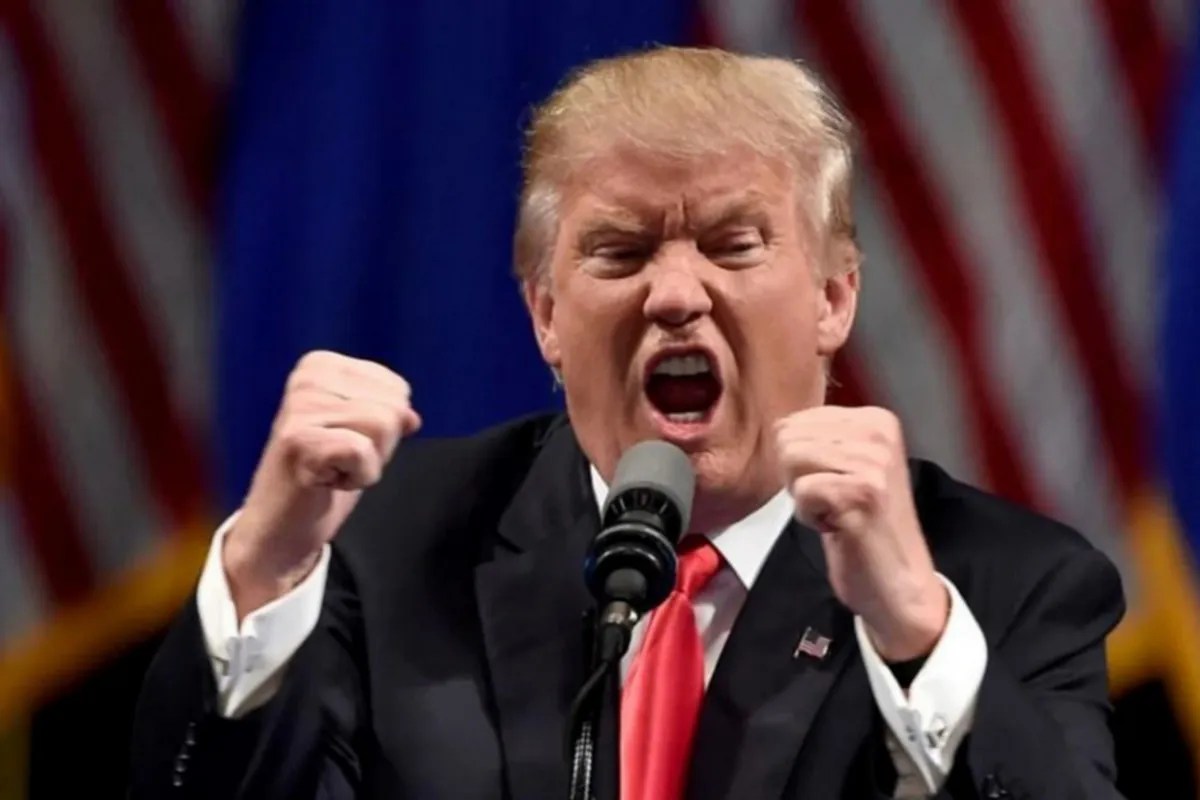
Political theater masks institutional mechanics. When Donald Trump announces a political comeback while preparing for an entrenched confrontation with Congress, surface-level commentary treats the dynamic as a clash of personalities. That framing misses the structural reality. What is unfolding in Washington is a high-stakes stress test of the American constitutional separation of powers, pitting centralized executive authority against a fractured legislative branch weaponizing procedural bottlenecks. Understanding this collision requires stripping away partisan rhetoric and analyzing the exact institutional levers, fiscal chokepoints, and legal doctrines that dictate how power actually moves in a divided or narrowly held federal government.
The Structural Anatomy of the Executive Comeback
A political comeback in the modern American system is not merely an electoral event; it is an administrative insurgency. Standard political reporting focuses on rally rhetoric and polling fluctuations, ignoring the operational blueprint required to reassert executive control over a sprawling federal bureaucracy. To execute a restoration agenda without reliable legislative majorities, the executive branch must shift its operational center of gravity from Capitol Hill to the Office of Management and Budget, the Department of Justice, and independent regulatory agencies.
This strategy rests on three distinct institutional pillars:
- Personnel Reclassification and Bureaucratic Centralization: The federal civil service operates as a fourth branch of government, insulated by statutory protections designed to prevent political patronage. A comeback administration seeking rapid policy reversal must neutralize internal institutional resistance. The primary mechanism for this is the reclassification of policy-influencing career civil servants into at-will positions. By stripping away Merit Systems Protection Board appeals for tens of thousands of roles, the White House converts an autonomous administrative state into a direct instrument of executive will.
- Deregulatory Velocity via the Administrative Procedure Act: Passing new statutes requires bicameral consensus and surviving Senate filibusters. Dismantling existing regulatory frameworks requires only administrative endurance. Under the Administrative Procedure Act, an incoming administration can suspend, revise, or rescind prior executive orders and agency rules. While this process requires formal notice-and-comment periods and must survive judicial review under the arbitrary-and-capricious standard, it bypasses Congress entirely.
- Impoundment and Fiscal Reallocation: The Constitution grants Congress the power of the purse, yet the executive branch controls the execution of spending. By testing the boundaries of the Congressional Budget and Impoundment Control Act of 1974, an assertive White House can delay, freeze, or redirect appropriated funds. Even if such maneuvers trigger immediate litigation, the time lag between executive action and Supreme Court resolution creates a temporary operational reality on the ground.
Consider how this functions in energy and trade policy. Rather than waiting for Congress to pass a comprehensive tariff bill or a drilling mandate, the executive utilizes existing statutory delegations—such as Section 232 of the Trade Expansion Act of 1962 or Section 301 of the Trade Act of 1974—to impose tariffs unilaterally under the guise of national security or unfair trade practices. Similarly, leasing moratoria on federal lands can be lifted via secretarial orders within days of inauguration. The legislative branch is reduced to a reactive spectator, forced to muster veto-proof two-thirds majorities just to claw back authority it delegated decades ago.
The Legislative Chokepoints and Congressional Counter-Strategies
A bitter showdown with Congress is not an anomaly; it is the inevitable equilibrium when an expansive executive meets a legislature armed with asymmetric procedural weapons. Even when the president's party holds narrow majorities in the House of Representatives or the Senate, razor-thin margins empower ideological factions and institutionalists to extract massive concessions or halt governance entirely. When opposition control enters the equation, Congress shifts from a lawmaking body to an oversight and obstruction engine.
The Appropriations Trap and Government Shutdown Dynamics
The primary battlefield of any executive-legislative showdown is the annual appropriations process. The federal government relies on twelve regular appropriations bills to fund discretionary operations. When ideological polarization prevents the passage of these bills before the October 1 fiscal year deadline, Congress resorts to Continuing Resolutions to keep agencies running at prior-year funding levels.
This creates a structural trap for an ambitious White House. Continuing Resolutions lock in the spending priorities of the previous administration, starving new executive initiatives of operational capital. To break this stasis, the executive must either accept bipartisan compromises that dilute its core agenda or force a brinkmanship scenario resulting in a partial or full government shutdown. During a shutdown, the Anti-Deficiency Act prohibits federal agencies from obligating funds not yet appropriated, halting non-essential operations. Politically, shutdowns impose asymmetric reputational costs, typically penalizing the party perceived as instigating the crisis, thereby forcing the executive to retreat or concede policy riders.
The Senate Confirmation Bottleneck
Article II, Section 2 of the Constitution requires the Senate's advice and consent for principal officers of the United States, including Cabinet secretaries, federal judges, and ambassadors. In a hostile or narrowly divided Senate, the confirmation process becomes an attrition war.
- Committee Holds and Floor Time Exhaustion: Under Senate rules, even a single senator can place an anonymous hold on a nominee, forcing the Majority Leader to burn days of valuable floor time filing cloture motions and running out post-cloture debate clocks. With roughly 1,200 executive branch positions requiring Senate confirmation, deliberate slow-walking can leave key sub-cabinet posts vacant for over a year.
- The Vacancy Reform Act Workaround: To circumvent Senate obstruction, the White House relies on the Federal Vacancies Reform Act of 1998. This statute allows the president to install "acting" officials for up to 210 days—and potentially longer if a nomination is pending—without Senate approval. While functional in the short term, acting officials often face legal challenges regarding the validity of the regulations they sign, creating a cloud of judicial uncertainty over every agency action.
Subpoena Power and the Oversight Gauntlet
When legislative pathways close, congressional committees pivot to investigative oversight. Armed with subpoena power, House and Senate committees can compel testimony, demand internal communications, and paralyze senior administration officials with continuous legal preparation. The executive branch routinely counters with assertions of executive privilege, triggering protracted civil litigation over document production. While these battles rarely produce immediate legislative outcomes, they consume the bandwidth of White House Counsel and distract the administration from policy execution.
The Cost Function of Institutional Attrition
Media narratives frame Washington showdowns in terms of wins and losses. From a systems-analysis perspective, prolonged conflict between the presidency and Congress imposes a measurable cost function on governance, markets, and institutional stability.
First, regulatory whiplash destroys capital allocation predictability. When major economic sectors—such as energy, healthcare, finance, and manufacturing—cannot forecast the regulatory or tax environment beyond a two-to-four-year election cycle, corporations hoard cash rather than deploying long-term capital expenditures. Supply chains become brittle when tariff regimes shift via executive proclamation rather than stable statutory frameworks.
Second, governance via executive action creates inherent policy fragility. What is created by the stroke of a presidential pen can be erased by the next occupant of the Oval Office on day one. Unlike landmark legislation—such as the Social Security Act or the Affordable Care Act—which embeds itself into the economic fabric and builds durable constituencies, unilateral executive actions lack institutional permanence. An administration that relies exclusively on executive orders builds a policy architecture on sand.
Third, constant brinkmanship degrades sovereign fiscal credibility. Repeated standoffs over the statutory debt ceiling—the legal limit on the total amount of national debt the Treasury can incur—introduce tail-risk scenarios of technical default. Even when resolved at the eleventh hour, these confrontations elevate borrowing costs and signal to global financial markets that domestic political polarization outweighs fiscal discipline.
Judicial Review as the Ultimate Arbiter
When the executive branch stretches statutory delegations and Congress responds with legislative paralysis, the Supreme Court becomes the de facto referee of American governance. Over the past decade, the federal judiciary has systematically recalibrated the balance of power between agencies and the legislature, creating new constraints that directly impact a Trump restoration strategy.
The defining doctrinal shift is the formalization of the Major Questions Doctrine. Under this principle, courts will not assume that Congress has delegated the authority to decide issues of vast economic and political significance to an executive agency unless the statute contains clear, unambiguous authorization.
This doctrine cuts both ways for an assertive president. While it serves as a potent weapon to strike down expansive progressive regulations—such as student loan forgiveness or sweeping carbon emissions caps—it simultaneously restricts a conservative administration from using vague, decades-old statutes to enact radical new policies without congressional approval. If a comeback administration attempts to restructure entire industries, alter immigration frameworks, or overhaul federal procurement using ambiguous statutory language, federal courts will likely enjoin those actions before they take effect.
Furthermore, the Supreme Court's overturning of the Chevron deference doctrine means federal judges no longer defer to an agency's reasonable interpretation of ambiguous statutes. Courts now exercise independent judgment in determining statutory meaning. For an administration planning a rapid, top-down regulatory overhaul, the loss of Chevron deference removes a critical shield. Every novel legal interpretation advanced by the White House will face rigorous, skeptical scrutiny from federal appellate courts, lengthening the timeline between policy announcement and actual implementation.
Limitations of the Unilateral Playbook
No executive strategy operates without structural constraints. Analysts who predict an unchecked imperial presidency misunderstand the friction built into the American constitutional design. Even the most disciplined White House faces hard limits when attempting to bypass a recalcitrant Congress.
- Statutory Ceilings: The president cannot spend money Congress has not appropriated, nor can the executive branch create new criminal penalties, levy new taxes, or establish new federal agencies without statutory enactment. The power of the purse remains an absolute boundary.
- Federalism and State-Level Resistance: The United States operates as a dual-sovereignty system. State attorneys general routinely coordinate multistate lawsuits to secure nationwide injunctions against federal executive actions within days of their announcement. Furthermore, state governments control critical infrastructure, law enforcement, and local regulatory regimes, allowing them to blunt federal initiatives through non-cooperation.
- Market Discipline: Bond markets and equity indices react instantaneously to reckless fiscal or trade maneuvers. If an executive-legislative showdown threatens inflation spikes, supply chain freezes, or debt default, financial market sell-offs rapidly impose political pressure on both ends of Pennsylvania Avenue to de-escalate.
The Strategic Imperative for Executive Execution
To navigate a hostile or narrowly divided Congress without succumbing to procedural paralysis, an incoming administration cannot rely on broad rhetorical mandates or sprawling legislative wish lists. Political capital is a depreciating asset that peaks immediately following inauguration and erodes rapidly ahead of the midterm elections.
The optimal operational play is ruthless prioritization paired with statutory precision. Rather than scattering legislative energy across dozens of contentious bills that will die in Senate committees, the White House must consolidate its core fiscal and tax priorities into a single Budget Reconciliation package. Because reconciliation bills bypass the 60-vote Senate filibuster threshold and pass with a simple majority, this mechanism remains the sole reliable vehicle for durable statutory change in a polarized Congress.
Simultaneously, the administration must immunize its executive actions against post-Chevron judicial challenges. Every regulatory rescission or new rule must be anchored in explicit, unambiguous statutory text rather than creative legal theories, backed by exhaustive administrative records that satisfy the Administrative Procedure Act. By pairing a single, filibuster-proof fiscal reconciliation strike with legally bulletproof regulatory execution, the executive branch can lock in structural policy shifts before legislative gridlock inevitably freezes Washington ahead of the next electoral cycle.