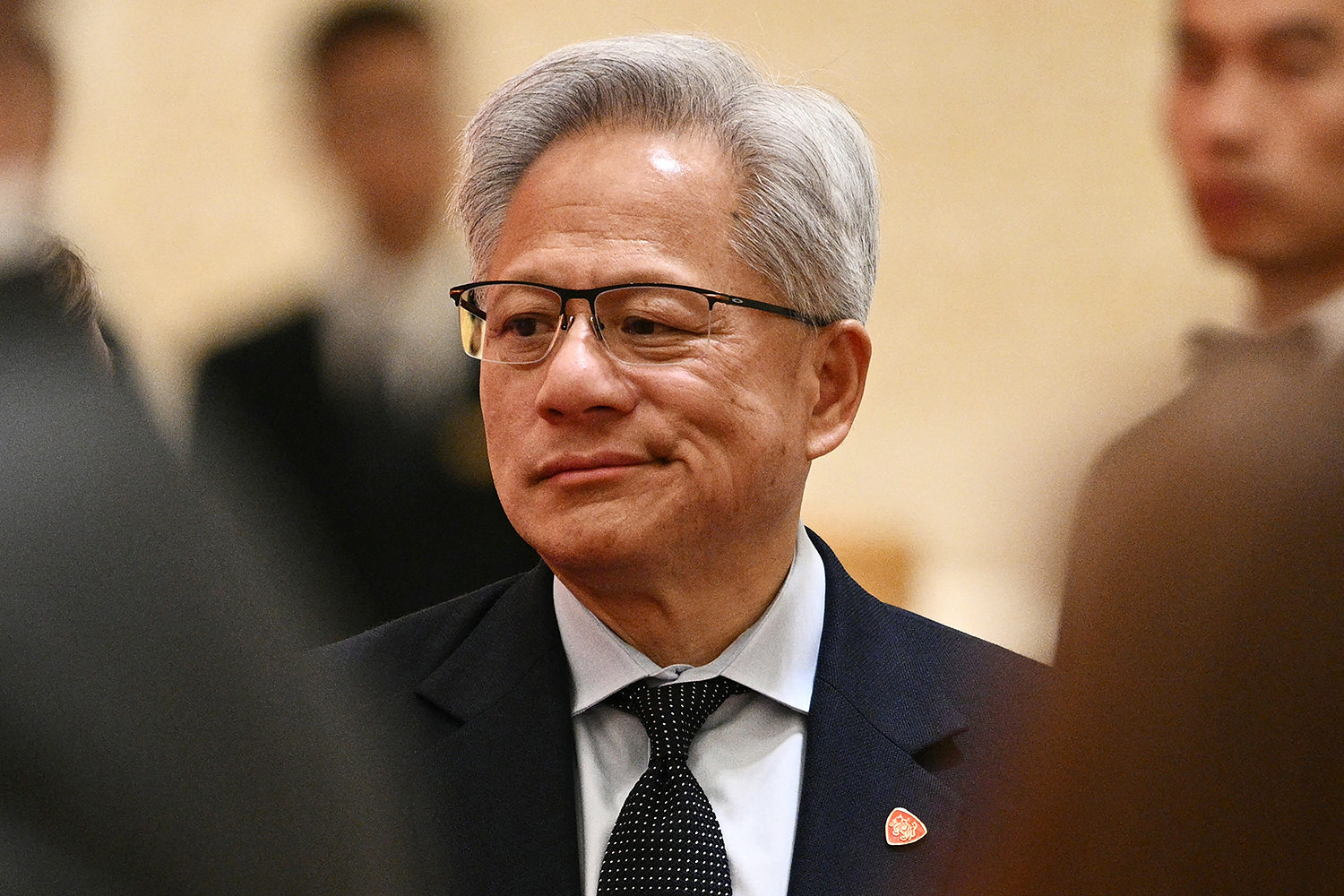
The addition of Singapore-based cloud provider Megaspeed International to the United States Commerce Department Entity List represents a structural inflection point in semiconductor export enforcement. While mainstream coverage treats the designation primarily as the political epilogue to a corporate governance scandal surrounding Nvidia chief executive Jensen Huang, an operational audit of the underlying supply chain mechanics reveals a deeper vulnerability. Placing an intermediary on a trade blacklist after hardware has already crossed international borders addresses the symptoms of diversion while leaving the primary transmission vectors—third-party distribution channels, cross-border cloud leasing, and extraterritorial manufacturing—largely intact.
The Architecture of Hardware Diversion
To understand why a single Singaporean entity acquired billions of dollars in restricted artificial intelligence accelerators, one must map the friction points between corporate sales channels and regulatory compliance frameworks. Advanced computing hardware does not move from fabrication plants directly to end users; it traverses a multi-tiered distribution network designed for velocity rather than forensic traceability.
Direct Sales Versus Indirect Channel Opacity
Semiconductor manufacturers maintain strict Know Your Customer protocols for direct enterprise buyers. However, a substantial portion of global graphics processing unit volume moves through Original Design Manufacturers, server integrators, and regional value-added resellers.
- The Direct Procurement Layer: In May 2025, when the Department of Commerce requested shipment records from Nvidia, the initial audit focused on direct transactions. Nvidia subsequently placed Megaspeed on an internal no-sell list in June 2025.
- The Partner Intermediary Blind Spot: A comparison of trade documentation later demonstrated that Nvidia's initial submission to the Bureau of Industry and Security omitted roughly 50,000 chips that Megaspeed procured indirectly through authorized channel partners and server builders.
- Custody Transfer Delays: Once a server integrator such as Supermicro or a regional distributor takes title to physical hardware, the original chip designer loses real-time telemetry over final deployment. This gap allowed Megaspeed to accumulate tens of thousands of processors beyond what primary manufacturer inspections initially accounted for.
Corporate Restructuring and Jurisdictional Arbitrage
Export control regimes rely heavily on corporate registry data to assess risk. When shell structures and cross-border corporate rebrands are deployed, ownership screening fails to detect beneficial control.
Prior to its 2023 rebranding, Megaspeed operated under corporate lineages tied to 7Road Holdings Ltd., which had previously received indirect minority capital from Chinese state-linked entities, including agencies connected to the Wuhan municipal government and China's central cabinet. By incorporating and operating out of Singapore's Ocean Financial Centre while routing physical server shipments toward data center facilities in Malaysia, the firm exploited jurisdictional seams:
- Singapore's Legal Framework: As Prime Minister Lawrence Wong noted following the blacklisting, Singapore does not domestically enforce unilateral American export controls. Local authorities prosecute fraud, false declarations, and customs violations under domestic statutes, rather than policing foreign geopolitical end-use restrictions.
- Transit Without Entry: Trade records indicate that portions of the hardware purchased by Megaspeed transited commercial channels without physically clearing Singaporean customs, moving directly from assembly hubs to neighboring jurisdictions.
- Physical Inspection Anomalies: When Commerce Department inspectors visited a Megaspeed facility in Malaysia in late 2024, they discovered high-density server racks still sealed in shipping crates rather than wired into power and cooling infrastructure. In data center operations, idle capital equipment represents massive daily depreciation losses—a clear operational indicator that the facility functioned as a staging warehouse rather than an active compute cluster.
Institutional Friction Within the Enforcement Apparatus
The timeline between the initial 2024 investigation and the November 2026 Entity List designation exposes severe interagency misalignment inside Washington. Export enforcement is not a unified mechanism; it is a negotiation between competing macroeconomic and national security mandates.
The Regulatory Cost Function
Decision-makers across the executive branch weigh two opposing variables when evaluating punitive trade actions against major hardware ecosystems:
- Containment Efficacy: The degree to which blacklisting an entity permanently degrades a rival nation's access to frontier compute clusters.
- Commercial Friction: The collateral revenue loss inflicted on domestic technology champions and the diplomatic blowback during sensitive bilateral trade negotiations.
Throughout 2025 and 2026, this tension produced visible policy paralysis. Treasury Secretary Scott Bessent and lawmakers including Senators Pete Ricketts and Tom Cotton publicly criticized the pace of enforcement, arguing that intelligence linking Megaspeed founder Alice Huang to Chinese state interests warranted immediate blacklisting. Conversely, Commerce Secretary Howard Lutnick favored narrower, targeted interventions designed to avoid derailing broader diplomatic engagements with Beijing.
Governance Contamination and Executive Risk
The Megaspeed inquiry escalated from a routine trade compliance audit into a corporate governance crisis because personal relationships intersected with regulatory oversight. Revelations regarding Jensen Huang's personal relationship with Alice Huang—who departed Megaspeed in August 2025 after being detained and questioned by Singaporean police—forced Nvidia's board to evaluate whether executive conflicts of interest had compromised internal compliance reporting.
Although Nvidia reinstated Huang in November 2026 following consultations with federal officials who confirmed he posed no national security threat, the episode permanently altered board-level risk calculus. Corporate legal teams can no longer treat export compliance as a back-office logistics function. When Nvidia's general counsel contacted Commerce Department officials in late 2025 to inquire about Singapore's detention of Alice Huang, the optics blurred the boundary between corporate audit cooperation and executive crisis management—a dynamic now subject to transcribed congressional interviews.
Structural Limitations of the Entity List Designation
Adding Megaspeed and six affiliated Southeast Asian entities to the Bureau of Industry and Security Entity List imposes immediate legal friction, yet its operational impact is constrained by three hard realities of global semiconductor manufacturing.
1. Extraterritorial Fabrication Realities
The Entity List prohibits American persons and firms from exporting, re-exporting, or transferring items subject to the Export Administration Regulations to designated parties without a federal license, which is reviewed under a presumption of denial. However, the physical fabrication of advanced graphics processing units occurs overwhelmingly in Taiwan, with packaging and assembly distributed across East and Southeast Asia.
While the Foreign Direct Product Rule extends American jurisdiction to foreign-made chips produced using American electronic design automation software and fabrication equipment, enforcing that rule across secondary and tertiary resellers in Asia requires forensic customs cooperation that Washington cannot unilaterally compel. Furthermore, Megaspeed had already ceased direct ordering from Nvidia months before the formal blacklisting, meaning the designation largely codifies an existing commercial freeze rather than severing an active pipeline.
2. The Compute-as-a-Service Loophole
Physical possession of silicon is no longer a prerequisite for training frontier artificial intelligence models. If an intermediary successfully lands restricted servers inside an unrestricted jurisdiction—such as a compliant data center in Malaysia or the Middle East—remote clients can access raw floating-point operations over encrypted fiber-optic cables without moving a single physical component across a border.
The Commerce Department attempted to close this vector in November 2026 by introducing regulations restricting remote cloud access to advanced processors. Yet policing cloud tenancy presents a severe verification problem:
- Nested Virtualization: A sanctioned entity can lease bare-metal capacity through layers of shell corporations, masking the identity of the ultimate workload owner.
- Telemetry Privacy: Cloud operators resist granting foreign regulators deep packet inspection rights over customer workloads due to commercial confidentiality laws and enterprise liability.
3. The Grey-Market Replenishment Cycle
Hardware blacklists operate against static corporate names, whereas diversion networks operate as fluid capital pools. When Singaporean authorities investigated Megaspeed and questioned key personnel, corporate officers resigned and key individuals departed the jurisdiction. In an environment where shell entities can be incorporated in days and capitalized through private credit networks, blacklisting a single corporate vehicle simply shifts procurement volume to unflagged sister entities until customs anomalies accumulate once again.
Operational Imperatives for Semiconductor Governance
To prevent repeat compliance failures across global distribution networks, hardware manufacturers and regulatory bodies must transition from reactive legal blacklisting to cryptographic and architectural verification.
- Enforce Hardware-Level Geolocation Telemetry: Chip designers must integrate cryptographically signed firmware verification directly into processor boot sequences. Before an advanced accelerator unlocks full interconnect bandwidth, it should validate its physical network topology and geographic latency bounds against a manufacturer-controlled attestation server.
- Eliminate Unaudited Channel Transfers: Manufacturers must contractually prohibit tier-one server integrators from transferring high-density compute clusters to secondary resellers without pre-shipment end-user verification signed off by the original silicon vendor's internal export control committee.
- Mandate Physical Rack-and-Power Audits: Rather than relying on shipping manifests or warehouse receipts, compliance teams must require time-stamped cryptographic proof of installation—verifying that shipped servers are drawing active power and executing authorized workloads within 30 days of customs clearance.
- Integrate Beneficial Ownership Screening into Distributor Onboarding: Compliance workflows must reject opaque holding structures and trace equity ownership back to ultimate natural persons and state-affiliated investment funds prior to issuing distributor credit lines.