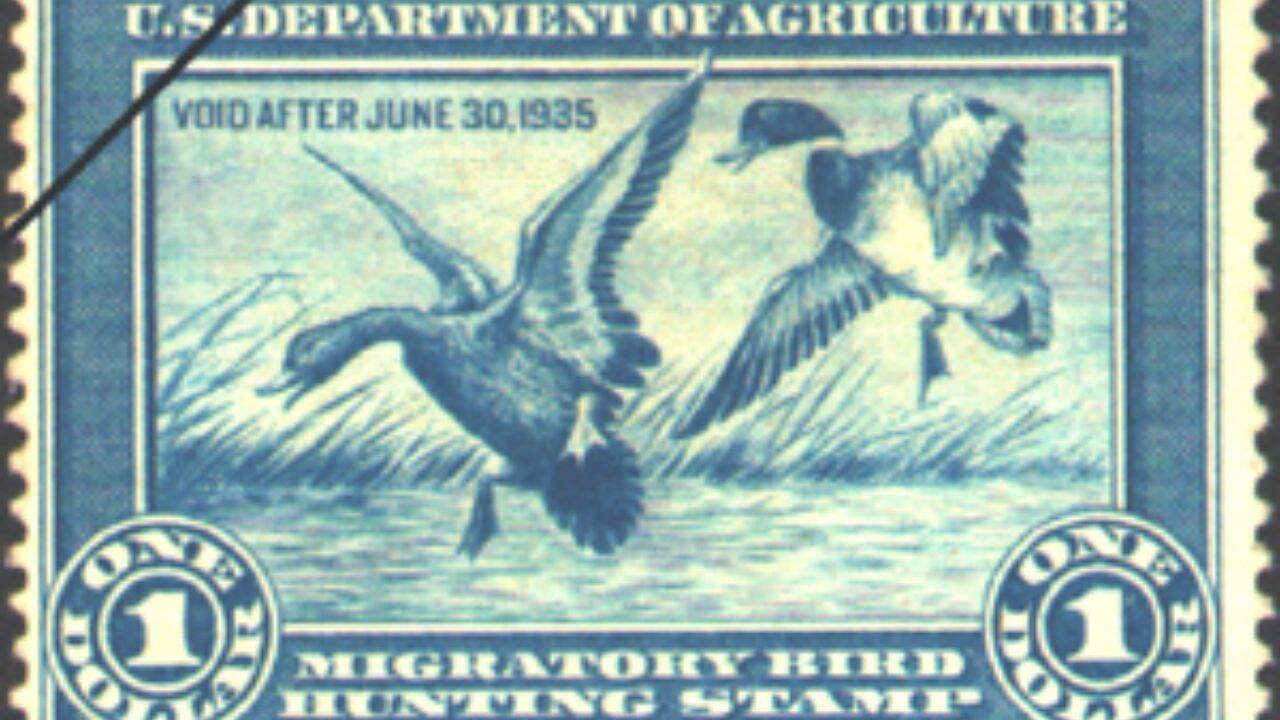
Hunters basically invented modern wildlife conservation in America.
Most people don't want to hear that because it ruins a clean narrative, but it's the absolute truth. Back in the early 1930s, the North American duck population hit rock bottom. Decades of unmanaged market hunting paired with the brutal ecological disaster known as the Dust Bowl dried up wetlands from the Midwest to the coast. Waterfowl were literally vanishing from the sky.
Instead of waiting for politicians to figure out a complex tax scheme or rely on unreliable federal handouts, waterfowl hunters looked at the shrinking wetlands and said they would pay for the fix themselves.
That radical idea turned into the Migratory Bird Hunting Stamp Act of 1934, signed into law by Franklin D. Roosevelt. Commonly known as the Duck Stamp, this little piece of paper became the quiet engine behind the protection of more than six million acres of American wetlands. If you care about clean water, open spaces, or wildlife, this 90-year-old experiment remains the gold standard of how conservation actually gets funded.
The Brilliant Mechanic Behind the Stamp
Government programs usually rely on general tax revenue, meaning funds get raided, diverted, or lost in bureaucratic quicksand. The Duck Stamp bypassed that entirely by creating a direct, user-pays model.
Every waterfowl hunter aged sixteen and older was legally required to buy a federal duck stamp each season. The genius part is where the money went. Congress mandated that nearly every single penny collected from the sales had to go directly into purchasing and protecting wetland habitats through the Migratory Bird Conservation Fund.
No middlemen. No slush funds. Just hunters buying a stamp at the local post office so ducks would have a place to breed and rest.
Over the decades, that small fee scaled up. What started as a single dollar in 1934 has risen incrementally to match inflation and conservation needs. Today, millions of dollars flow into the fund every single year. To date, this mechanism has generated over one billion dollars, securing upwards of six million acres of critical refuge land.
If you drive past a National Wildlife Refuge anywhere in the United States, there is a massive chance that land exists because a duck hunter paid for it nearly a century ago.
Beyond the Hunters
Non-hunters often miss the bigger picture here. While waterfowl enthusiasts footed the bill through statutory requirements, the benefits spilled over into everything else.
Wetlands aren't just breeding grounds for mallards and pintails. They are natural sponges. They filter agricultural runoff, recharge underground aquifers, buffer coastal communities against severe storms, and capture carbon dioxide at rates that dwarf many forests.
When a duck stamp buys a prairie pothole in the Dakotas or a bottomland hardwood swamp in the Mississippi River alluvial valley, it protects hundreds of non-game species. Frogs, turtles, bald eagles, pollinators, and rare native plants get a free ride on conservation dollars meant for game birds.
Birdwatchers, hikers, photographers, and kayakers now use these protected refuges daily without always realizing who paid the bill to keep those acres out of the hands of developers. It's a massive collaborative win born from a narrow hunting mandate.
The Art World Connection Most People Miss
The Duck Stamp isn't just a bureaucratic receipt. It is also the oldest continuously running federally sponsored art competition in the United States.
Every year, wildlife artists from across the country spend months painting a specific species of waterfowl. They submit their work to a rigorous federal contest in hopes of winning the ultimate prize.
Here is the kicker: the winning artist doesn't get a cash payout. Zero dollars from the federal government.
Instead, the prestige of having your artwork chosen for the federal duck stamp allows winning artists to sell limited-edition prints, originals, and licensing rights for substantial sums. It turns out that earning the title of Federal Duck Stamp Artist launches careers. It transformed wildlife art from a dusty hobby into a respected, thriving genre.
Take a look at any vintage stamp from the mid-twentieth century. The detail, the anatomical accuracy, and the mood captured on a tiny adhesive rectangle are staggering. This unique marriage of high art and hard conservation science gave the program cultural weight that a standard tax stamp could never achieve.
Why This Model Struggles Today
If the Duck Stamp is so remarkably effective, why aren't we replicating it across other ecosystems?
That is the frustrating question conservationists grapple with today. Modern outdoor recreation has exploded. Millions of hikers, mountain bikers, campers, and off-road vehicle enthusiasts flood public lands every weekend, yet funding for those spaces often lags far behind use.
Proposals to introduce similar stamp requirements for hikers or general outdoor recreationists routinely hit a brick wall. People scream about new fees and government overreach. Hunters accepted the duck stamp because they saw the immediate crisis unfolding in the marshes and understood that stewardship has a price tag.
Today, a disconnect exists between enjoying nature and paying to maintain it. Many assume public lands simply take care of themselves. They don't. Invasive species creep in, trails erode, and surrounding landowners sell out to subdivision developers. Without dedicated, recurring revenue streams like the stamp model, public lands slowly degrade from a thousand small cuts.
How You Can Support Habitat Protection Now
You don't need a shotgunshell box or a hunting license to participate in this legacy.
Anyone can buy a Federal Duck Stamp. Birders, conservationists, and outdoor lovers purchase them voluntarily every year because it remains the most direct way to funnel money into land acquisition.
Buying a stamp gives you free admission to any National Wildlife Refuge that charges an entry fee for that year. It is basically an annual pass to some of the wildest, most pristine corners of the continent.
Check your local post office or buy one online directly through the U.S. Fish and Wildlife Service website. Stick it in your wallet or pin it to your vest. Know that your small contribution is directly funding the purchase of acres where wildlife can actually breathe, breed, and survive away from the concrete creep.
Protecting the wild doesn't happen by accident. It takes cash, commitment, and a willingness to pay for what we love. Buy the stamp. Walk the refuge. Keep the legacy alive.