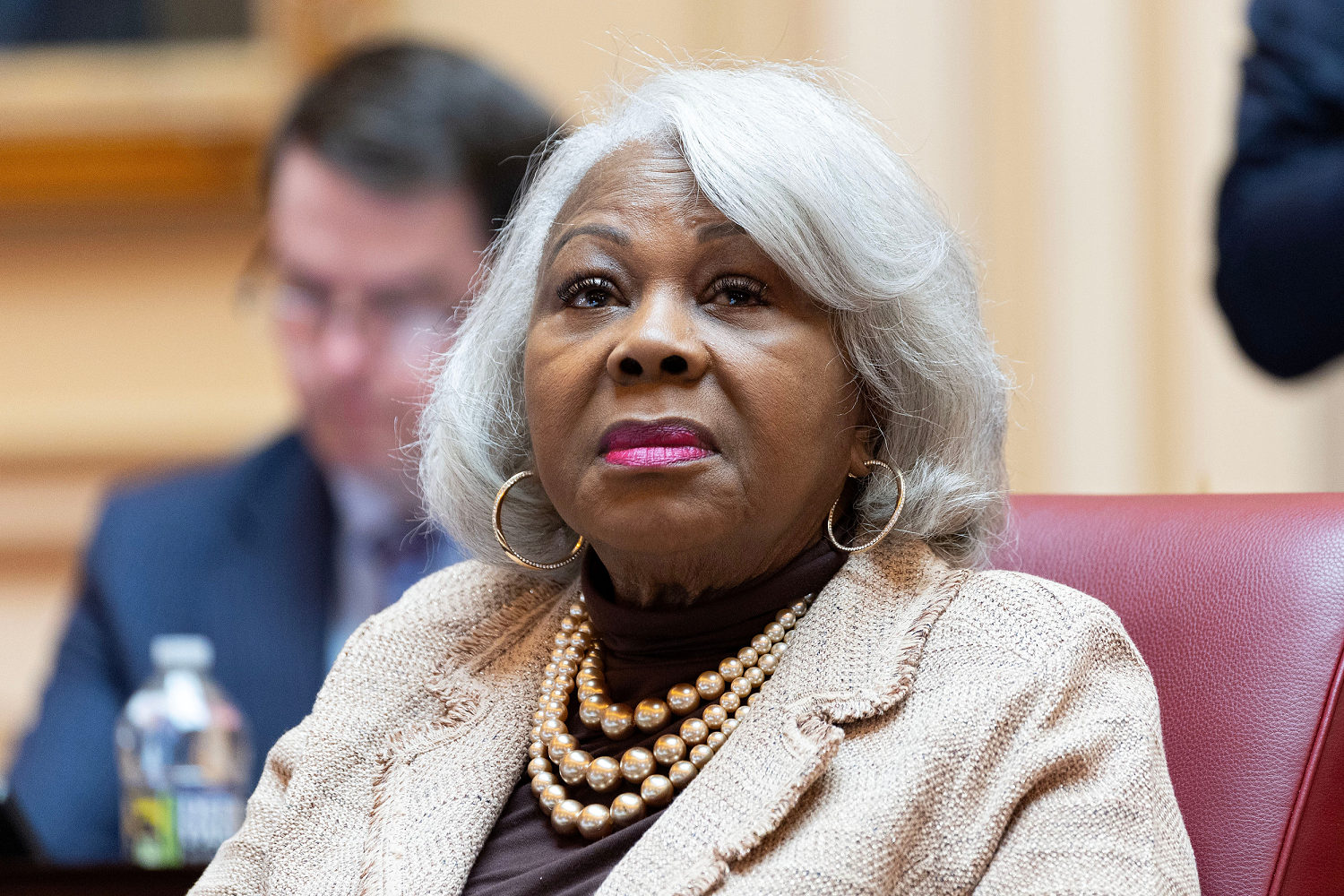
When federal agents unsealed a heavy criminal indictment against Virginia Senate President Pro Tempore L. Louise Lucas, the political blast radius shook Richmond instantly. Authorities charged one of the commonwealth's most formidable lawmakers with leading an illicit marijuana distribution network and laundering cash through commercial storefronts.
Federal prosecutors from the Department of Justice allege that the multi-year operation involved family members, shell accounts, and unregistered retail locations. While federal law enforcement framed the case as a straightforward breach of public integrity, the surrounding political fallout exposes a massive loophole in state government. Read more on a related topic: this related article.
Unlike many state legislatures across the country, Virginia has no statutory mechanism to automatically suspend or remove a sitting lawmaker facing active federal felony charges. Unless her colleagues muster a two-thirds vote for expulsion, Lucas retains her legislative seat and her post atop the Senate Finance and Appropriations Committee.
That legal reality puts voters, taxpayers, and state legislators in an uncomfortable spot. More journalism by The Guardian highlights similar perspectives on this issue.
Inside the Federal Case Against the Portsmouth Senator
The charges outlined by the U.S. Attorney's Office for the Eastern District of Virginia don't look like a standard administrative conflict of interest. Federal prosecutors allege that Lucas used her commercial holdings, including "The Cannabis Outlet" and "The CBD Shoppe," to market illicit marijuana alongside legal hemp-derived items.
During executed search warrants, federal agents seized illicit marijuana and firearms from these retail locations. The indictment asserts that the enterprise moved hundreds of thousands of dollars in illicit cash, concealing payments behind routine business transactions. Prosecutors also allege that she used her legislative stature to shield the business from regulatory oversight.
Lucas pleaded not guilty to all charges in federal court. Through public statements, she maintains her innocence and characterizes the prosecution as an overreach by political adversaries in Washington. Her defense team points out that initial investigative inquiries originated earlier under the Biden administration before carrying over into current DOJ leadership.
Yet while the judicial process moves slowly toward a jury trial, the political engine of the Virginia General Assembly keeps running.
Why Virginia Cannot Force a Sitting Felon Out of Office
Most voters assume that an official facing serious federal charges would be sidelined immediately. In states like Georgia, clear constitutional rules automatically suspend elected officials once a grand jury returns a felony indictment.
Virginia doesn't work that way.
Under the Virginia Constitution, a lawmaker loses their seat automatically only after a final felony conviction. Until that verdict is rendered, the General Assembly has only one internal remedy: formal expulsion under Article IV, Section 7.
That requires a two-thirds supermajority vote in the chamber. Because the state Senate remains closely divided by party lines, an internal vote to remove a powerful committee chair is practically impossible without significant cross-party support.
The state has faced this gap in authority before. Local officials in small towns and city councils across Virginia have remained in office for years while battling active felony indictments, simply because local codes lacked suspension clauses. Now, that structural blind spot sits squarely inside the most powerful budget committee in Richmond.
The Power Struggle Over Committee Leadership
In state politics, policy lives and dies in committee rooms. As chair of the Senate Finance and Appropriations Committee, Lucas controls the flow of legislation with a price tag attached.
State budget decisions—ranging from local school funding to infrastructure grants and tax policy—pass through her committee desk. Holding that gavel gives a legislator unmatched leverage over colleagues from both parties.
Political allies argue that stripping her committee posts before a jury rules would violate the fundamental presumption of innocence. They caution against establishing a precedent where federal indictments dictate state legislative assignments.
Critics argue that managing state appropriations requires total public trust. Managing billions of dollars in public funds while defending against federal money laundering charges creates an immediate structural conflict of interest.
What Happens Next for Virginia Taxpayers
This legal battle won't resolve overnight. Federal racketeering and financial cases involve complex evidentiary discovery, pretrial motions, and extended timelines.
Here is what voters and political observers should monitor as the case unfolds:
- Pretrial Motions and Evidentiary Rulings: Watch how federal judges handle defense motions regarding the search warrants executed on Lucas's business properties.
- Senate Ethics Filings: Pay attention to whether the Senate Privileges and Elections Committee opens a formal inquiry into financial disclosure compliance.
- Legislative Reform Bills: Look for state lawmakers to introduce bipartisan reform bills aimed at creating automatic suspension rules for indicted state officials.
Virginia taxpayers deserve a state government that operates with total transparency. Until Richmond closes the structural loop between indictment and conviction, federal courtrooms will continue to dictate the pace of state governance.