The air inside the National Quarantine Unit in Omaha doesn't move like the air outside. It is scrubbed, filtered, and pressurized, a constant mechanical hum that serves as the soundtrack to a very specific kind of purgatory. Here, fifteen people are waiting for a fever that might never come.
They are not prisoners, though the thick glass and the interlocking steel doors suggest otherwise. They are Americans caught in the crosshairs of a biological uncertainty. They are the human faces of a hantavirus scare, tucked away in a specialized wing of the University of Nebraska Medical Center.
To understand what it feels like to be behind those doors, you have to look past the yellow suits and the bleach-soaked protocols. You have to look at the bedside tables. There are family photos propped up next to high-grade disinfectants. There are half-read paperbacks resting beside medical monitors. It is a strange collision of the domestic and the clinical.
The Mechanics of Isolation
A quarantine is a biological pause button. When a group of people is exposed to hantavirus—a pathogen carried by rodents that can cause a devastating respiratory failure known as Hantavirus Pulmonary Syndrome—time becomes the only diagnostic tool that matters.
The virus has an incubation period that can stretch for weeks. During this window, the body is a black box. You might feel fine. You might be making plans for next month’s vacation. But deep within the cellular level, a war could be brewing.
[Image of Hantavirus structure]
The Omaha unit is the only one of its kind in the United States. It was built for this. The floors are seamless to prevent pathogens from hiding in cracks. The air pressure is negative, meaning nothing—not even a microscopic droplet—can escape into the hallway when a door opens.
Consider a man we will call Elias. He is one of the fifteen. A week ago, Elias was clearing out an old barn on his property, a chore he’d put off for years. He saw the dust motes dancing in the sunlight as he swept, unaware that he was inhaling aerosolized remnants of deer mouse droppings. Now, he sits in a room where every breath he takes is monitored.
He watches the news on a wall-mounted TV. He sees reports about himself—or at least, about "the fifteen." It’s a surreal experience to be a statistic while you’re still breathing. He checks his forehead for warmth every twenty minutes. In here, a simple headache isn't just a headache. It’s a potential death sentence.
The Science of the Silent Threat
Hantavirus isn't like the flu. You don't catch it from a coworker's sneeze. It is a zoonotic leap, a desperate hitchhiker jumping from animal to human. Once it enters the lungs, it targets the capillaries.
In a typical infection, the immune system responds with such ferocity that the lungs begin to leak fluid. It is essentially drowning from the inside out. The mortality rate is staggering, often hovering around 36 percent. That is the ghost haunting the Nebraska unit.
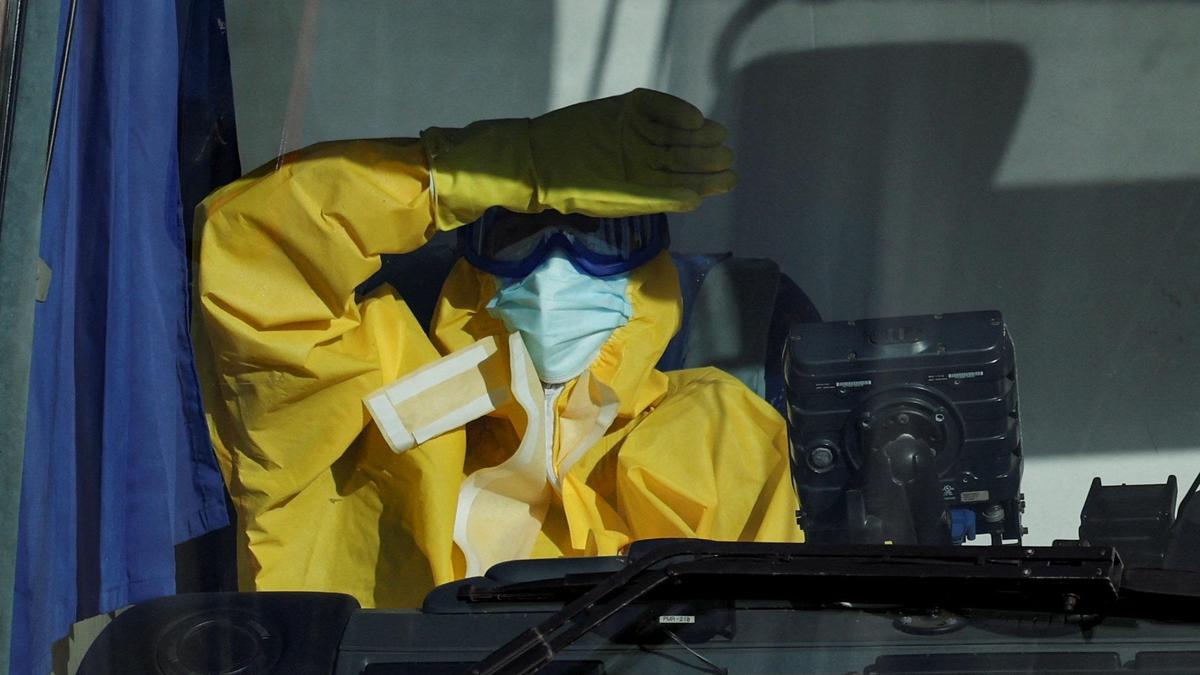
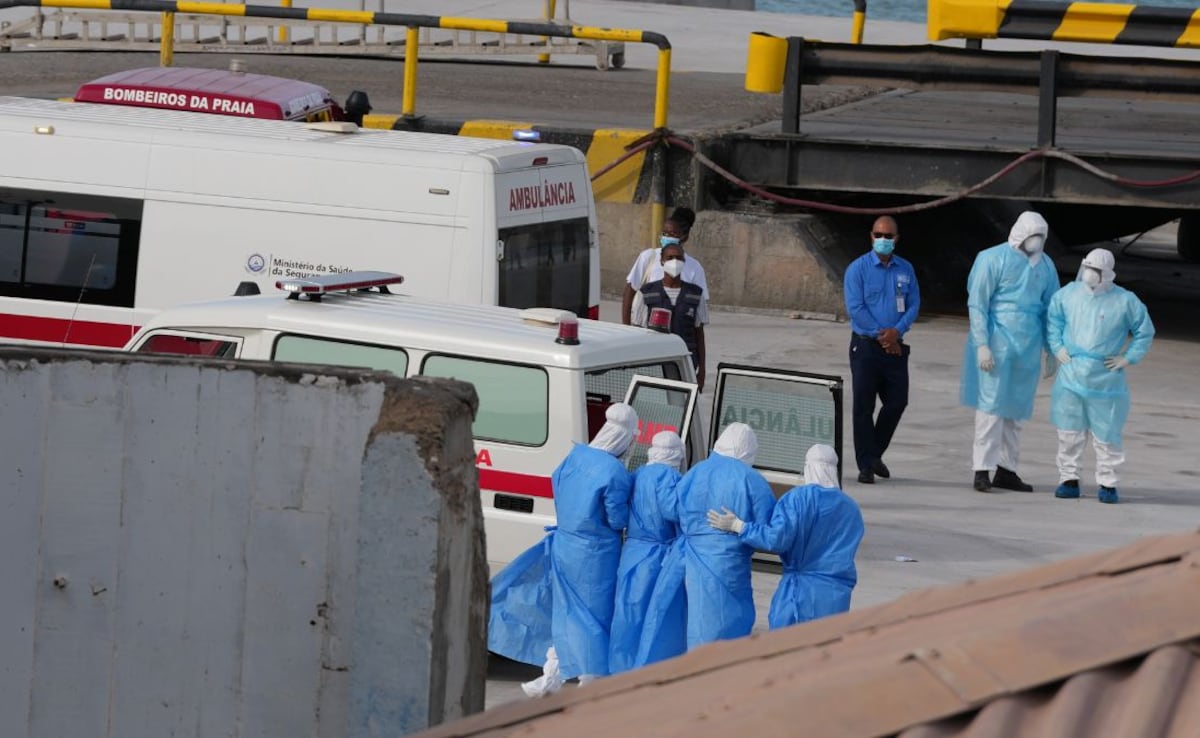
The doctors and nurses who enter these rooms don't look like people. They look like astronauts. They wear Powered Air-Purifying Respirators (PAPRs), which wrap around their heads like clear bubbles.
When Elias speaks to his nurse, he sees her eyes behind a plastic shield. He hears her voice through a speaker. The tactile comfort of medicine—the hand on the shoulder, the physical check of a pulse—is filtered through layers of latex and Gore-Tex. The isolation isn't just physical; it's sensory.
The Architecture of a Modern Plague Ward
Building a space for fifteen people to wait out a potential plague requires a level of engineering that borders on the paranoid. Everything in the Nebraska unit is designed for a "what if" scenario.
The walls are coated in high-performance epoxy. The plumbing features a dedicated decontamination system that treats every drop of water leaving the unit with heat or chemicals before it ever reaches the city sewers.
But for those inside, the architecture is felt in smaller ways. It’s the lack of an openable window. It’s the way the light looks different through reinforced glass.
The staff works in shifts that are grueling, not just because of the medical stakes, but because of the physical burden of the suits. They sweat. Their vision is limited. They have to communicate in shorthand because the roar of the air blowers in their helmets makes nuanced conversation difficult.
Yet, they find ways to bridge the gap. They write messages on whiteboards. They hold up iPads so the fifteen can FaceTime their children. They provide a bridge back to the world that currently views these fifteen people as a biological risk.
The Invisible Stakes of Public Health
Why Nebraska?
The state has quietly become the nation’s fortress against infectious disease. Following the Ebola crisis years ago, the federal government poured resources into this specific location. It is the gold standard of containment.
If the virus is present in any of the fifteen, the goal is to catch it at the very first spike in temperature. Early intervention is the only way to beat the odds. By the time a patient feels "sick" in the traditional sense, the damage to the lungs can be irreversible.
Monitoring involves more than just thermometers. It’s about blood chemistry. It’s about watching for a drop in platelets, a subtle signal that the body is beginning to struggle.
The tension in the unit is thick. Every time a lab result comes back negative, there is a collective sigh of relief that echoes through the intercoms. But the clock resets every morning. Until the incubation period ends, no one is safe.
The Human Cost of the Waiting Game
Beyond the biology, there is the psychological toll.
Imagine being told you cannot touch another human being for weeks. Imagine the guilt. Many of the fifteen were exposed while working with others—family members, friends, colleagues. They sit in their sterile rooms and wonder if they’ve passed a phantom to the people they love.
They share a common bond of silence. They can't walk down the hall to talk to one another. They are connected only by the shared reality of their predicament. They are a community of the isolated.
The nurses note that the patients often stop asking about their own health and start asking about the others. "How is the woman in 402 doing?" "Did the guy across the hall get his labs back?"
In the face of a microscopic predator, the instinct to congregate remains. Even when that congregation is mediated by walls and wires.
The Thin Line Between Safety and Fear
As the days crawl by, the world outside begins to move on. The news cycle finds a new crisis. The headlines about the Nebraska fifteen migrate from the front page to the inner sections, then disappear entirely.
But inside, nothing has changed. The hum of the air filters continues. The bleach wipes are still used with religious fervor. The fifteen are still suspended in time.
This is the reality of modern biosecurity. It isn't a blockbuster movie with a frantic chase through the streets. It is a slow, methodical, and often boring process of waiting. It is the discipline to stay in a room when every fiber of your being wants to walk out into the fresh Nebraska wind.
The true success of the Nebraska unit will be measured by an absence. If the fifteen walk out of those steel doors in a few weeks, healthy and unremarkable, the system worked. There will be no parade. There will be no grand announcement.
There will only be the sound of the air filters finally switching off in fifteen empty rooms, leaving behind a silence that is, for once, entirely safe.
Elias stands by his window and looks at the parking lot below. He sees people walking to their cars, shoulders hunched against the wind, preoccupied with the mundane stresses of their lives. He envies them their boredom. He envies them their ability to touch a doorknob without thinking about a pathogen.
He waits for his phone to ring with the morning's results. He waits for the fever that hasn't come yet. He waits for the world to let him back in.