The theater lights do not fade all at once. They go down in stages, a slow bleeding away of warmth until the stage is left in that strange, cold twilight actors know all too well. For decades, Barbara Chan lived under those lights. She knew how to hold an audience still with a look. She knew the precise weight of a paused breath. To the world outside her living room, she was a collection of memorable performances, a face that captured a specific kind of grace, an artist who left her mark on the fabric of the culture.
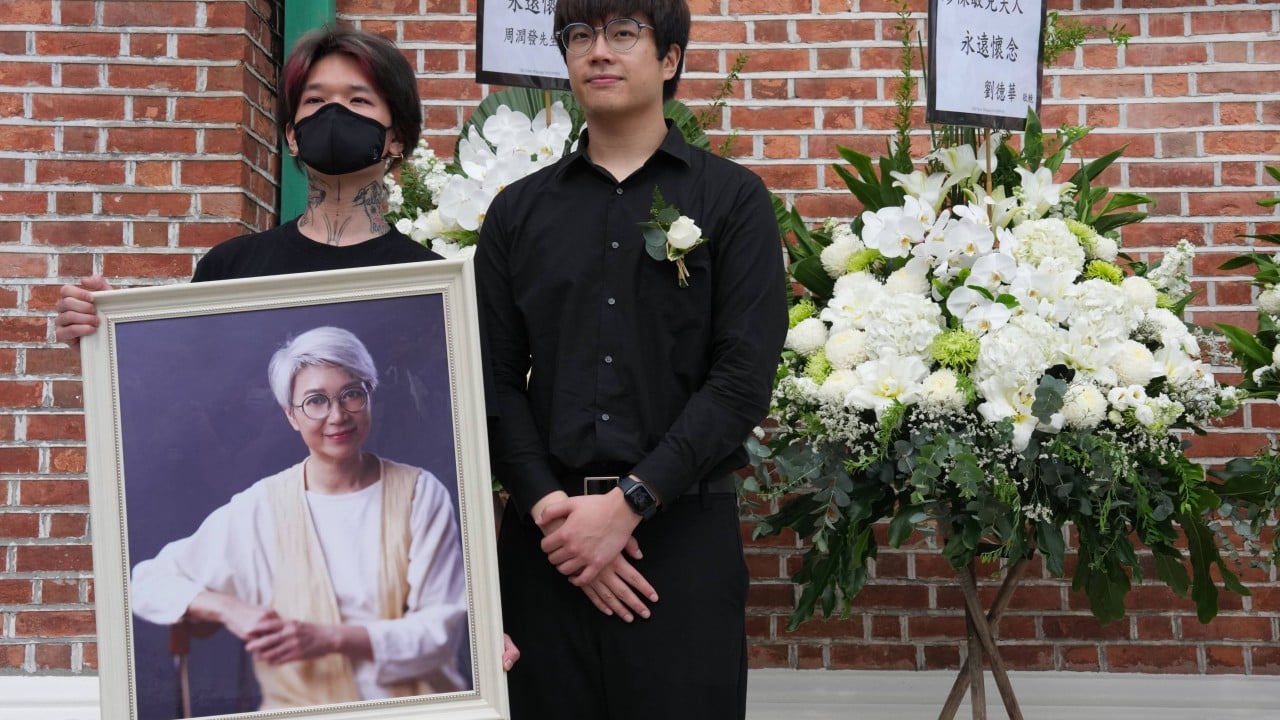
But when the house lights finally went dark for Barbara, the crowd that gathered in the quiet aftermath did not ask for an encore. They did not recount line readings or box office receipts. Instead, her sons stood where the spotlights used to shine, rewriting the narrative of a public life into a testament of private devotion.
Every public figure lives a double life. There is the person immortalized in celluloid, digital streams, and press releases, and then there is the person who washes the dishes when the cameras stop rolling. We are obsessed with the former. We track their rises, analyze their missteps, and mourn them with a vague, collective grief that dissipates by the next news cycle. But the true weight of a life is measured in the spaces the public never sees. It is found in the quiet kitchen conversations, the steady hands during a childhood fever, and the fierce, unyielding protection of a mother who refused to let the industry consume her family.
As her sons stepped forward to lead the tributes, they pulled back the velvet curtain to reveal something far rarer than star power. They spoke of unconditional love. In an industry built entirely on conditions—on looking a certain way, hitting the right demographic, and staying relevant—that kind of love is a quiet revolution.
The Illusion of the Public Eye
Step back into the world Barbara Chan navigated. The entertainment industry is a meat grinder of validation. It tells you that you are only as good as your last project. It demands that you offer up your vulnerabilities for public consumption and then critiques the way you bleed. For an actress, the stakes are doubly high. The camera demands your youth, your energy, and your absolute attention.
Imagine the friction of balancing that insatiable demand with the needs of a home. A child does not care about a standing ovation. A child needs to be known. When a parent is a public figure, the children often grow up in the shadows of giants, competing with an invisible audience for a slice of attention. It is incredibly easy for a performer to bring the theater home, to treat the dining table as a stage and the family as a captive audience.
Barbara chose a different script.
Her sons did not speak of her as a star who occasionally stepped down from her pedestal to visit them. They spoke of a woman whose presence was absolute. When she was with them, the noise of the industry was shut out completely. This requires a level of discipline that standard biographical facts fail to capture. It means turning off the phone when an agent calls because a son needs help understanding a difficult day at school. It means separating the ego of the artist from the duty of the parent.
The crowd in the memorial hall expected stories of glamorous sets and famous costars. Instead, they received a masterclass in the quiet art of being present. The brothers stood shoulder to shoulder, their grief visible but anchored by a profound gratitude. They described a mother who created a sanctuary where they were allowed to fail, to grow, and to be entirely ordinary away from the glare of public expectation.
The Anatomy of an Unconditional Bond
We use the phrase "unconditional love" so often that it has lost its teeth. It sounds like something from a greeting card, soft and sentimental. In reality, unconditional love is heavy. It is exhausting. It means loving someone through their worst iterations, through the rebellion of youth and the mistakes of adulthood, without ever threatening to withdraw your affection.
Consider how rare this is in the modern world. Most relationships are transactional. We give because we expect to receive. We love because it makes us feel good, or because the other person fulfills a specific need in our lives. If they stop fulfilling that need, the love fractures.
But a mother's love, when executed with the ferocity that Barbara’s sons described, operates outside the laws of transaction.
One of her sons recalled a moment from his twenties—a period of drift and uncertainty when the path forward seemed entirely obscured. He expected judgment. He expected the sharp edge of disappointment from a mother who had achieved so much through sheer willpower and talent. What he received instead was a steady, quiet gaze. No lectures. No demands for a five-year plan. Just the simple, grounding assurance that his value in her eyes was not tied to his productivity or his success.
That is the invisible scaffolding that keeps a person upright when the world tries to knock them down. By centering her legacy on this unconditional bond, her sons did something remarkable. They took a woman who had been objectified by fame and gave her back her humanity. They reminded everyone in attendance that her greatest masterpiece was not a character she played on a screen, but the emotional resilience she cultivated in her children.
Moving Through the Echoes
Grief is a strange country. When a parent dies, the world alters its shape overnight. The phone calls that will never happen leave a specific kind of silence in a house. For the sons of a public figure, that grief is complicated by the fact that the world claims a piece of their sorrow. Strangers offer condolences on social media. Old clips resurface on television. The private ache of losing a mother is soundtracked by the public mourning of a celebrity.
But the brothers showed no resentment toward the fans who shared their grief. Instead, they used their platform to ground the public’s perception in reality.
They did not speak in the rehearsed, glossy tones of Hollywood PR. They spoke with the raw, ragged honesty of men who had lost their anchor. They wept openly, leaned on one another, and allowed the audience to see the depth of the void that Barbara’s departure had left behind. In doing so, they honored her far more than any retrospective reel ever could. They proved that the love she poured into them had taken root, turning them into men who could face immense sorrow with dignity and mutual support.
The true measure of a person’s impact is found in the behavior of the people they leave behind. If a parent leaves behind children who are bitter, distant, or broken by the weight of expectations, all the accolades in the world cannot hide that fundamental failure. But to see these brothers lead the tributes with such profound unity and tenderness was proof of a life beautifully and successfully lived.
The Final Standing Ovation
The stories will eventually fade from the headlines. The names of past actors always slip quietly into the footnotes of film history, remembered only by historians and late-night cinephiles. The awards gather dust on shelves. The digital files sit in archives, waiting for someone to click on them out of curiosity.
But the legacy Barbara Chan built in the hearts of her sons is permanent.
It is passed down in the way they treat their own children, the way they navigate their own trials, and the quiet kindness they extend to a world that desperately needs it. Unconditional love does not disappear when the heart stops beating. It ripples outward, changing the trajectory of generations in ways that cannot be measured by algorithms or box office statistics.
As the service drew to a close, there were no cameras flashing. The reporters had written down their quotes, and the casual observers began to check their watches, thinking about the traffic outside. But for the family, the moment stretched out, long and unbroken. The brothers stood together, looking at a portrait of their mother—not as the queen of the stage, but as the woman who loved them without boundaries, without stipulations, and without end.
The stage was finally dark, but the warmth remained.

.jpg?width=1200&auto=webp&trim=0%2C100%2C0%2C100)