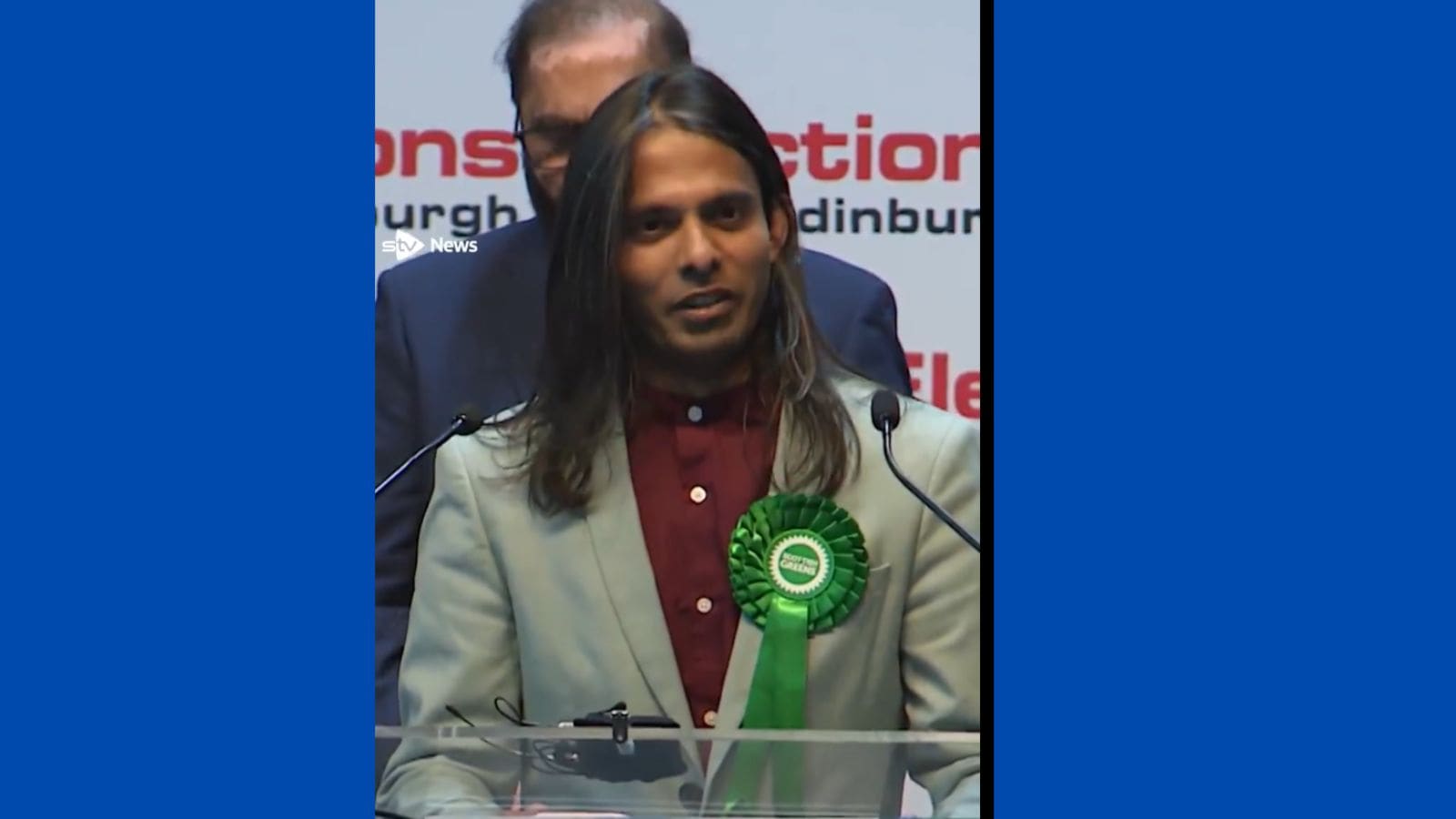
Scotland just watched history happen. It wasn't just another boring shuffle in the Holyrood halls. Priti Bhardwaj, an Indian-origin trans woman, stepped into the Scottish Parliament as a Member of the Scottish Parliament (MSP). This isn't just about diversity checklists or PR wins. It's a fundamental shift in who gets to hold power in the UK, especially when you look at the messy reality of her residency status.
Bhardwaj didn't have a permanent UK visa when she won. Think about that for a second. In a political climate where immigration is usually a shouting match about borders and "illegal" crossings, a woman without a permanent stamp in her passport just secured a seat at the table. She's representing the Scottish Green Party for the North East Scotland region. It’s a bold move that challenges every preconceived notion about who "belongs" in British governance.
The Complicated Reality of Being a Representative Without a Permanent Visa
You might wonder how this is even legal. It's a fair question. The rules for the Scottish Parliament aren't the same as Westminster. In Scotland, you don't need to be a British citizen to run for office. You just need to be a resident with a valid visa that allows you to stay in the UK.
Bhardwaj moved to Scotland from India. She’s built a life in Aberdeen. She’s worked in the community. But she’s still on a temporary visa. This creates a weird, high-stakes tension. She has the power to vote on Scottish laws, yet her own right to stay in the country is technically tied to a piece of paper that has an expiry date.
It highlights a massive gap in how we think about civic duty. If someone pays taxes, works in our schools or hospitals, and gets elected by the people, should their visa status even matter? Bhardwaj’s victory says "no." The voters in the North East didn't care about her immigration paperwork. They cared about her platform.
Breaking the Double Glass Ceiling in Holyrood
Being the first trans MSP is a heavy enough mantle. Being the first trans woman of color adds an entirely different layer of scrutiny. Scotland has been at the center of a brutal, often toxic debate over gender recognition for years. The Gender Recognition Reform (Scotland) Bill turned into a constitutional tug-of-war between Edinburgh and London.
Bhardwaj enters this environment not just as a policy maker, but as a living rebuttal to the idea that trans people are a "fringe" element of society. She isn't a theoretical talking point in a newspaper column. She's a colleague.
Why Her Background in India Matters
India has a long, complex history with trans and third-gender identities, specifically the Hijra community. While modern Indian politics can be incredibly hostile to LGBTQ+ rights, the cultural memory of gender non-conformity is deep. Bhardwaj brings that perspective with her.
She's talked openly about the challenges of navigating both her Indian heritage and her identity in a Western political system. It’s not just about "representation" in the sense of a face on a poster. It’s about lived experience. When she speaks about healthcare, she isn't just reciting a manifesto. She’s talking about the actual hurdles trans people face when trying to access basic services.
The Green Party Strategy and the Regional List System
Let's talk about the mechanics of how she got here. She didn't win a first-past-the-post constituency seat. She got in through the regional list system. This is where Scotland’s proportional representation actually does its job.
The Scottish Green Party has been the loudest voice for radical social change in Scotland. By placing Bhardwaj high on their list for the North East, they made a clear statement. They weren't just "supporting" diversity; they were engineering it.
- Proportionality works: Smaller parties can elevate marginalized voices that might get drowned out in a traditional two-party scrap.
- Visibility matters: Having an MSP who looks and lives like Bhardwaj changes the "vibe" of the chamber instantly.
- Policy focus: Her presence forces the Parliament to address issues like trans healthcare wait times and visa hurdles for skilled migrants.
Addressing the Critics and the Visa Controversy
Of course, not everyone is cheering. Predictably, the usual suspects on social media and in some corners of the press have tried to weaponize her visa status. They claim it’s a security risk or that it devalues the concept of citizenship.
It’s nonsense.
If you're legally allowed to live somewhere, you should be allowed to help run the place. That's the basic premise of local democracy. Bhardwaj’s election is a stress test for Scottish inclusivity. If she can be an effective legislator while her visa is processed, it proves that our rigid definitions of "citizen" are outdated.
The Home Office still holds the ultimate power over her stay. There’s a certain irony in an MSP having to potentially deal with the bureaucracy of a government department that might not even recognize her right to exist in the UK permanently. It’s a precarious position that most politicians never have to think about.
What This Means for Future Elections
Bhardwaj’s win is a blueprint. It shows that the "electability" myth is dead. For years, party bosses told marginalized candidates they were "too risky" or "too niche" for the general public.
The people of North East Scotland proved them wrong.
They didn't see a "trans candidate" or an "Indian candidate." They saw a Green candidate who talked about the cost of living, climate change, and social justice. This victory should embolden other parties to stop playing it safe with their candidate selections.
If you're a campaigner or someone looking to get into politics, the lesson here is simple: stop waiting for a "perfect" time or a "perfect" status. The barriers are still there, but they’re starting to crack.
Immediate Steps for Policy Makers
The Scottish Government needs to look at the protections offered to elected officials who don't have permanent residency. It’s a niche problem, sure, but it’s one that will come up again as our society becomes more mobile.
We need to ensure that an MSP’s ability to serve their constituents isn't held hostage by Home Office delays. That means formalizing support systems for international residents who take the leap into public office.
Bhardwaj is now in the room. She’s got the pass. She’s got the vote. Now, the real work of legislating begins, and the rest of the UK is watching to see how Scotland handles this new era of representation.
Pay attention to how she uses her platform over the next few months. She isn't just there to be a pioneer. She's there to be a politician. Watch the debates, look at the bills she supports, and see how the tone of the conversation changes when the "marginalized" person is the one holding the microphone.