The metal spatula hits the cast-iron wok with a rhythmic, metallic clatter that Uncle Tan has repeated ten thousand times. Wok hei—the prized, smoky breath of a well-seasoned pan—rises in a plume of fragrant steam from his zi char stall in Woodlands. But tonight, the steam drifts over empty plastic tables.
It is a Saturday evening. Usually, this open-air coffee shop in Singapore's northern heartland would be a chaotic symphony of shouting families, clinking beer bottles, and the hiss of deep fryers. Tonight, half the fluorescent-lit tables sit unoccupied. If you liked this piece, you should check out: this related article.
Uncle Tan wipes his brow with a damp towel draped over his shoulder. He looks toward the north, where the dark waters of the Johor Strait separate his quiet stall from the glittering skyline of Malaysia.
"They are all across the water," he says, his voice flat with a resignation that has been months in the making. "Why would they pay eighteen dollars for my pork ribs when they can get the same thing, twice the size, for less than half the price over there?" For another look on this event, check out the recent update from The Motley Fool.
He is not exaggerating. For decades, the physical friction of the Johor-Singapore Causeway acted as a natural economic shield for local businesses. The legendary, soul-crushing traffic jams—sometimes stretching up to four grueling hours in suffocating heat—kept Singaporean shoppers captive.
But a US$815 million steel-and-concrete behemoth is about to erase that friction entirely.
The Death of Friction
The Johor Bahru-Singapore Rapid Transit System Link, simply known as the RTS Link, is not just a train. It is an economic siphon.
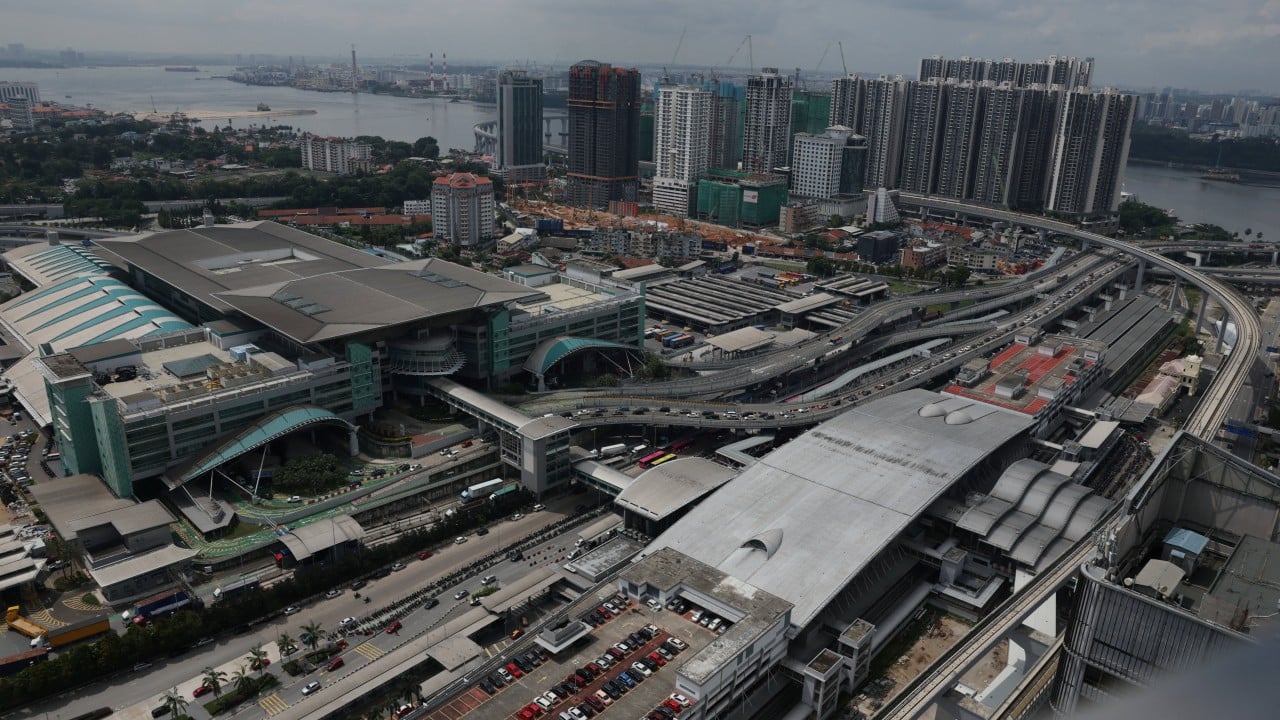
Stretching four kilometers across the narrow strait, this shuttle service is designed with a singular, terrifying efficiency: to move up to 10,000 passengers per hour in a single direction. The travel time between Singapore’s Woodlands North station and Johor’s Bukit Chagar terminal is a mere five to six minutes.
More importantly, the project introduces co-located Customs, Immigration, and Quarantine facilities. Travelers clear both Singaporean and Malaysian customs at their point of departure, stepping onto the train as domestic passengers. No second queues. No bottleneck.
For the average Singaporean consumer, this is a miracle. For Singapore’s suburban retail and food-and-beverage sectors, particularly in the north, it is an existential threat.
Consider Sarah, a twenty-eight-year-old marketing executive living in Yishun, a short subway ride from the border. She represents the demographic that makes Singaporean mall operators sweat.
Every second Saturday, Sarah packs a canvas tote bag and prepares for her crossing. Under the old system, the journey was a tactical operation. She had to monitor highway cameras, calculate bus arrival times, and brace her knees for hours of standing in immigration queues.
"It was a weekend-ruiner," Sarah says. "You only did it if you were desperate or had a whole day to burn. Now? If the train takes five minutes, I can go over just for dinner and a haircut after work on a Tuesday."
The mathematics driving her choice are simple, brutal, and entirely in Malaysia's favor.
The Gravity of the Ringgit
The currency exchange rate is a gravity well from which Singaporean merchants cannot easily escape. For years, the Singapore Dollar has steadily strengthened against the Malaysian Ringgit, hovering at historic highs.
When Sarah steps off the train in Johor Bahru, her purchasing power instantly triples.
A standard meal at a mid-tier Singaporean cafe costs around twenty-five Singapore dollars once you factor in the service charge and local taxes. In Johor Bahru, a meal of identical quality in an air-conditioned mall costs thirty ringgit—roughly nine Singapore dollars. A professional haircut that costs sixty dollars in Singapore is suddenly twenty dollars. A weekly grocery run that leaves a seventy-dollar dent in a Singaporean supermarket budget is slashed to twenty-five.
This is not a matter of luxury; it is a survival strategy in one of the most expensive cities on Earth.
For years, the Singaporean government has wrestled with core inflation. Rent is high. Labor is scarce and expensive. The local Goods and Services Tax continues its steady, mandated climb. Local business owners cannot lower their prices without cutting their own throats.
"My rent went up fifteen percent this year," says the owner of a small boutique in a Woodlands mall, who asked to remain anonymous. "My ingredients, my electricity, my staff wages—everything is up. I have to charge ten dollars for a bowl of noodles just to break even. If my customers can cross the border in five minutes and get it for three, I am dead in the water."
The economic argument for the RTS Link was built on the concept of regional integration. It was meant to turn the Johor-Singapore corridor into a twin-city powerhouse, resembling Shenzhen and Hong Kong. But water flows downhill, and capital flows toward value.
The Invisible Stakes
To understand the true scale of this shift, one must look past the flashy mega-malls of Johor Bahru and look at the quiet, suburban neighborhoods of Singapore.
Singapore’s retail strategy has long relied on "heartland malls"—localized shopping centers anchored by supermarkets, food courts, and basic services. These malls are the community living rooms of the suburbs. They do not rely on tourists; they rely on the predictable, daily foot traffic of the local residents who live in the surrounding public housing estates.
When that foot traffic evaporates, the ecosystem collapses.
It begins slowly. A family decides to skip their usual Sunday lunch at the neighborhood mall, choosing instead to dine in Johor. The local restaurateur, seeing a dip in weekend revenue, decides not to hire a part-time student helper. The student helper now has less pocket money to spend at the local bubble tea shop. The bubble tea shop owner, squeezed by falling sales and rising rent, decides not to renew their lease.
Soon, the mall is populated only by chain medical clinics, tuition centers, and empty storefronts boarded up with colorful, artificial hoarding.
"People think this is just about big retail corporations losing a bit of profit," says Dr. Lim, a local urban economist who has studied border economies for a decade. "It isn’t. It’s about the erosion of the neighborhood economy. If the suburban malls lose their anchor customers, the social fabric of these housing estates changes. The elderly lose their gathering spots. Small, family-run service providers disappear."
The threat is not distant. The concrete pillars of the RTS Link already stride across the Johor Strait. The tracks are laid. The stations are taking shape. The countdown has begun.
The Fight for Relevance
Singapore's retail and F&B sectors are not going down without a fight, but their traditional weapons are useless here.
They cannot compete on price. The structural costs of operating in Singapore make it impossible to match Malaysian prices. A plate of chicken rice in Singapore will never cost three Singapore dollars again.
Instead, local businesses must find ways to offer what Malaysia cannot: hyper-convenience, hyper-localization, and experiences that cannot be packed into a suitcase.
Some suburban malls are already shifting their tenant mix. They are moving away from traditional apparel and electronics retail—items easily bought online or cheap in Johor—and focusing heavily on experiential services. Indoor playgrounds, boutique fitness studios, wellness centers, and highly specialized community spaces are taking over the floors once occupied by fashion chains.
"We have to give them a reason to stay that isn't financial," says a marketing director for a major Singaporean mall developer. "We have to be the place where they drop their kids off for art class, where they meet their neighbors, where they get things done in thirty minutes instead of committing to a five-hour round trip across the border."
But even this strategy has its limits.
The human heart is notoriously practical. When the month-end bills arrive, loyalty to the local neighborhood mall rarely triumphs over a thirty-percent saving on the family budget.
The Crossing
Back at the Woodlands coffee shop, the sky has turned a deep, bruised purple. Uncle Tan is cleaning his prep station. He sweeps chopped garlic into a plastic container and seals it with a loud snap.
He remembers when his children were young. Every weekend was a struggle of balancing the books, of deciding whether they could afford a movie or a nice meal.
"If this train was here thirty years ago when my kids were small, I would have used it too," he admits, his voice softening. "I cannot blame my customers. Everyone is just trying to live."
The RTS Link represents a triumph of engineering and regional cooperation. It will bring families together, ease the burden of thousands of Malaysian commuters who cross the border daily for work, and foster a deeper connection between two closely linked nations.
But every bridge has two sides. And as the high-speed shuttles begin their relentless, five-minute journeys across the water, the quiet heartlands of Singapore will have to learn how to survive in a world where the border is no longer a barrier, but a revolving door.