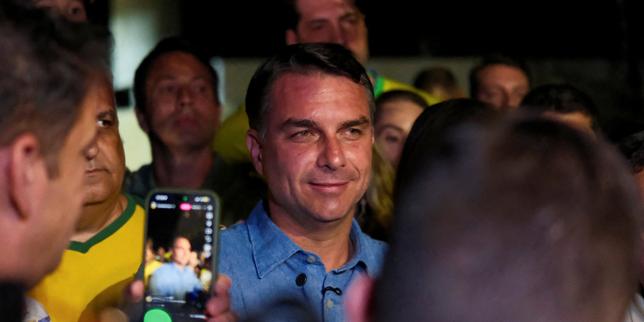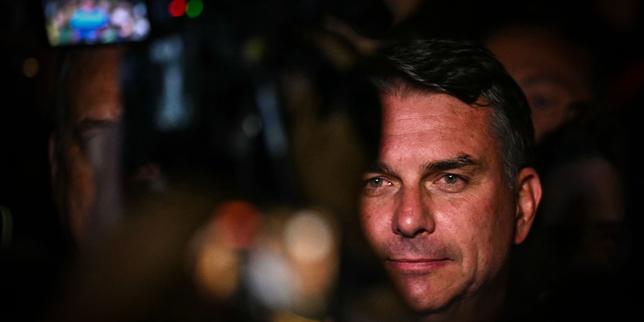
The media elite wet themselves the second the latest polling data dropped out of Brasília. Flávio Bolsonaro leading Luiz Inácio Lula da Silva in a hypothetical presidential runoff isn't the resurrection of authoritarian darkness the commentariat wants you to believe. It is a strategic trap of monumental proportions, and the conservative establishment is sleepwalking right into it.
Everyone in the press box is reading from the exact same tired script. They look at the Bolsonaro name, flash back to the polarization, the congressional brawling, and the pandemic management, and they declare democracy on the brink. They assume that if a Bolsonaro junior takes the torch, the machine simply restarts with a younger, slicker operator.
That diagnosis is fundamentally lazy.
Politics in the Americas has entered a phase of severe exhaustion. Voters are not ideological zealots looking for a ideological crusader; they are exhausted consumers looking for stability, cheap groceries, and basic competence. When you hand the banner to Flávio, you aren't anointing a charismatic populist with the magnetic stage presence of his father. You are handing the opposition a lightning rod that lacks the grease, the grit, and the accidental charm of the original article.
Let us look at the mechanics of what is actually happening on the ground. Lula’s administration is currently trapped in a fiscal vise. They are trying to fund social programs while placating financial markets that view every real spending initiative as an invitation to inflation. The traditional playbook of the Workers Party relies on booming commodity cycles and free-flowing credit. Neither of those conditions exists right now.
Yet, instead of recognizing that Lula is currently governing with one hand tied behind his back by a hostile Congress and a punishing macroeconomic reality, the establishment treats every poll number as a referendum on civilization itself.
This creates a massive analytical distortion.
When you frame an election as an existential battle between light and darkness, you completely blind yourself to the actual shifts in voter behavior. Flávio leading in a pre-election snapshot does not mean the Brazilian electorate has suddenly decided they want a dynastic restoration of the extreme right. It means a significant chunk of the population is furious about inflation, taxation, and bureaucratic stagnation, and they are using the only available blunt instrument to punch the current administration in the nose.
The mistake analysts make is confusing a protest vote with a mandate.
If you have spent any time tracking Brazilian legislative dynamics over the past decade, you know that the real power in Brasília does not reside exclusively in the Planalto Palace. It lives in the Centrão—that pragmatic, transactional bloc of lawmakers who care infinitely more about committee chairmanships, state-level patronage, and budgetary amendments than they do about ideological purity.
Jair Bolsonaro understood this transactional reality only by accident. He spent half his presidency at war with the very system he needed to survive, surviving through sheer populist muscle and a loyal base that viewed him as an outsider fighting the swamp.
Flávio does not have that outsider armor. He is a career politician who has spent his entire adult life inside the legislative machinery of Rio de Janeiro. He knows how the sausage is made because he has been elbow-deep in the grinder for decades.
That is his fatal vulnerability.
When you run an anti-establishment campaign while being the quintessential creature of the parliamentary machine, your shelf life as a disruptor expires the moment you step onto a debate stage against a seasoned tactician. Lula’s camp knows this. Behind closed doors, strategists in São Paulo are popping champagne corks because they know how to run against a career politician from a prominent political dynasty. It is much harder to demonize an erratic outsider who speaks in raw viral soundbites than it is to dismantle the voting record of a sitting senator with two decades of legislative baggage.
Let us dismantle another persistent myth: the idea that polarization is a permanent, unbreakable ceiling for Brazilian politics.
The conventional wisdom dictates that Brazil is permanently fractured down the middle, with thirty percent locked in for the left, thirty percent locked in for the right, and a miserable middle trying to decide which disaster is less offensive.
Data from recent municipal elections tells a radically different story. Voters split their tickets, ignored federal endorsements, and rewarded local administrators who fixed potholes, managed municipal transport, and kept the streets clean. The ideological noise at the top is largely a media-driven distraction from the pragmatic demands of urban governance.
When a candidate like Flávio Bolsonaro tries to nationalize the race entirely around culture-war grievances and familial legacy, he is fighting the last war. The electorate has moved past the high-drama confrontations of 2018 and 2022. They are worried about the cost of beef, the price of gasoline, and whether their kids can find a decent job that does not require a gig-economy app.
By pushing Flávio to the front of the opposition, the conservative movement is sidelining dynamic regional governors and technocrats who actually know how to balance a budget and build infrastructure without tweeting inflammatory talking points at midnight. They are trading institutional competence for household name recognition.
History shows that dynastic politics rarely survives a severe economic squeeze. When voters feel pinched, they do not care about historical grievances or protecting a family brand. They want results.
If the opposition commits to the Flávio Bolsonaro strategy, they are handing the left a unified narrative on a silver platter. They are uniting a fractured progressive coalition that was otherwise busy tearing itself apart over fiscal austerity and environmental policy. Nothing brings the disparate factions of the left together faster than the prospect of fighting a Bolsonaro restoration.
The real story of this poll isn't that the right is surging. It's that the opposition is falling into the most predictable trap in modern democratic politics: mistaking name recognition for momentum, and mistaking voter frustration with the incumbent for an endorsement of an alternative.
Stop looking at the flashing lights of the culture war. Follow the money, watch the legislative horse-trading, and keep your eyes on the Governors' mansions outside of Rio and São Paulo. That is where the real future of the country is being forged while everyone else is busy arguing over yesterday's headlines.