The media is choking on its own outrage again.
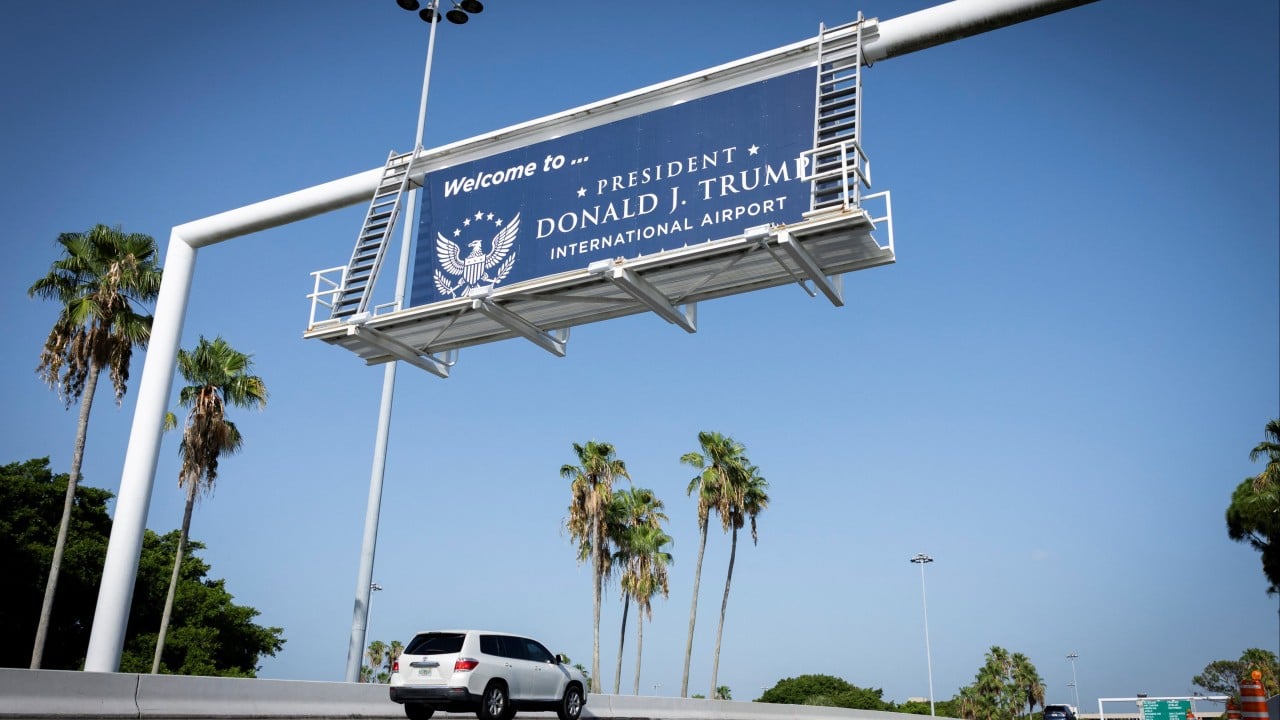
When a group of lawmakers pushes to slap a former president’s name onto an international airport in Florida, the pundit class immediately defaults to a lazy, pre-packaged narrative. They call it a vanity project. They call it a cynical push to expand a real estate mogul's personal brand. They treat it like a cheap gold-plated sign being hammered onto public infrastructure.
They are completely missing the point.
I have spent nearly two decades watching municipalities, corporate boards, and political entities weaponize infrastructure naming rights. Let's be entirely clear about how this game works: this isn't about expanding a brand. It is about a calculated, localized consolidation of regional political power that uses aviation infrastructure as a permanent gerrymander of public consciousness.
To view the renaming of a transportation hub through the lens of a traditional marketing rollout is a fundamental misunderstanding of both business and political mechanics.
The Flawed Premise of Infrastructure Brand Expansion
The mainstream consensus insists that renaming an airport adds equity to a politician's portfolio. This is mathematically and operationally illiterate.
A high-yield brand relies on exclusivity, controlled positioning, and curated consumer experiences. An airport is the exact opposite. It is a bureaucratic, high-friction utility characterized by TSA lines, delayed flights, baggage claim disputes, and infrastructure decay.
The Reality Check: You do not expand a luxury or high-impact brand by tying it to the place where people get stuck for six hours eating stale pretzels during a thunderstorm.
When Houston renamed an airport after George Bush, or when New York named Idlewild after John F. Kennedy, it didn't alter the consumer perception of those political families. It simply integrated their names into the mundane logistics of daily commuting.
True brand expansion requires a scalable return on investment. Renaming an airport offers zero commercial scalability for the individual. Instead, it serves a much more cold, transactional purpose for the local actors who propose it.
Who Actually Profits From Infrastructure Battles
If the politician doesn't gain a measurable commercial lift from an airport renaming, who does? Look at the local state legislators, county commissioners, and regional lobbyists driving the initiative.
In my years tracking municipal asset management, the pattern is unvarying. Proposing a lightning-rod name change for a major transit hub is a low-cost, high-yield tactic for down-ballot politicians to secure free national airtime, satisfy donor bases, and signal absolute fealty without having to pass a single piece of complex legislation.
It is a distraction mechanism. While the public engages in screaming matches over the signage on the tarmac, billions of dollars in municipal bonds, airport vendor contracts, and zoning laws are quietly approved under the radar.
The Real Cost of a Name Change
Let's look at the actual operational friction of changing an airport's identity. Media reports focus on the emotional weight of the name. They rarely audit the spreadsheet.
Changing the name of a commercial airport involves:
- Updating Federal Aviation Administration (FAA) databases and global aeronautical charts.
- Overhauling international ticketing systems, global distribution systems (GDS) like Amadeus and Sabre, and airline scheduling frameworks.
- Replacing physical highway signage, terminal branding, vehicle fleets, and worker uniforms.
This process routinely costs local taxpayers millions of dollars. When a city or state forces this change for purely ideological reasons, they are intentionally burning capital that could have been allocated to runway expansion or baggage handling upgrades. The local politicians win a news cycle; the traveling public inherits a less efficient airport.
Dismantling the Public Consent Illusion
A common question that surfaces during these public debates is whether the local population should have a direct vote on infrastructure naming.
The premise of the question is fundamentally flawed. Public infrastructure in the United States has never been a democratic canvas. It is, and has always been, a trophy room for the political faction currently holding the keys to the statehouse.
| Airport Name | Political Context of Renaming | Primary Objective |
|---|---|---|
| Washington Dulles (IAD) | Named after Eisenhower's Secretary of State | Cold War geopolitical signaling |
| Jackson-Medgar Wiley Evers (JAN) | Renamed to honor civil rights leader | Regional historical correction |
| Proposed Florida Airport | Named after a modern political figure | Regional power consolidation and base mobilization |
To pretend that an airport name should reflect a neutral, universally agreed-upon regional identity is historical revisionism. It is a weaponized piece of real estate designed to broadcast which faction is currently in control of the local levers of government.
The Hidden Risk of Inverted Branding
There is a major structural downside to this strategy that none of these politicians seem to recognize. I call it inverted branding.
When you attach a highly polarizing political figure to a public utility, you turn that utility into a permanent lightning rod for protest, corporate boycotts, and operational disruption. Major international carriers don't want to fly their planes into an ideological battleground. Fortune 500 companies evaluating cities for new regional headquarters look at the stability and neutrality of local infrastructure.
If a state chooses to turn its primary economic engines into partisan statements, it introduces a level of reputational risk that institutional capital detests. You might please a local voting bloc today, but you risk chilling long-term corporate investment tomorrow.
Stop looking at the name on the terminal as a marketing victory. It is an exercise in territorial marking, paid for by the taxpayer, executed by down-ballot politicians hunting for relevance, and resulting in a less stable environment for global commerce.
The next time you see a headline about renaming a public asset to expand a personal brand, ignore the outrage. Follow the money, look at the local legislative calendar, and recognize it for what it truly is: a cheap political shell game disguised as a tribute.