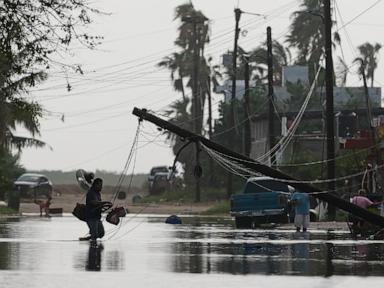
Severe tropical systems off the western coast of North America demand analysis beyond simple meteorological tracking, requiring a strict evaluation of thermodynamic heat engines and ocean-atmosphere coupling. When Hurricane Rachel escalated into a Category 3 system within the eastern Pacific basin, it exposed structural vulnerabilities in how regional infrastructure models coastal threat vectors. Standard reporting relies on descriptive updates regarding wind speeds and coordinate positions, failing to deconstruct the underlying energy fluxes that dictate rapid intensification and subsequent spatial decay.
The Thermodynamic Engine of the Eastern Pacific
Tropical cyclogenesis in this specific basin operates on precise thermal thresholds. Sea surface temperatures must consistently exceed 26.5 degrees Celsius down to a sufficient oceanic depth to prevent upwelling-induced cooling from short-circuiting the system. Rachel exploited a regional thermal anomaly driven by macro-scale climatic forcing, specifically an active El Niño phase. This state increases upper-ocean heat content, expanding the vertical column of warm water available to fuel deep convection. If you liked this piece, you should check out: this related article.
The conversion of latent heat into kinetic energy follows a strict Carnot-cycle efficiency model. Warm, moisture-laden air spirals inward toward the zone of lowest pressure, expanding adiabatically and releasing thermal energy upon condensation within the eyewall. The primary constraint on peak intensity is not merely ocean temperature, but the vertical wind shear profile. Low wind shear allows the convective core to remain vertically stacked, maintaining a concentrated low-pressure anomaly at the surface. When shear increases, the warm core tilts, ventilating the thermodynamic engine and initiating decay.
The Kinematics of Offshore Trajectories
A common analytical failure in public-facing weather communication is the binary assumption regarding landfalls. Systems that track parallel to a coastline without making direct landfall are frequently mischaracterized as benign. This perception ignores the operational mechanics of offshore wave generation and atmospheric moisture transport. For another angle on this development, see the recent coverage from NPR.
Even when a major hurricane maintains a westward or northwestward vector away from immediate coastal integration, its outer circulation fields exert mechanical stress on the marine boundary layer. Surface winds blowing continuously across a fetch of ocean generate long-period swell trains. These waves propagate outward from the storm center at speeds independent of the system's translational velocity, reaching distant shorelines hours or days before the meteorological disturbance alters local barometric pressure. Consequently, coastal infrastructure experiences severe hydrodynamic forcing—manifested as coastal flooding, beach erosion, and destructive rip currents—solely from the far-field kinetic energy dissipation of an offshore storm.
Orographic Amplification and Inland Moisture Transport
As systems like Rachel interact with continental landmasses or transition into post-tropical structures, their interaction with topography governs the distribution of risk. The Baja California peninsula and the mountain ranges of the American Southwest present significant physical barriers to low-level atmospheric flow.
When moisture-laden air masses encounter elevated terrain, orographic lift forces the saturated air upward. This adiabatic expansion accelerates condensation rates, producing localized precipitation totals that far exceed those observed over open water. The mechanics of this process create flash flood bottlenecks in arid or semi-arid environments. Soil infiltration capacities in these regions are characteristically low due to crusting and lack of organic matter, meaning high-intensity rainfall events convert almost entirely into surface runoff. The resulting hydraulic pressure within river channels and arroyos generates destructive debris flows and rapid structural inundation, long after the primary wind hazard has degraded.
Strategic Assessment for Regional Infrastructure
Mitigating the systemic risks associated with high-intensity Pacific storms requires shifting operational planning away from simple wind-damage mitigation toward hydrological and coastal hydrodynamic resilience. Asset vulnerability assessments must account for secondary moisture transport and long-period wave run-up. Urban drainage design within coastal and downstream inland corridors must calculate runoff coefficients based on saturated soil models rather than baseline historical averages. Emergency management protocols must decouple evacuation triggers from direct landfall predictions, prioritizing dynamic flood and surf-zone hazards generated by offshore synoptic-scale wind fields.