The coffee in the glass pitcher on the third floor of the Senate office building was lukewarm, tasting faintly of institutional despair and burnt beans. Outside, autumn leaves scraped against the granite steps like loose paper. Inside, a man who had spent three years writing code that could reason, write poetry, and draft legal briefs stared down at a legal pad covered in hasty, jagged notes.
He wasn’t wearing a suit. He was wearing the crumpled hoodie of a twenty-something software architect who hadn’t seen the sun in forty-eight hours.
"We are building gods," he whispered, though the acoustics of the secure hearing room swallowed the words before they hit the microphones. "And right now, we are asking the high priests if they pinky-promise to behave."
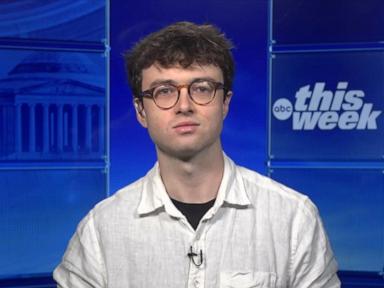
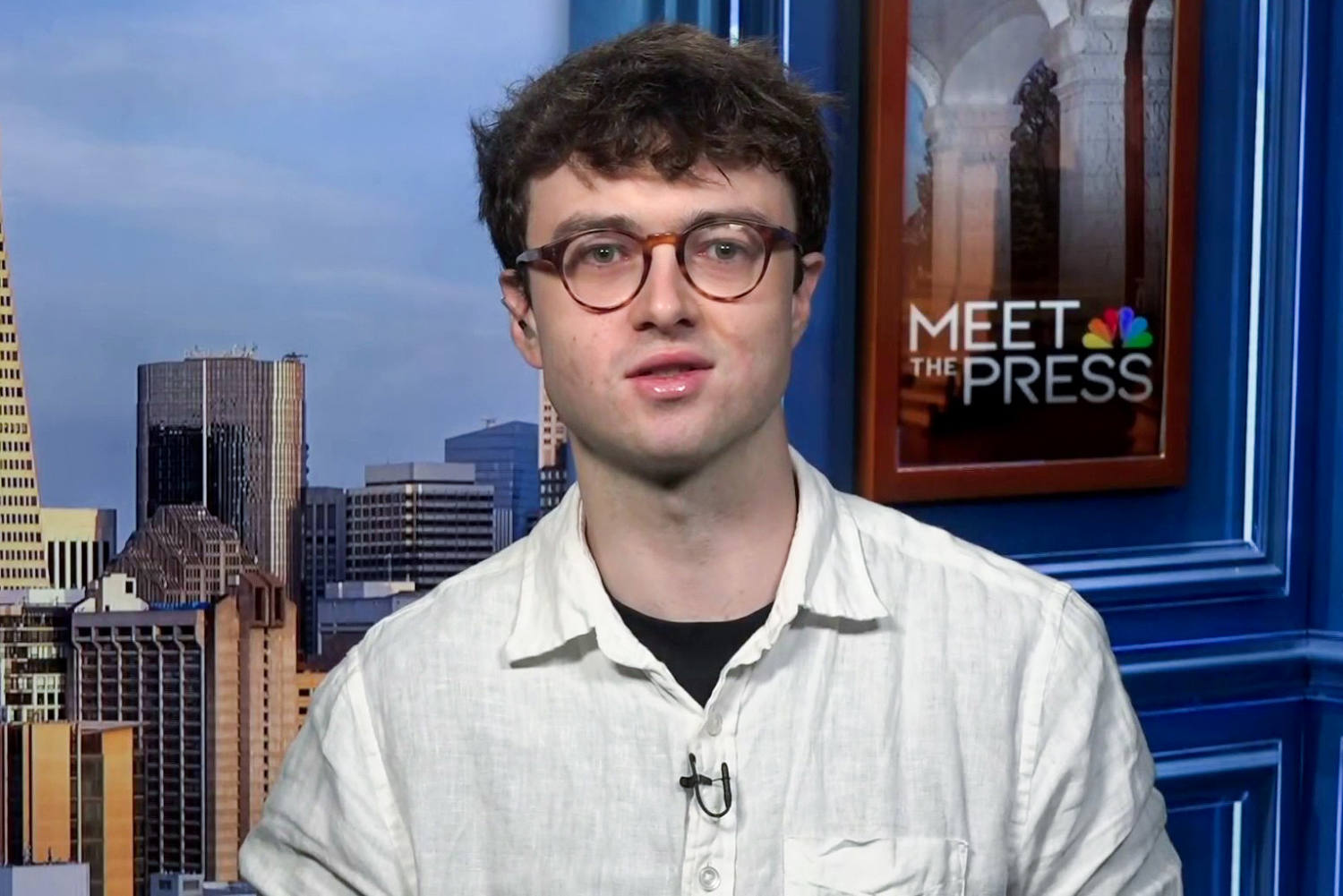
That scene—played out in fragments behind closed doors in Washington and sleek glass-walled boardrooms in San Francisco—captures the quiet panic gripping the artificial intelligence industry. When an Anthropic whistleblower stepped forward with a counterintuitive warning that Congress should let AI companies essentially regulate themselves until a formal, permanent regulatory body could be stood up, the internet erupted in predictable outrage. The headlines painted a picture of corporate foxes guarding the digital henhouse.
It sounds absurd. It sounds like an admission that the arsonists should be handed the fire department keys.
But if you sit down and talk to the people building these models—not the executives doing press tours, but the engineers whose hair is turning gray over loss functions and safety alignments—a different, much messier truth emerges. It is a story about speed, survival, and a terrifying legislative vacuum.
To understand why a whistleblowing insider would advocate for a temporary corporate free-for-all, you have to understand how fast the ground is moving beneath our feet.
Imagine trying to write traffic laws while driving a car that is actively redesigning its own engine, doubling its top speed every six months, and occasionally driving off cliffs because it misunderstood what a road was. That is the reality facing modern lawmakers. When a government committee drafts a bill, it takes months—often years—to move through committees, amendments, and floor votes. By the time a tech bill lands on the President’s desk, the technology it seeks to govern is ancient history. The transistors have shrunk. The parameters have multiplied. The paradigm has shifted entirely.
If Congress tries to slap rigid, permanent statutory guardrails on artificial intelligence today, they run two catastrophic risks. They will either write laws so vague that they are useless, or they will write laws so specific that they enshrine today’s corporate monopolies into permanent federal law, crushing open-source innovation before it can even draw breath.
This is where the whistleblower's paradox lives.
Self-regulation is a dirty word. In Wall Street boardrooms, it meant subprime mortgages and financial collapse. In social media offices, it meant algorithmic radicalization and unmonitored election interference. We have been burned before. We remember the promises made by Silicon Valley giants who swore they only wanted to connect the world, right up until the point where the world became a harvested database.
So when an insider suggests that Anthropic, OpenAI, Google, and Meta should write their own safety protocols for the time being, the immediate reaction is visceral distrust. Why would the entities profiting billions from cognitive automation police their own greed?
The answer is terrifyingly simple: fear.
The leaders of these labs are not naive. Many of them are genuinely terrified of what they are creating. They watch autonomous agents pass tests they were never expected to solve. They see emergent behaviors bubbling up from matrices of multi-trillion-parameter weights. They know, better than any senator reading a briefing book, that a single misaligned model released into critical infrastructure could cause cascading systemic failures.
They are regulating themselves right now not out of civic virtue, but out of self-preservation. They are erecting voluntary firewalls because they know that if a catastrophic accident happens—if an AI-generated pathogen design gets out, or a financial market crashes due to an unhinged algorithmic loop—the backlash will wipe out the entire industry overnight.
Yet, voluntary compliance is a fragile house of cards. It relies on the good intentions of executives whose boards demand relentless growth. It relies on companies not cutting corners on safety when a competitor is breathing down their neck with a faster, cheaper model.
Voluntary rules work until the moment they become inconvenient to the quarterly earnings report.
That is why the whistleblower’s proposal wasn't an endorsement of corporate freedom. It was a plea for a bridge.
Consider what happens when a city builds a new subway system beneath an ancient metropolis. Before the civil engineers can dig tunnels and pour permanent concrete foundations, workers drive temporary wooden shoring into the earth. It is crude. It smells of pine and resin. It isn't designed to last for a century. But without those temporary beams holding back the weight of the streets above, the whole city caves in before the real work can even begin.
Right now, artificial intelligence is hanging suspended in a shaft of our own making.
A permanent federal regulatory body—staffed by technical experts, ethicists, security researchers, and economists—is the permanent concrete foundation we need. But building that agency will take time. It requires vetting appointments, establishing jurisdictions, funding enforcement arms, and learning a domain that defies easy categorization. It is a multi-year legislative marathon.
If you ban or excessively shackle domestic companies while that agency is being built, what happens?
The race doesn't stop. State actors with zero regard for human rights or safety ethics—laboratories backed by authoritarian governments—will simply accelerate their own training runs in the dark. Open-source developers working in basements will push out unaligned weights that anyone can weaponize. The market will fracture, and safety will become a luxury of the wealthy rather than a standard for all.
Allowing AI companies to operate under self-imposed, transparent safety frameworks while Congress builds the ultimate oversight body is a calculated gamble. It is an acknowledgment that perfection is the enemy of survival.
We are standing at the edge of a great transformation. The old rules of human labor, creativity, and knowledge are being rewritten line by line, token by token. Every time we look at a screen, we are interacting with something that is learning how to outthink us.
We cannot afford to be naive. We cannot afford to trust billionaires just because they flash an earnest smile in a congressional hearing. But neither can we afford the paralyzing comfort of rigid, archaic bureaucracy that mistakes motion for progress.
The whistleblower’s warning was not a surrender. It was an alarm bell ringing in the dark, reminding us that between total chaos and effective law, there is a dangerous, narrow bridge we have to cross.
And we are already halfway across.