The Tremor Beneath the Bosphorus
The wind blowing across the Bosphorus has turned cold. In Istanbul, the tea gardens are crowded, but the conversations have shifted. People are no longer just talking about the price of bread or the next election. They are looking East, toward the smoke rising over the Levant, and West, toward a Europe that feels increasingly like a gated community built on shifting sand.
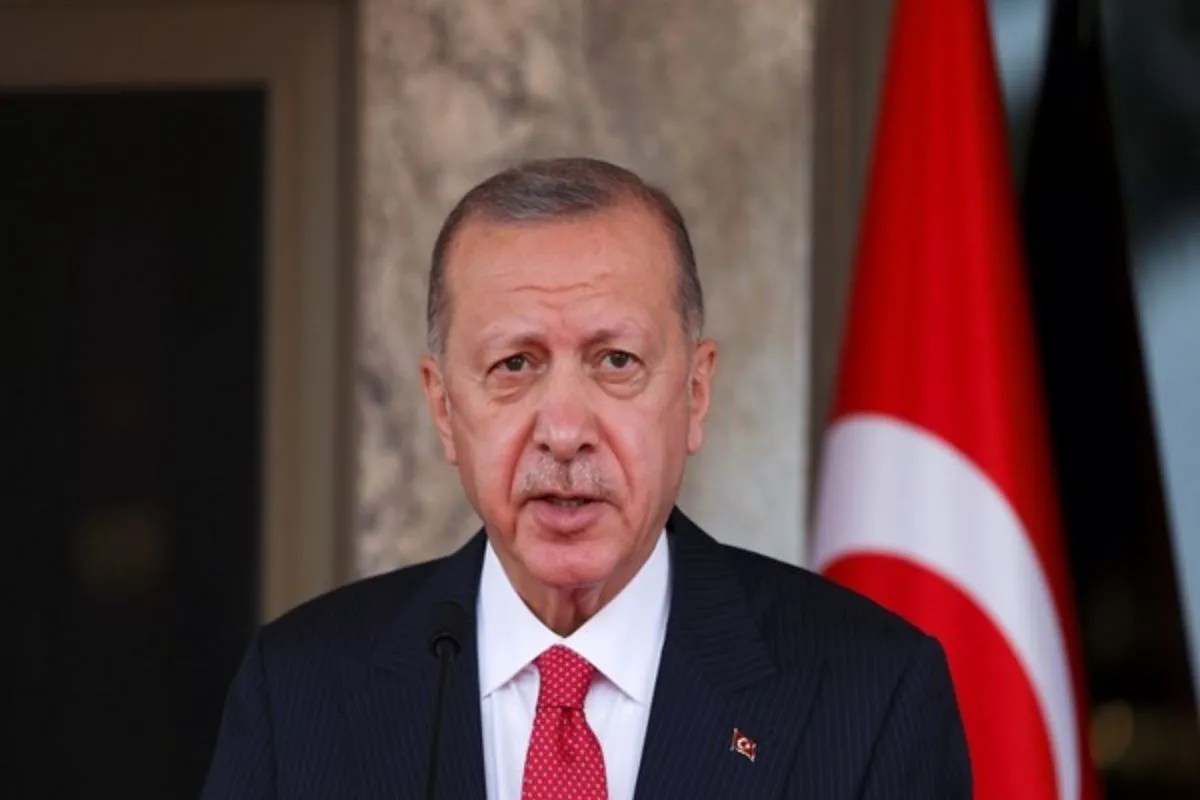
When Recep Tayyip Erdoğan sat across from Olaf Scholz in Berlin, the air wasn't just filled with diplomatic formalities. It was thick with the scent of a looming storm. The Turkish President didn’t just deliver a speech; he issued a prophecy. He spoke of a fire lit in the Middle East—specifically the escalating tensions involving Iran and the spillover of the Gaza conflict—that is no longer a "regional" problem.
It is a European problem.
The geography of pain is simple. Turkey sits at the literal crossroads of every major crisis currently threatening global stability. To the north, the grinding war in Ukraine. To the south and east, the volatile arc of Iran, Iraq, and Syria. For decades, Europe treated Turkey as a buffer, a convenient velvet curtain that kept the chaos of the East from spilling onto the streets of Berlin, Paris, and Brussels.
That curtain is tearing.
The Ghost at the Table
Consider a hypothetical family in a small apartment in Neukölln, Berlin. They have no direct connection to the geopolitics of Tehran. But when the "fire" Erdoğan warned about finally reaches Europe, it won't arrive as a military invasion. It will arrive as a radical shift in the social and economic fabric of their daily lives.
The Iranian shadow over the region is long. If the conflict between Israel and Iranian proxies expands into a full-scale regional conflagration, the first casualty will be the remnants of global energy stability. The second will be the physical safety of millions.
Erdoğan’s message to Germany was blunt: you cannot remain a spectator in a theater where the stage is already on fire. He pointed to the humanitarian catastrophe in Gaza as the primary accelerant. For the Turkish leader, the silence or perceived complicity of the West isn't just a moral failing—it is a tactical blunder that invited Iran to project its influence further than ever before.
The stakes are invisible until they aren't. We think of "war" as tanks and jets. But for a continent still reeling from the 2015 migrant crisis, war is also the sound of millions of footsteps. If the sparks from the Iran-Israel tension ignite a broader regional war, the displacement of people will dwarf anything seen in the last decade. Turkey, already hosting the largest refugee population in the world, cannot—and will not—act as the sole shock absorber for Europe’s indifference.
The Economy of Fear
Numbers are cold. They don't capture the anxiety of a German manufacturer watching energy prices fluctuate based on a drone strike thousands of miles away. During the Berlin talks, the underlying tension was palpable. Germany needs Turkey for security and migration management; Turkey needs Germany for economic cooperation and a voice in the West.
But there is a fundamental disagreement on the definition of the fire.
For Scholz and the German leadership, the focus remains firmly on Israel’s right to defend itself and the containment of Hamas. For Erdoğan, the lens is wider. He sees a region being pushed to a breaking point where Iran becomes the only beneficiary of the chaos. He warned that if the fire reaches Europe, it will manifest as a surge in radicalization, a collapse of trade routes, and a political upheaval that could empower the very far-right movements currently threatening the EU’s internal cohesion.
Imagine the Strait of Hormuz closing.
It sounds like a headline from a financial journal, but the reality is much more visceral. It means the truck driver in Bavaria can't afford the fuel to complete his route. It means the heating in a pensioner’s flat in Hamburg becomes a luxury. This is how the "Iran war fire" travels. It doesn't need to cross borders with a passport; it flows through the pipes, the wires, and the bank accounts that bind our modern world together.
The Weight of History
Turkey has seen empires rise and fall. It understands that when a neighbor's house is burning, you don't just close your shutters. You grab a bucket. Erdoğan’s rhetoric in Germany was a demand for more buckets. He criticized the German stance on the Middle East as being "one-sided," a perspective he believes is blinded by historical guilt and failing to see the immediate geopolitical danger.
The tension in the room wasn't just about current events. It was about two different ways of seeing the world. Europe often sees the Middle East as a series of problems to be managed or contained. Turkey sees it as an existential reality.
There is a specific kind of arrogance in thinking that a conflict can be "localized" in an era of total connectivity. We saw it with Syria. We saw it with Libya. Each time, the West believed the fallout would stay within the borders of the map. Each time, the fallout arrived at the doors of the European Parliament.
The Silence Between the Words
What wasn't said in the official press releases was perhaps more important than what was. Behind the talk of Eurofighter jets and trade agreements lies a deep, mutual distrust. Germany worries about Turkey’s drift toward an increasingly assertive, independent foreign policy. Turkey worries that Europe is a fading power, too slow to react to the shifting tectonic plates of the 21st century.
The "fire" Erdoğan speaks of is also a fire of the spirit. He is tapping into a global sentiment that feels the current international order is broken. When he warns Germany, he is essentially saying that the old rules no longer apply. If Iran and its network of influence are allowed to turn the Middle East into a permanent battlefield, the radiation of that conflict will change the political climate of Europe forever.
It is a domino effect that has already begun.
The first domino is the humanitarian crisis. The second is the radicalization of the youth who feel the West has abandoned its own stated values. The third is the economic shock. By the time the fourth domino falls, it’s no longer a "foreign policy issue." It’s a domestic emergency in Berlin.
The Uncomfortable Truth
We often treat these diplomatic warnings as theater. We assume leaders are just playing to their respective bases. But look at the geography. Look at the energy dependencies. Look at the demographics.
Turkey is the bridge.
If the bridge is engulfed in flames, there is no other way across. The warning issued to Germany was not a threat, though it may have sounded like one. it was a diagnosis. The diagnosis is that the Middle East is suffering from a fever that won't break until the underlying causes—the displacement, the occupation, and the proxy wars—are addressed with something more than just rhetoric.
The sun sets over the Bosphorus, casting long shadows that reach toward the European side of the city. In the distance, the lights of the bridges flicker on, connecting two continents by a thin strip of steel and asphalt. It is a beautiful sight, but it is also a reminder of how narrow the gap truly is.
When the fire starts on one side, the smoke always drifts to the other. You can't hold your breath forever.